Shi’ites back cleric call for elections
The demonstration in Iraq’s second-largest city followed a string of violent incidents in the country, including a car bombing in Baqouba and a series of clashes between US troops and insurgents that left 20 people dead.
An estimated 20,000-30,000 Shi’ite Muslims turned out to support Grand Ayatollah Ali al-Husseini al-Sistani’s demand that an interim legislature be elected directly and not chosen in provincial caucuses, as called for under the American plan.
The massive demonstration for the most powerful cleric of Iraq’s majority Shi’ites showed that the US cannot afford to take Mr al-Sistani’s criticism of the transfer plans lightly.
Smaller demonstrations also took place yesterday in Baghdad, Ramadi and Mosul, of a few hundred people each, cautioning against aspects of the American plan for Iraq’s future, which they fear will divide the country.
Under the plan, the US will transfer power by July 1 to a provisional Iraqi government to be created by a legislature chosen by provincial caucuses. The plan envisions a two-year political transition before full elections.
American officials say Mr al-Sistani’s demand for elections to choose members of the assembly are unreasonable because a credible election could not be conducted on short notice due to the country’s precarious security situation.
Iraqi leaders and US authorities hope a meeting in New York on Monday with UN Secretary-General Kofi Annan will help resolve the impasse over Mr al-Sistani’s objections.
Mr Annan has written to the Governing Council, saying that holding a credible election before June 30 may be impossible. Shi’ite council members dismissed that as the view of “faraway” experts unfamiliar with the realities of Iraq. Many Iraqis would like the United Nations to play a major role in the transfer of power.
“If the agreement is implemented under the supervision of the Americans alone or the coalition as a whole, it will be deficient because it will have been carried out under occupation,” said Mahmoud Othman, a Kurdish Governing Council member.
“But if it’s implemented under the supervision of the UN, the Europeans and the Arab League, then it will be much more acceptable.”
The question of legitimacy has dogged Iraqi politics since the downfall of Saddam Hussein’s regime in April. The Governing Council is viewed by many Iraqis as a tool of US administrator Paul Bremer, who hand-picked its 25 members in July.
Many council members are Saddam critics who spent many years outside Iraq before returning home.
At a news conference in Baghdad, the president of the Governing Council, Adnan Pachachi, said he believes Mr al-Sistani can be convinced elections cannot be held right away.
But even if Mr al-Sistani relented on immediate elections, “he wants to see a better way of electing the legislature, better than the one proposed in (the) November 15 agreement”, said Mr Pachachi, who met Mr al-Sistani last week and is in contact with him.
The Basra protesters shouted “No to America! Yes to al-Sistani!” as they marched through the streets under the close watch of British soldiers before dispersing.
“We are here to support Sistani’s edict to avoid an appointed council laying down our constitution. If that happens we will resist,” said Osama Mohammad, a 32-year-old unemployed man.
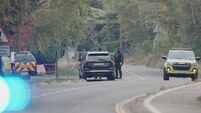
The car bombing occurred Wednesday morning in the central town of Baqouba when a motorist tried to drive into the walled compound of a police station in the city 40 miles northeast of Baghdad.
Police Col Salam Omar said guards opened fire after the driver ignored orders to stop. The driver then detonated the vehicle, killing himself and two others and wounding about 30 people.