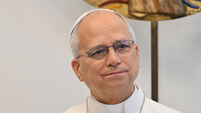
Bush seeks recovery with Alito nomination
But ready-to-rumble Democrats warned Mr Alito may be an extremist who would curb abortion rights.
"Judge Alito .... has more prior judicial experience than any Supreme Court nominee in more than 70 years," Mr Bush said, drawing an unspoken contrast to his recent choice, Harriet Miers.
Abortion emerged as a potential fault line. Democrats pointed to Mr Alito's rulings that restricted a woman's right to abortion. Senate Judiciary Committee Chairman Arlen Specter, a Republican who supports abortion rights, said that Mr Alito's views on the hot-button issue "will be among one of the first items Judge Alito and I will discuss."
In a political twist, Republicans who helped sink Ms Miers's nomination rallied to Mr Alito's side. A leading Democrat who backed Ms Miers led the attack against Mr Alito.
"The Senate needs to find out if the man replacing Miers is too radical for the American people," said Senate Minority Leader Harry Reid, of Nevada. He chided Mr Bush for not nominating the first Hispanic to the court.
"President Bush would leave the Supreme Court looking less like America and more like an old boys club," Mr Reid said.
Consistently conservative, Mr Alito has been dubbed "Scalito" or "Scalia-lite" by some lawyers because his judicial philosophy invites comparisons to conservative Supreme Court Justice Antonin Scalia. But while Justice Scalia is outspoken and is known to badger lawyers, Mr Alito is polite, reserved and even-tempered.
Given solid Republican support in the Senate where the GOP controls 55 of the 100 seats Democrats would have to filibuster to block Mr Alito's confirmation, a tactic that comes with political risks. Mr Alito also enjoys the early support of conservative activists who used their sway in the Bush White House to derail Ms Miers's nominations.
The fight to nominate Mr Alito, a judge on the 3rd US Circuit Court of Appeals since 1990, is one step in Mr Bush's political recovery plan as he tries to regain his footing after a cascade of troubles including the indictment of the vice-president's chief of staff rocked his presidency.
If confirmed by the Senate, Mr Alito would replace retiring justice Sandra Day O'Connor, a decisive swing vote in cases involving affirmative action, abortion, campaign finance, discrimination and the death penalty. Mr Bush's first nominee, John Roberts, is now chief justice. "The Supreme Court is an institution I have long held in reverence," said the bespectacled Mr Alito, a former prosecutor and government attorney who has argued 12 cases before the Supreme Court. "During my 29 years as a public servant, I've had an opportunity to view the Supreme Court from a variety of perspectives."
Praised by Democrats when confirmed for the appeals court 15 years ago, Mr Alito has staked out positions supporting restrictions on abortion, such as parental and spousal notification. He favours more restrictions on abortion rights than either the Supreme Court has allowed or O'Connor has supported, based on a 1992 case in which he supported spousal notification. Mr Bush called for confirmation by year's end.
Senate Majority Leader Bill signalled uncertainty, saying, "If it's possible to act," he would call for a vote.