Car bombs claim the lives of 23, wound 56

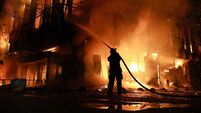
A SERIES of car bombs exploded after dusk yesterday in Baghdad, killing at least 23 people and wounding about 56, police said. Separate attacks earlier in the day killed seven others.

Car bombs claim the lives of 23, wound 56

Meanwhile, three US soldiers were killed Tuesday by small-arms fire during combat operations west of Baghdad near the insurgent stronghold of Ramadi, the military said. At least 1,727 members of the US military have died since the war began in 2003, according to an Associated Press count.

Gunmen also killed a former judge whose name once was on a list of Sunni Arabs joining a parliamentary committee to draft Iraq's new constitution.

Separately, a Filipino hostage was released after eight months in captivity.

Three additional explosions caused by roadside bombs in western and eastern Baghdad killed three insurgents planting the devices, police said.

The first two car bombs went off in front of two restaurants in the predominantly Shiite neighborhood of Shula in western Baghdad, killing at least 11 and injuring 28. The third apparently driven by a suicide bomber struck a nearby bus station, killing eight people and injuring 20, police lieutenant Majid Zeki and police major Mousa Abdul Karim said.

A suicide car bomber attacked an Iraqi army patrol in Baghdad's western Ameriyah suburb and killed at least four bystanders, police said. The attack occurred at about 9.45pm, said Najim Abid, a police officer in Baghdad's Yarmouk Hospital. The four dead included a woman and a child, he said.

According to police in Shula, the first two bombs went off at 9.30pm in front of the al-Haji restaurant, next door to a shop selling falafel sandwiches and ice cream which had been targeted by a car bomb on June 10.

Both bombs targeted people sitting outside the grill restaurant, which sold shish kebabs and other barbecued meat, while the suicide car bomber then ran the third car into the bus station 300 yards away.

Former judge Jassim al-Issawi, whose candidacy to join the 55-member committee was later dropped, was a law professor at Baghdad University and a former contributing editor of Al-Siyadah newspaper, said Salih al-Mutlak, secretary general of the Sunni National Dialogue Council Al-Issawi, aged 51, and his son were killed in Shula, said Abdul Sattar Jawad, editor of Al-Siyadah.

The core of a violent insurgency plaguing most of Iraq is thought to be composed of Sunni Arabs fighting to overthrow the US-backed, Shi'ite-led government of Prime Minister Ibrahim al-Jaafari. Some militants have begun threatening fellow Sunnis because some of their leaders have expressed a readiness to join the political process.

"The assassination of professor Jassim al-Issawi comes within an organised campaign aiming to liquidate all Sunni figures who will play an important role in the upcoming political process," said al-Mutlak.

Egypt, meanwhile, will become the first Arab nation to send an ambassador to post-Saddam Iraq, said Iraqi Foreign Minister Hoshyar Zebari in an address to an international conference in Belgium on Iraqi reconstruction.

Arab nations withdrew their ambassadors from Baghdad under Saddam Hussein. Some, including Egypt, have diplomats in Baghdad, but none at the ambassador level.

x

More in this section

Cookie Policy Privacy Policy Brand Safety FAQ Help Contact Us Terms and Conditions

© Examiner Echo Group Limited