The man who tried to kill the Pope
Then, the violence of a gunman’s attack on a revered figure in white as he moved among his people in St Peter’s Square, shocked the Christian world.
The reasons behind Mehmet Ali Agca’s attempt to assassinate the Pope remain a mystery. Theories abound and each one is disputed by another.
Ali Agca, a Turkish Muslim, has contradicted himself in explaining his motives in his few public comments over the years and though he has in the past promised to speak freely when he leaves prison, no one is sure how trustworthy his account will be.
Mehmet Ali Agca was already a dangerous man before he set out on his mission to Rome. Born in 1958 in the oppressed Kurdish region of Turkey, he was a petty criminal in his early teens before joining the gangs who made a living smuggling goods to the neighbouring market of then communist Bulgaria.
Along the way, he came into contact with a militant Turkish nationalist group, the Bulgarian-backed Grey Wolves, who, in 1979, commissioned him to murder the liberal Jewish newspaper editor, Abdi Ipekci.
Shopped by an informant, Ali Agca was quickly caught, tried and sentenced to life imprisonment, but he had served only a few months when the Wolves arranged his escape. On the run and hiding out in Bulgaria, Ali Agca was set another task - to kill the Pope. Who his taskmasters were on this occasion, however, is still unclear.
Details relayed to his murder trial in Rome would hear later that he arrived in the city on May 10, 1981, three days before the Pope’s scheduled service in St Peter’s Square.
Although he would claim to have acted alone, evidence was presented that he spent those days linking up with another Turk and two Bulgarians and rehearsing a plan that would see him and an accomplice both shoot at the Pope and then detonate a bomb to create panic in the crowd and facilitate their escape to the Bulgarian embassy.
In 2000, the Church decided the millennium year was the appropriate time to reveal the 83-year-old third secret of Fatima.
It was a vision that foresaw a holy man in white falling to the ground amid a hail of gunfire. It did not, however, indicate that the holy man would die.
Whether it really was fate that foiled Ali Agca’s mission or whether a moving figure in a dense crowd was simply too difficult a target, even at a distance of just nine feet, the gunman’s aim was off and the bullet that tore through Pope John Paul’s abdomen missed his vital organs by millimetres. For four days he lay in intensive care at Rome’s Gemelli Hospital while anxious pilgrims prayed in their thousands in St Peter’s Square. Then, to the amazement of the crowds, his voice came over the loudspeakers from his hospital bed and he led them in prayers, adding that he had forgiven his assailant.
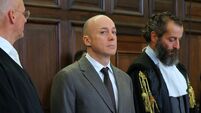
The Italian criminal justice system was not so forgiving. Ali Agca was convicted and sentenced to life in jail, though this was commuted after 19 years and he was handed over to the Turkish authorities where he was immediately imprisoned for the 1979 murder and a number of earlier robberies. Now 47, he is still in Istanbul’s high security Karbal Prison, where he is likely to remain behind bars for at least another few years, although his name pops up regularly as a possible candidate for an amnesty release.
Turkish media have all but given up lodging formal requests with the Turkish justice ministry for interviews with him and no international applications have been granted.
Ali Agca has occasionally written to media outlets from prison, most recently in February this year when he wished the Pope a full recovery from his flu. Apart from his unwavering goodwill towards the Pope since the assassination attempt - he accepted a visit from the Pontiff in his Italian prison in 1983 - he has proved inconsistent.
He once claimed to be a member of the Popular Front for the Liberation of Palestine, but they denied any links with him.
Later he accused the Bulgarian secret service of having organised the assassination attempt at the behest of the KGB because of the Pope’s support for the anti-communist Solidarity movement in Poland. Numerous investigations and two trials failed to establish a firm Bulgarian connection and the Pope attempted to end two decades of rumour when he visited Bulgaria in 2002 and declared he had never believed the theory.
But a Bulgarian alternative - that the assassination attempt was a joint CIA-Italian secret service plot to get rid of a meddling pontiff - never held much weight either.
To add to the mystery, Ali Agca has become a hero figure for various maverick fundamentalists, one of whom hijacked an Air Malta plane bound for Istanbul in 1997 with a demand that the Turk be released from prison.
Earlier this week, the theory of Bulgarian involvement revived again when Italian newspapers reported claims that this was backed by official documents recently discovered in former East Germany.
The Bulgarians protested loudly at the renewed accusations but the official Italian commission of inquiry, still in existence, now wants full access to all Bulgarian state files on the issue.
The mystery may never be solved, just like there may never be an answer as to why Ali Agca failed in his mission when he was just nine feet away from him. For the Pope, however, there was no great riddle. Bishop John Magee of Cloyne, then secretary to the Pope, was by his side as he lay bleeding in St Peter’s Square 26 years ago and remembers his words of reassurance. “John, this is not death,” John Paul told him.
Yesterday, the Pope’s certainty in his destiny was strong as ever but this time the clergy who gathered around him sensed a different kind of sureness. This time he was being directed towards death rather than away from it, but once again he had full faith in his guide.


CONNECT WITH US TODAY



Be the first to know the latest news and updates