North Korean hospital struggles to cope
At the Sinuiju Provincial Hospital, just across the Chinese border into North Korea, 360 patients from the blast were undergoing treatment, according to Tony Banbury, Asia regional director for the UN World Food Programme. He said more than 60% of the victims were children.
"They clearly lack the ability to care for all the patients," Mr Banbury said.
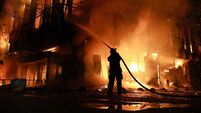
The enormous explosion on Thursday in the town of Ryongchun, fed by oil and chemicals, killed 161 people and injured at least 1,300, officials said.
The death toll rose by seven today, but it was unclear whether the higher number reflected new fatalities or simply confirmed casualties. Aid agencies have not said whether they expect the number to increase further.
As relief workers assessed damage, 11 trucks crammed with tents, blankets and instant noodles rumbled across the Chinese frontier into North Korea yesterday part of a 1 million yuan (€127,000) multi-national shipment to the devastated borderland region. South Korea, Japan and Australia have also offered aid.
In Canberra, Australian Foreign Minister Alexander Downer said yesterday his country would help if Pyongyang asked.
In the Sinuiju hospital, Banbury said the most serious injuries were suffered by children in a nearby school who heard the initial blast, glanced toward it and were smacked by a wave of glass, rubble and heat. Many were left with serious eye injuries, he said.
The hospital was "short of just about everything", Banbury said including antibiotics, steroids and painkillers. Equipment was not plugged in, suggesting it was broken or electricity was insufficient, and the number of beds was so meagre that some children were being laid on filing cabinets.
Aid workers recounted huge craters, twisted rail tracks and scorched buildings. But all of the 1,300 people that North Korean officials said were injured had been evacuated before the aid workers arrived to nearby Sinuiju, where the foreigners were not immediately able to visit.
"People were cleaning up by hand and loading their meagre belongings onto ox carts," Banbury said after the visit today. "They looked like World War I refugees."
UN officials estimated 40% of Ryongchun was damaged.
The aid workers' visit followed a rare invitation from the North's communist government, as it pleaded for international help.
North Korea's reclusive communist regime has blamed the disaster on human error, saying a train cargo of oil and chemicals ignited when workers knocked the wagons against power lines. The statement was unusually frank for a government that controls information tightly, both to the world and its own people.
North Korea's state news agency said the explosion was set-off by "electrical contact caused by carelessness during the shunting of wagons loaded with ammonium nitrate fertiliser". Ammonium nitrate can be extremely volatile.
CONNECT WITH US TODAY



Be the first to know the latest news and updates