Pentagon to relieve troops in Iraq
Notably, the Third Infantry Division learnt it will return to the United States in September, after some of its troops recently criticised the Pentagon hierarchy for postponing a rotation back home.
The rotations are not expected to affect the total number of Western troops serving in Iraq, currently some 156,000 soldiers. Of this, some 148,000 are American troops. The remaining 12,400 are mainly British.
The First Marine Expeditionary Force is to be replaced by a "multinational division" under Polish command between September and October.
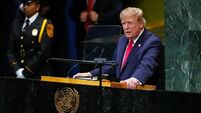
US President George W Bush yesterday urged the nations of the world to contribute militarily and financially to rebuilding Iraq, but the question of deploying troops in Iraq, notably without a specific UN mandate, was raising a political storm in some countries.
In Japan, opposition parties launched 11th-hour resistance to enacting a bill to send troops to Iraq by submitting a censure motion against the foreign minister in a move aimed at delaying debate on the bill.
The bill paves the way for a reconnaissance mission expected to be dispatched by August, followed by a 1,000-strong contingent in October.
But the opposition insists that the troops dispatch would violate Japan's anti-war constitution, put Japanese at risk and involve the country in the aftermath of an unjustifiable war.
Similarly in Spain, the opposition Socialists continued to criticise the government as a 60-strong advance party of Spanish troops left Wednesday for Iraq to underpin the coalition.
In all, Spain is set to provide 1,300 military personnel but the undertaking is a gamble for Prime Minister Jose Maria Aznar, whose unwavering support for the US-British coalition throughout the Iraq crisis has been widely criticised.
In Paris, Foreign Minister Dominique de Villepin whose country was sharply opposed to the US-led war reiterated Thursday France's opposition to the sending of multinational forces to Iraq without a UN mandate.
"We must put the United Nations at the heart of it," Mr de Villepin said.
"Only the United Nations can provide the security guarantees that are needed to allow the entire (international) community to work together.
"Patching up a system on the basis of what exists now, adding foreign forces to the coalition forces, does not seem to us to be the best way to ensure Iraq's security."

CONNECT WITH US TODAY



Be the first to know the latest news and updates