12-year-old orphaned in continuing Iraqi violence

THREE shootings killed four people across Iraq yesterday, including one attack in the capital that left a young girl wounded and her parents dead.

12-year-old orphaned in continuing Iraqi violence

Police said gunmen killed the 12-year-old’s mother and father, a pharmacist, late Wednesday in west Baghdad. The girl was lightly injured and was picked up by relatives, said Dr. Muhannad Jawad of the Yarmouk Hospital.

Fifty American soldiers have been killed in the past three weeks, while leaders from the country’s disparate groups have huddled together to write the new constitution supposed to be complete by Monday.

US and Iraqi officials hope political progress will deflate the insurgency that has launched waves of attacks on the new government and security forces.

In a western district of Baghdad, a police officer travelling to work was killed in a drive-by shooting. Lt Hamid Mahmoud was killed and a taxi driver injured in the attack, Jawad said.

Gunmen burst into the home of an intelligence official from the Defence Ministry and killed him Thursday in the southern city of Basra, 340 miles southeast of Baghdad. Lt Col Ibrahim Khalil was shot as he prepared for work.

On Wednesday, gunmen kidnapped a senior Interior Ministry official in Baghdad. Police said Brig Gen Khudayer Abbas, chief of the administrative affairs office, was dragged from his car and rushed away in another vehicle.

Political leaders continued intense negotiations to complete the country’s draft charter, which parliament is scheduled to approve by Monday.

But major differences among ethnic and political factions threaten to delay the document’s completion.

The major obstacle is the Kurdish demand for Iraq to be transformed into a federal state. They insist on this to protect their self-rule in three northern provinces.

Sunni Arabs oppose federalism, fearing the Kurds want to break away and declare independence. Shi’ites, who make up 60% of the population, are divided.

Shi’ite leaders yesterday hammered home their demands for an autonomous federal state for their people across oil-rich southern Iraq.

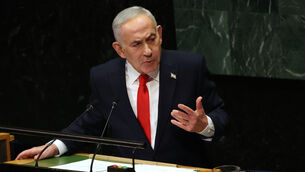
Supreme Council for the Islamic Revolution leader Abdul Aziz al-Hakim said: “Regarding federalism, we think that it is necessary to form one entire region in the south.”

Mr al-Hakim is a powerful force in the coalition that came to power in January’s election.

Minority Sunni Arab leaders, as well as a spokesman for the Shi’ite-led coalition government, rejected the idea.

x

More in this section

Cookie Policy Privacy Policy Brand Safety FAQ Help Contact Us Terms and Conditions

© Examiner Echo Group Limited