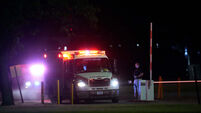
Britain to cut troops in Iraq by 10%
"Our commitment to the coalition remains certain," Mr Reid told the House of Commons. Mr Reid insisted it was not the start of the handover of security responsibility to Iraq and he was adamant the withdrawal had not been prompted by spiralling violence.
The move means one in ten British troops will be withdrawn. It marks a reduction from the high point of 10,000 British troops in Iraq in October 2003 to just over 7,000 now.
Mr Reid said 235,000 members of the Iraqi security forces were now equipped and trained, with 5,000 more signing up every month.
Meanwhile, further violence in Iraq, apparently sparked by Sunday's bomb attack on a Shi'ite area of Baghdad has raised fears of a frenzy of sectarian killing.
Yesterday police found the bodies of four men dangling from electrical pylons in a Baghdad slum, hours after car bombs and mortars shells ripped through teeming market streets, killing at least 58 people and wounding more than 200.
Bomb blasts in Baghdad, Kirkuk and Tikrit - many of them targeting Iraqi police patrols - killed at least 10 more people and wounded more than 30.
In the Shi'ite holy city of Najaf, the anti-American cleric Muqtada al-Sadr avoided blaming Sunni Muslims for the attacks and appealed for unity. He instead blamed al-Qaida in Iraq and US forces.
Sunni leaders condemned the attack on Baghdad's Sadr City. Sheik Ahmed Abdul Ghafour al-Samaraie, head of the Sunni Endowment, the state agency responsible for Sunni mosques and shrines, called it "a cowardly and criminal act targeting civilians".
* A former judge from Saddam Hussein's regime acknowledged sentencing 148 Shi'ites to death in the 1980s, but insisted they were given a proper trial and had confessed to trying to assassinate Saddam.
Awad al-Bandar, who presided over the trial told the court that, he had no choice "but to implement the law". He and his co-defendants are charged with killing the Shi'ites, as well as illegal imprisonment and torture of hundreds of others - including women and children - in a crackdown launched against the town of Dujail following a 1982 assassination attempt against Saddam. They face possible execution by hanging if convicted.


CONNECT WITH US TODAY



Be the first to know the latest news and updates