Mandelson to release Chinese ‘bra wars’ garments
Mr Mandelson gave no details of how he proposed to break the deadlock over quotas for textile imports from China, which has led to bras, T-shirts, sweaters, blouses and trousers being stockpiled in customs warehouses.
But he insisted that he could not allow the EU's textiles trading agreement with China to unfairly penalise retailers trying to stock up for the Christmas period and winter sales.
Trade representatives welcomed Mr Mandelson's announcement, but called for more detail of his solution.
And the Conservatives criticised the commissioner who insisted that "nobody in particular" was to blame for the dispute arguing that the agreement with China was ill-thought through.
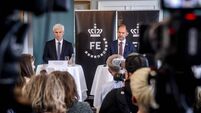
Speaking at a press conference in Brussels, Mr Mandelson, who had faced criticism for continuing with his holiday plans rather than cancelling them to tackle the crisis, told journalists: "I cannot accept that EU retail businesses should be penalised unfairly by the introduction of the agreement we made with China.
"I have therefore set in motion procedures to unblock the goods."
Mr Mandelson said suggestions that the problem would result in shortages in the shops and rising prices were overblown.
"The idea that there are likely to be shortages and shelves going empty is rather far from the truth," he insisted.
Mr Mandelson acknowledged that talks with governments of the 25 EU nations and the Chinese authorities had "so far not produced a mutually satisfactory solution", but added that he hoped European governments would quickly approve his latest proposals.
Trade experts believe that the commission could put forward two potential solutions to EU members.
One would allow China to bring forward some of its 2006 quota allowance for garments to this year. A second way out of the problem could involve raising overall quota limits.
Yesterday, Mr Mandelson said if his proposals were backed by EU member states, the Chinese goods could be freed up for sale in Europe by mid-September.
The goods have piled up because the EU, having opened its borders to more open trade in textiles, faced an influx of goods way in excess of quotas designed to protect European producers.
Yesterday, Mr Mandelson argued that, although there had been difficulties implementing the agreement with China, the deal should be preserved. "Our primary shared interest and determination is to preserve the original overall agreement. There is no better alternative to the agreement we have, given member states' desire for temporary restrictions to be placed on the import of Chinese textile goods."
However, Robert Sturdy, a Conservative MEP and their spokesman on international trade in the European Parliament, criticised Mr Mandelson's handling of the affair.
"He (Mr Mandelson) said at the start of his speech it could not have been foreseen, this problem. I wrote to him on the 8th of June warning him of exactly this problem," Mr Sturdy said.
"I actually think it was an ill-thought through piece of legislation and it brings into question his judgment on it, because nobody thought through the problems that have arisen."
CONNECT WITH US TODAY



Be the first to know the latest news and updates