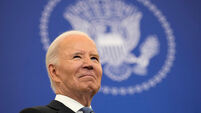
Blair defends Iraq decision following leaked memo
A leaked memorandum drawn up after high level Downing Street talks suggested that planning for military action was already well under way, eight months before the invasion took place.
At the same time the then Chief of Defence Staff, Admiral Sir Michael (now Lord) Boyce, disclosed his concerns that the war may not have been legal under international law.
The latest disclosures came after the British government was forced to publish the original legal advice on the case for war by the Attorney General, Lord Goldsmith, following extensive leaks to the press.
Admiral Boyce said that he had always been "troubled" by the prospect that British troops could be brought before the International Criminal Court and had insisted on legal "top cover" from the attorney general.
"If my soldiers went to jail and I did, some other people would go with me," he said in an interview with The Observer.
"I wanted to make sure that we had this anchor which has been signed by the government law officer. It may not stop us from being charged but, by God, it would make sure other people were brought into the frame as well."
Asked if he meant Mr Blair and the attorney general, he replied: "Too bloody right."
At the same time the Sunday Times published a leaked minute of a meeting held in Downing Street on July 23 2002 eight months before the war began.
MI6 Chief Sir Richard Dearlove, who had just returned from talks in Washington, told the meeting that the Americans now saw military action against Iraq as "inevitable", adding that "the intelligence and facts were being fixed around policy."
Foreign Secretary Jack Straw agreed that it seemed clear that President George Bush had made up his mind but warned that the case for military action was "thin."
"Saddam was not threatening his neighbours and his WMD capability was less than that of Libya, North Korea or Iran," he warned.
Mr Blair rejected claims that the memorandum showed that he was already committed to military action at the time of the meeting and defended the decision to go to war.
"What happened subsequent to that meeting is that we went the United Nations route. We went back the United Nations in November to give them (Iraq) a last chance," he told BBC1."The real world was you had to take a decision to take Saddam out, put him in prison or leave him in power. I decided to put him in prison."
CONNECT WITH US TODAY



Be the first to know the latest news and updates