The Roy Keane effect: Why Ireland’s rugby greats looked to the Cork football icon
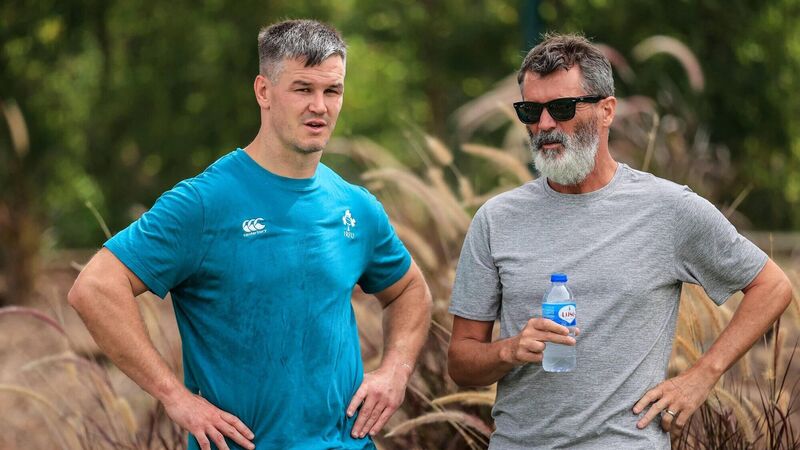
TOP MAN: Johnny Sexton chats with his favourite footballer Roy Keane. Pic: Dan Sheridan, Inpho
By the time Roy Keane was starring for Rockmount in the 1980s, there were soccer teams sprinkled all across the northside of Cork City. Some came and went quickly, others were long-standing institutions, but it was, by some distance, the most popular participation sport in that part of town. In contrast, there was a solitary rugby club catering for this entire half of the urban population. After Sunday’s Well crossed south of the river and moved their home base to Musgrave Park in far-flung Ballyphehane in the 1940s, Old Christians were the lone standard bearers for those wanting to fling around the oval ball. This proved convenient for some interlopers.
‘At that time, we used to train in the Old Christians’ rugby pitch because it was too far to go out the seven miles to Rockmount Park,’ said Timmy Murphy, one of Keane’s first managers. ‘We’d sneak in before any of the rugby crowd would see us and train away.’ One Thursday in October 2005, the Munster rugby team were in Manchester to play Sale Sharks at Edgeley Park in Stockport when they had a surprise visitor the night before the game. The one-time trespasser on Old Christians’ property walked into the room where the players had assembled to play Monopoly and eat pizza. Keane was still captain of Manchester United and carried the aura that came with that title, yet he surprised the squad in one way.
‘He was so small,’ said Jerry Flannery, ‘and we were these fat rugby players. I thought he must be looking at us like we’re idiots.’ It was a measure of how they had pictured him in their minds that many of those present were startled at his size. They expected him to be bigger. In their imaginations, on their television screens even, his outsized performances and perhaps also his uber-confident persona, ensured that he always seemed larger than life. Punching above his weight.
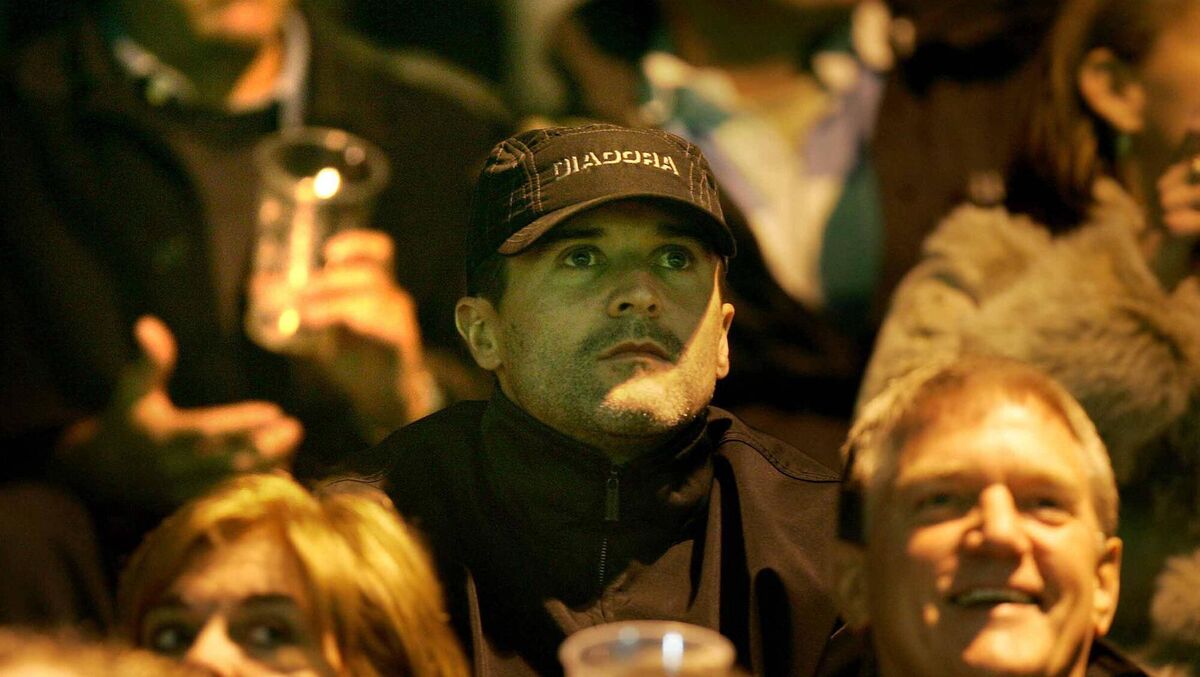
No matter his physical stature, in a room full of rugby behemoths always seeking a competitive edge, his words still came freighted with a certain heft. ‘It’s strange to have a hero who is only a few years older than you,’ wrote Ronan O’Gara. ‘But hero is the best word to describe my admiration for him. I always loved his drive. His attitude. The way he turned himself into a great player with less talent than other top players.’ All of which explains why Declan Kidney’s introduction was succinct. ‘You all know Roy,’ said the Munster coach. ‘He’s just going to say a few words.
Two years earlier, Keane, accompanied by United teammate John O’Shea, had turned up at Lansdowne Road, a curious spectator watching Munster lose an epic Heineken Cup semi-final to Wasps. Yet, as he leaned against the physio table in the hotel in Manchester that evening addressing the players, the sharper characters in the audience quickly cottoned on to the fact he really didn’t know too much about Munster. How could he? During his formative years in Cork, the province often played games attended by 300 people, fixtures that scarcely registered outside the alickadoo fraternity, hoary men with hip flasks in the pockets of their bulky sheepskin coats. Back then, Keane’s Rockmount, as the finest and most entertaining youth team the city ever produced, routinely drew bigger crowds for schoolboy cup finals in Cork. But his obvious lack of appreciation of the heritage involving the red shirt with three gold crowns and a stag on the crest didn’t diminish his impact.
For a man then famous for being jealous of his privacy, Keane was remarkably frank addressing this room full of strangers, especially about matters nutritional. He admitted that when he fetched up at Old Trafford in the summer of 1993, his diet was the worst at the club. Then he regaled them about his misadventures giving up eating meat in the second half of his career in an effort to trim his body fat percentage. This move spawned a phase when he became too thin for his own good before he settled on a suitably ascetic yet still healthy approach to food as essential fuel.
‘We were sponges to the information he gave us,’ wrote Donncha O’Callaghan. ‘Axel [Foley], a huge Manchester United fan, interrogated him with questions … Heading away from that talk, we all resolved to change. Even that night, as Roy was speaking to us, Deccie [Kidney] had arranged for pizzas to be delivered to the team room. Normally there’d be a scrap to grab as much of it as we could. But this time, there were only two slices eaten, one by Fede [Pucciariello], the other by Anton [Pitout]. The rest of us were too embarrassed to consider going near it while Keane was there. To me, it was one of the most inspirational speeches I’d ever heard.’
*****
Johnny Giles was the heartbeat of a Leeds United team that dominated English football in the late 1960s and early 1970s. The rugby squads who won Triple Crowns for Ireland in the 1980s were impressionable children then. None came of age publicly citing the Dubliner’s renowned professionalism and dedication as an influence on how they trained and prepared to play their sport. But that was the impact Keane had on a generation of Irish rugby players whose success transformed their sport and its status forever. In a way that no soccer player or any other athlete did before or since, he mattered to them, looming large in their consciousness, informing their approach to their own code.
Their reverence for and interest in him and his approach to excellence predated that evening in the Munster team hotel and it extended far beyond one inspirational lecture too. Witness Paul O’Connell writing in his autobiography about a deputation of Munster players meeting Declan Kidney at a certain juncture to complain about what they perceived to be deficiencies in his training methods and preparation.
‘Back then a lot of us in the dressing room looked up to Roy Keane,’ wrote O’Connell. ‘The combative side of his personality was always about the upholding of standards. You’ve got to be the best – or if you’re not, you’ve got to want to be, which means putting in the work and doing things right. And if you don’t want to be part of the best team, what are you doing here? I never allowed myself to have an excuse when things didn’t go well, even if there was a reasonable one available. It was probably around that time some of the lads started calling me “Keano”. As in Roy, giving people a hard time. I think it was mostly meant as a compliment, given the respect that people in our group had for Roy Keane…In his great years, Roy Keane showed a lot of us the way.’
Rugby squads love nicknames, to an almost risible extent. But labelling O’Connell as ‘Keano’ showed the depth of their admiration for both men. Again, you don’t typically find rugby players in any decade in Irish history comparing their most driven teammate to any professional footballer, Irish or otherwise. It is not difficult to understand why this changed with Keane.
In his manic relentlessness, his quest for self-improvement and demented determination to compete at the highest level, he transformed the national sporting psyche. Not just with his regularly magnificent displays for Manchester United on the biggest stages in Europe, but with his refreshingly candid approach to Ireland’s long-standing tolerance of mediocrity. In lambasting the FAI for putting players in economy on planes and skimping on pre-match food, he had declared war on the tyranny of low expectations that he felt kept the national team back.
Keane had departed Ireland long before the rugby revolution transformed the sport’s relationship with the country and took it mainstream. But, like so many of his compatriots, he caught the bug somewhere along the way. A serious case of it too. In June 2008, less than three years after the Munster squad cottoned on to the fact he knew little enough about their history, he spent a week observing the All Blacks as they prepared for a test match against Ireland in Wellington. Fresh off the serious achievement of keeping Sunderland in the Premier League following promotion, his trip Down Under was not just about ticking a box as part of the requirements for getting his UEFA Pro Licence.
‘Seeing them in action in New Zealand fulfils a lifetime ambition,’ he said, of a team he never mentioned in his first autobiography when discussing sporting heroes. ‘The All Blacks have long intrigued me and I love seeing them perform the haka.’ During that week, he was asked by the New Zealand coaching team to give a talk to the squad after dinner one evening, an impressive measure of the status he enjoyed in the sporting world. On another night, he went out to eat with Alan Quinlan, Paul O’Connell and Ronan O’Gara from the Irish camp. Before the main course even arrived, O’Gara was picking his brain about the All Blacks, proving that in worshipping Keane he had absorbed some of his traits, always looking for a competitive edge.
Johnny Sexton had not yet made his debut for Ireland by that point, but O’Gara’s future successor as Ireland’s out-half had been equally obsessed with Keane since 1999, and the magical evening when he gave what many regarded as his greatest individual performance, dragging Manchester United from two goals down to defeat Juventus 3–2 in the Champions League semi-final. Sexton was a 13-year-old United fanatic, who watched that game all alone on the television in his parents’ bedroom. The indomitability of Keane that night and the way in which he somehow raised his game after the booking that ensured his absence from the final made an impression on the teenager. It also confirmed the Corkman’s status as his favourite player.
More than two decades later, Keane visited the Irish squad at their hotel before a Six Nations’ clash with England at Twickenham in 2020. As team captain and somebody then regarded by rugby folk with the same reverence once afforded Keane in the soccer world, Sexton was tasked with the job of interviewing the guest. An icon himself, he reverted to something of a fanboy, spending all week avidly preparing avenues of attack and topics to be covered. In the end, he posed one question, and the answer lasted nearly two hours.
‘He was incredibly generous with his time and his stories,’ said Sexton. ‘He was very, very open with us. We asked him about different things about leadership, and about team culture and environments. We probably didn’t get the answers we thought we were going to get. What he boiled down to was: effort, hard work, turning up day in, day out. He gave us very simple answers, but brilliant answers all the same…We could have sat there all night listening to him.’
The portrait is of the artist as the most unlikely ruck and role model.
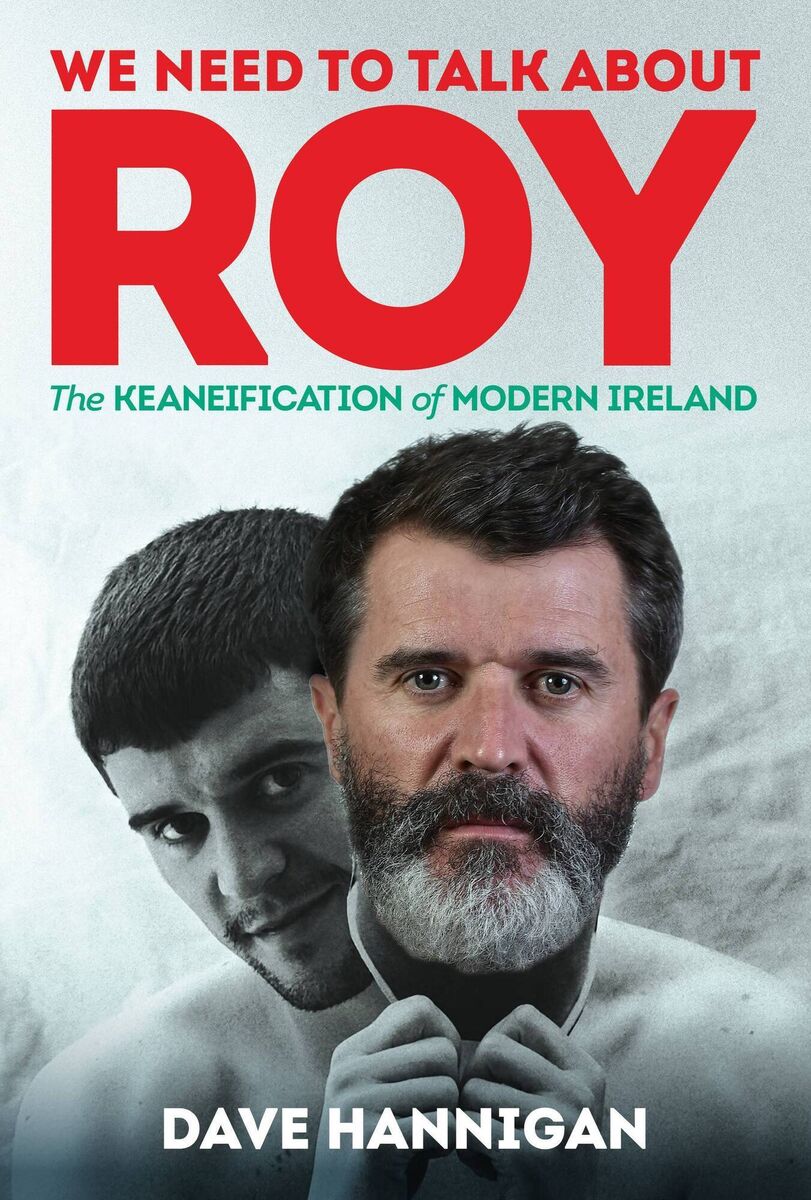
*
CONNECT WITH US TODAY



Be the first to know the latest news and updates