Is what we saw at the Emirates really the beautiful game?  
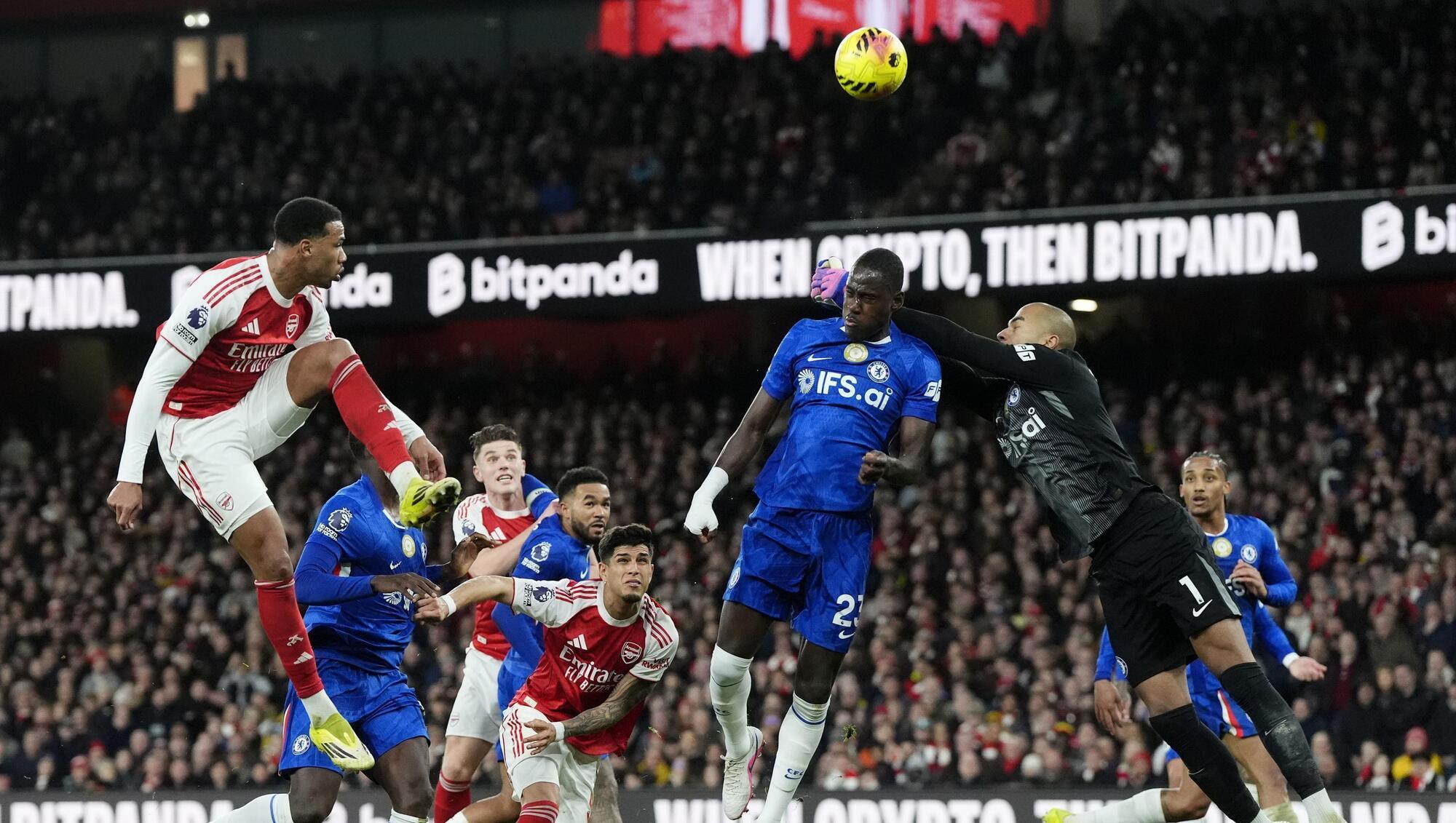
A group of people who have been sentenced to play some kind of dense, claustrophobic hate‑football in an outer circle of purgatory for the last 500 years
Is what we saw at the Emirates really the beautiful game?  

Mikel Arteta endured a nerve-wracking end to the game. Pic: Nick Potts/PA

On Thursday night at a swanky London hotel so luxuriously risk‑averse the toilets are equipped with wireless thermostats to control to within half a degree the heat of the seat, the Premier League chief executive, Richard Masters, spoke in detail for the first time about the prospect of “Premflix”, the direct‑to‑consumer model of the future, an app that will sluice this irresistible footballing opiate directly into the eyeballs of 8 billion rapt humans.

In doing so Masters was echoing the words of Todd Boehly on the same stage 12 months earlier, who had talked about the Premier League as a kind of fire stolen from the gods, source of the next great tech platform, an engine of empire, tool of world domination, of lassoing the moon out of the sky.

Well. OK. But perhaps not quite like this. Unless, that is, the world really likes hugging, set pieces and deflections. In which case: activate launch sequence. We are go.

Three‑quarters of the way through an afternoon that resembled for much of the time one of those 300-year-old Derbyshire wrestle-ball events where 2,000 tattooed men hug each other in a village high street, a thought occurred. What do you do when you only look like scoring from corners, but your attack is so blunt it can’t actually win you any corners?

The answer presented itself almost immediately. You win a free-kick that wins you a corner. Arsenal duly did this. Declan Rice whipped the dead ball in and saw it deflected behind. From the resultant corner-bundle Jurriën Timber scored Arsenal’s second corner-bundle based goal and what turned out to be a vital winner.

Chelsea had also scored from a corner-bundle. In between which there was a sense here of watching a group of people who have been sentenced to play some kind of dense, claustrophobic hate‑football in an outer circle of purgatory for the last five hundred years. And there will be plenty of criticism on this score.

First, because there must always be criticism – we need, not just victory, but the right kind of victory. But also because there is often a misunderstanding of the true of this thing. Is football actually supposed to be fun, in a light entertainment way? Should, you really be able to syringe it into an app for a six-inch screen? Has it ever been like this?

The answer is of course, no. Like it or not this title race has become an utterly moreish spectacle. The next nine games are now a space where outcome is everything, where the odd goal, a shaving of points at the final whistle will become a referendum on an entire project, an era, the characters of those involved. What are we witnessing here? A hugely dogged inch across the line for first title in 22 years? Or a grand scale slow motion choke, a self throttling, a case of failing to reach for the prize when it gets in sight?

Should Arsenal’s fans be worried? The title is also in the hands of Manchester City. And Arsenal are a paradox. Look from one angle and they have now packed away two very tough wins in the space of a week. There are nine games to go. Only two of them look notably tricky. On the other hand, why would you go about trying to win like this? Why does it have to be so hard, so painful, like watching someone run the London marathon inside a Victorian diving suit?

The Emirates Stadium was running hot at the start, on one of those drizzle‑bound days where the sky seems to be reaching down over the lip of the stand. Arsenal had to win. But for the opening 45 minutes they didn’t look like they had any idea how to make this happen, in the sense of seeking victory, not just letting it happen as a by-product of pressure and control.

For at least an hour the most extraordinary part of the spectacle was the vast amount of money, energy and expertise required to make it happen. Patterns were run. Duels took place. Football happened, guardedly. It wasn’t as though risk, joy, playfulness had been squeezed out of the spectacle. It was never supposed to be there in the first place. This was basically watching cardio happen.

Arsenal in particular had nothing off the cuff, no sense of daring, no pulling at the stitches. The negatives then, in the game of guessing what may happen from here. It is still deeply strange that this team, so supreme in defence and midfield, has no obvious attacking identity. What is an Arsenal outfield goal? What are the patterns?

Chelsea had a clear plan to press certain Arsenal players. Arsenal didn’t respond well. This is a worry. How often can you keep inching home like this? On the other hand, Arsenal did inch home. If every win is going to be painful from here, you may as well just take the painful wins. Football has always been like this. Winning takes you to a fearful, dark place.

The sense among those who want to see him fail is that Mikel Arteta’s flaw is his systems obsession, his robot-brain rigidity. What will do for him is emotion, an inability to process, like a 1960s sci-fi robot. Hal wants the airlock doors closed. Hal is playing the double pivot against a low block. Hal talks of the fun bus but has no concept of fun or buses.

In reality, this is a deeply human kind of drama. Arsenal are 50-50 to win the league from here. It will, whatever happens, be deeply gripping. It is also great that some of this might look terrible on an app on a six-inch screen, that the global eyeball market might be turned off. Give us your wrestle-ball montages, your puzzled pundits unable to finesse the product. It isn’t meant to be easy. This certainly wasn’t. But it was still a huge step towards the line.

Guardian

x

More in this section

Sport

Newsletter

Latest news from the world of sport, along with the best in opinion from our outstanding team of sports writers. and reporters

Cookie Policy Privacy Policy Brand Safety FAQ Help Contact Us Terms and Conditions

© Examiner Echo Group Limited