Dave Connell felt the FAI chill but zest for game still burns
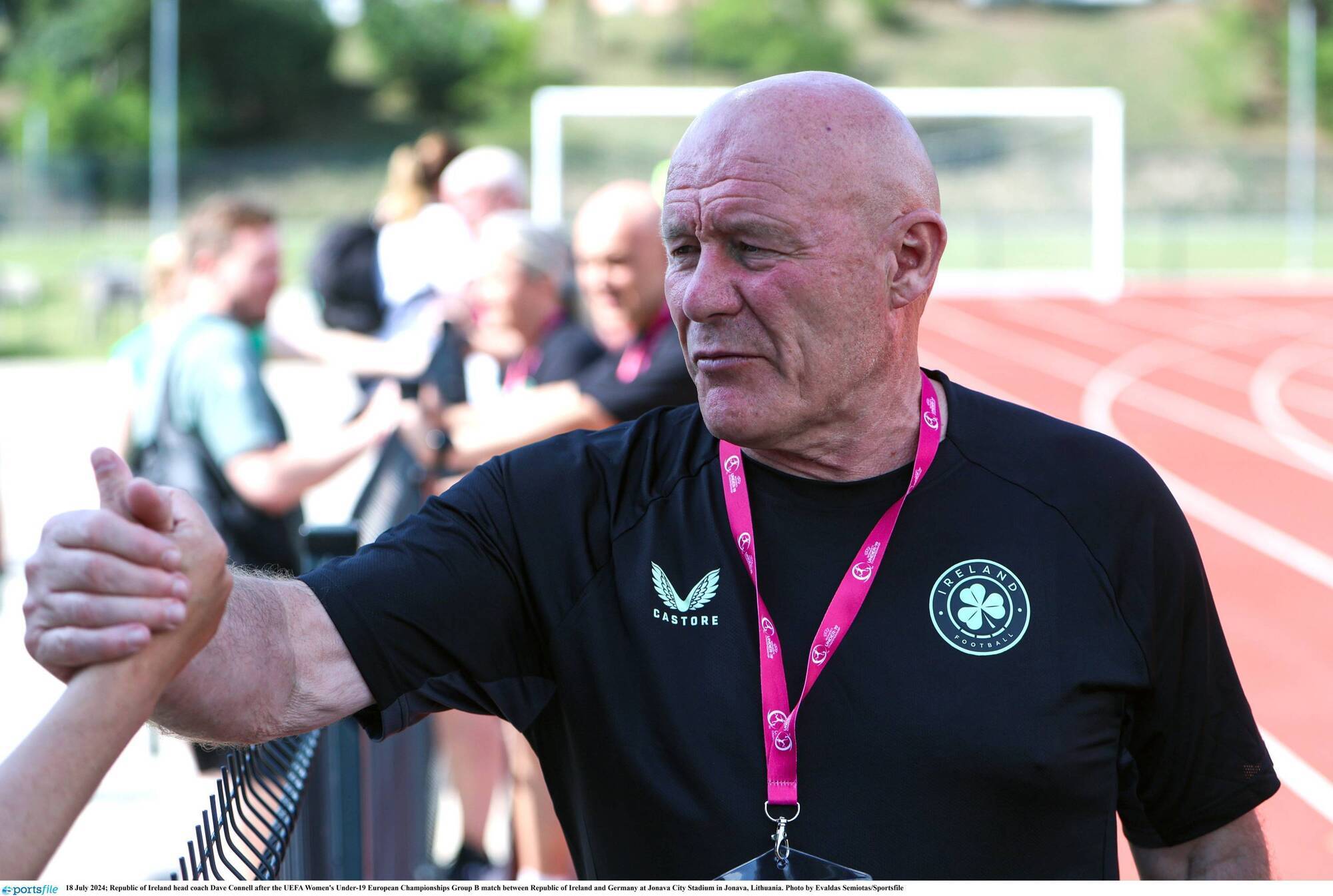
Republic of Ireland head coach Dave Connell after the UEFA Women's Under-19 European Championships Group B match between Republic of Ireland and Germany at Jonava City Stadium in Jonava, Lithuania. Photo by Evaldas Semiotas/Sportsfile
If Dave Connell was in doubt about his decision to quit the FAI after almost 20 years, they were torpedoed by the manner of his exit.
The association’s headquarters, surrounded by green space in Abbotstown, can be a gloomy backdrop most of the time but returning his car, laptop and fuel card on a cold, dark December evening to an empty building compounded the deflation.
Nobody was there to meet him. Not even a personal thank you. And still nothing.
It was difficult at that point to recall the brighter, even shinier, days.
Over 15 years managing the women’s underage teams, he’d led teams to two U19 European Championship finals, an U17 Euros and fourth at the World Student Games.
Katie McCabe was part of the 2014 generation that reached the U19 semi-final.
Connell wasn’t alone in feeling the dejection.
He was one of 100 employees to receive an email at the end of October warning their jobs were at risk.
All managers for the male and female underage squads had to reapply for their positions but the permanent contracts were changed to special purpose, diluting job security.
This, according to the FAI, was part of the ‘transformation programme’ that has since seen 40 employees depart.
“I didn’t see any future there, unfortunately,” said Connell. “I was disappointed by the way it was handled. But surprised? Absolutely not.”
The 64-year-old former Bohemians and Shamrock Rovers full-back wasn’t long out of the game. Before he’d worked out his notice at the U19 qualifiers in Bulgaria, Wexford FC were on the phone. He’s taken charge for the 2026 season kicking off in March.
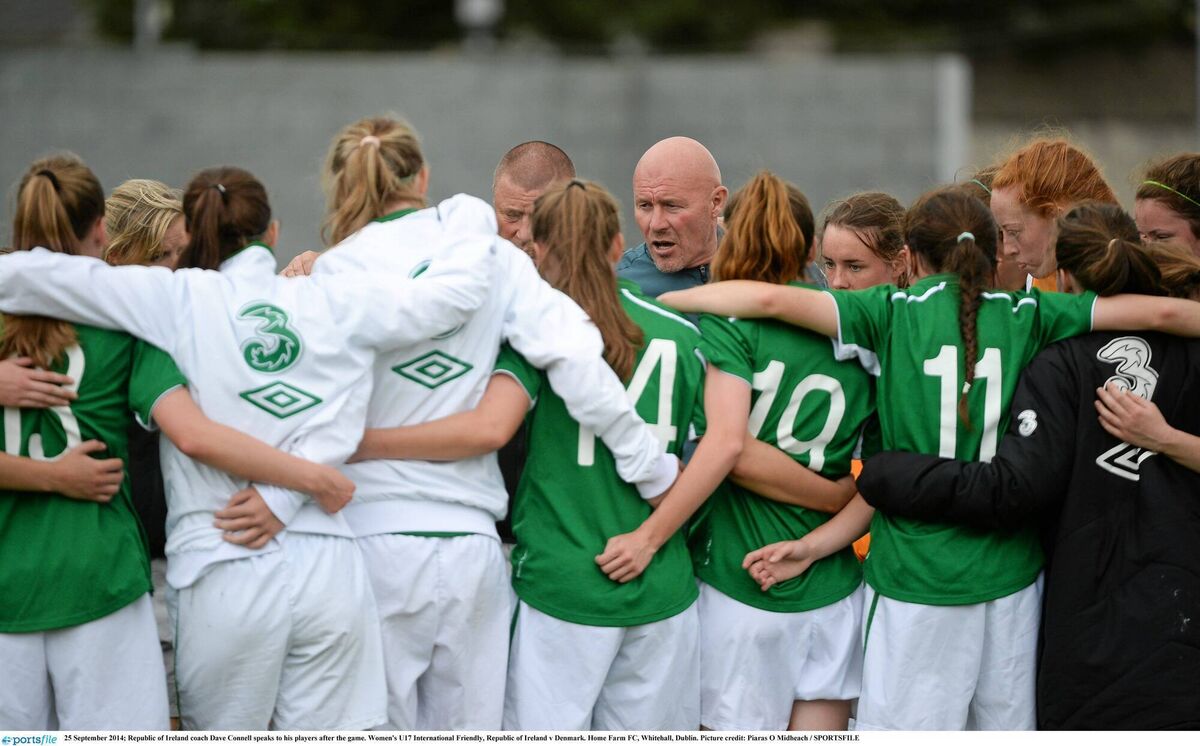
“I’m working with people now whose culture and values are aligned more with mine,” he admits.
Connell’s frustration isn’t reserved only for the current FAI hierarchy, rather a gradual decline over various regimes.
Reality on the financial front began to bite within a few years of his 2006 arrival – manifesting in annual contact days with the squad being halved from 60 to 30 - but some of the ideas he proposed for structural improvements weren’t confined to money.
The concept of entering the U19 Ireland squad into the national league, limiting players from each club to two, was floated without gaining the internal will to proceed.
It doesn’t take much time in his company to realise how fractured the international pyramid is for women and girls.
The absence of an U21 team is fuelling drop-offs but the basics of organisational functionality missing is equally detrimental.
Little, if any, interaction occurred between himself and the last three senior team managers and the executives tasked with melding the constituent parts allowed the gaps widen.
“There was plenty of talk about the importance of women’s football but not much action,” he explains.
“Lots of managers and heads of women’s football came in during my time and I was willing to help them all. But I don’t know whether I was seen as a threat.”
Promotion from within is a growing phenomenon across the international sphere. Indeed, his predecessor in the U19 role, Sue Ronan, was fast-tracked into the senior job.
It didn’t end well for Jorge Vilda at Spain after their 2023 World Cup yet he was the exemplar of a coach climbing the ladder from U17 to U19 and senior.
Twice Connell applied for the senior vacancy before Colin Bell was appointed in 2017 and Vera Pauw in 2019. For the first, he was forced to defer his holiday when an interview was hastily arranged. The second time around, the sense going into the meeting was of a box-ticking exercise.
Open competition was dispensed with thereafter.
Eileen Gleeson succeeded Pauw on a caretaker basis before being upgraded. The incumbent Carla Ward was appointed within five weeks of Gleeson being dispensed with. Marc Canham spearheaded the ‘searches’ as director of football, then was promoted to chief football officer.
Bar one meeting of all international managers, including Stephen Kenny and Keith Andrews, there were no gatherings of staff across the various teams and genders.
Engagement improved after Shane Robinson was enlisted as Canham’s assistant but Connell found the supremo’s interest in the underage set-up as threadbare.
Chief executives Jonathan Hill and David Courell kept their distance too.
It continued a pattern. Pauw was told to look elsewhere for a scout when inviting Connell to apply for a role on her opposition analysis staff for the 2023 World Cup. “If she wanted me, I’d have gone to Australia,” he insists.
One might have thought Hannah Dingley would seek opinions from the veteran underage manager, and someone who’d set up the female emerging talent programme, when brought in from England in 2024 but no. There was zero communication there as well.
As much as recent years soured his tenure, the staff and players he worked with provide the best memories. McCabe, Denise O’Sullivan and Clare Shine rate as some of the finest talent under his tutelage but out in a league in her own is a player who’s endured cancer and serious injury to regain her place in the Ireland squad.
“Chloe Mustaki was my captain for the U19 Euros in Norway – a great player but even better person,” he says.
“She was bright on the pitch and a brilliant leader, without being forceful.
"She kept things simple and carried our message through the team. I’m delighted she’s back playing for Ireland and Notts Forest.”
Football folk are also delighted that Connell, at 64, is going strong with the zest for contributing to the women’s game.
Disappointment in others occupying high places won’t suppress that enthusiasm.
CONNECT WITH US TODAY



Be the first to know the latest news and updates