Michael Carrick must shake off tactical rigidity to taste success with Manchester United
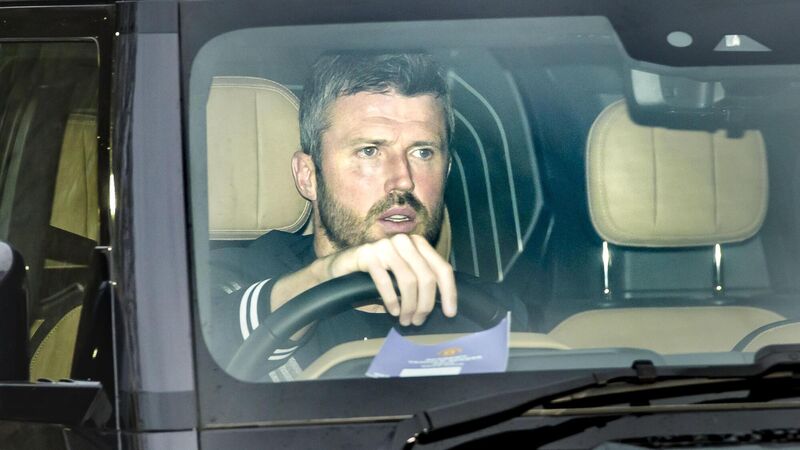
CARRICK'S AT THE WHEEL: Michael Carrick arriving at the Trafford Training Centre, Carrington on Tuesday. Pic: Danny Lawson/PA Wire.
In many ways Michael Carrick is the antithesis of Ruben Amorim but Manchester Unitedâs incoming interim head coach does have something significant in common with his Portuguese predecessor.
Like Amorim, Carrick has proved remarkably resistant to tactical change. So much so that at Middlesbrough the former United and England midfielderâs determination not to compromise a philosophy constructed around a patient, possession-heavy passing game arguably cost him his job.
After Boro finished a disappointing 10th in the Championship last season, the owner, Steve Gibson, and his board instigated an in-depth review of the season. All the indications were that there was a marked reluctance to sack the much-liked and respected Carrick.
It took more than a month until the managerâs dismissal in early June. Even then there were suggestions that a turning point arrived only when, during a series of meetings, Carrick seemed disinclined to alter the teamâs style.
At its best that vision was easy on the eye. During Carrickâs early days in charge, after succeeding Chris Wilder in October 2022, Boroâs pass-and-move approach had the Riverside Stadium rocking as they rose from 21st in the second tier to finish fourth, reaching the Carabao Cup semi-finals the following season.
As Boro prepared for a playoff semi-final against Coventry in May 2023 the clubâs biggest concern was whether Gibson could ward off interest in Carrick from bigger clubs, but Boro failed to perform in that tie and finished an underwhelming eighth in 2023-24.
By the end of last season they had dropped further and a postmortem proved unavoidable. The managerâs internal supporters â and he had plenty â cited the destabilising impact of the February sale of Emmanuel Latte Lath, Boroâs key striker, to Atlanta for a club-record ÂŁ22.5m.
Those Carrick advocates reminded colleagues of the way his coaching had transformed Latte Lath almost beyond recognition. Tellingly, the game of midfielder Hayden Hackney, now ÂŁ25m-rated, underwent a similar metamorphosis and Aston Villaâs outstanding Morgan Rogers has publicly thanked the 44-year-old for turning him into a future England forward during a watershed interlude at the Riverside in the 23-24 season.
Although injuries contributed to a destabilising churn in Boroâs defensive and goalkeeping departments last season, there was a sense the manager had not always made the most of his resources.
Before Latte Lathâs sale, his net spend was ÂŁ8m, but it was not lost on the board that lower-spending teams including Bristol City, Millwall, Blackburn and, notably, Sunderland had finished above the them in the Championship.

Sunderlandâs promotion with a young, inexperienced side expertly coached by a highly flexible manager in RĂ©gis Le Bris prompted particularly awkward questions.
More positively, Carrick was regarded as a man of rare integrity who inspired loyalty in the dressing room and boardroom. His arm-round-the-shoulder style of man-management helped rebuild the squadâs confidence and his air of quiet, measured authority went down well with staff.
Everyone was impressed by Carrickâs sincere commitment to community and charity work, but the media training he had undergone as a United player dictated he was perhaps overcautious with journalists.Â
Such unnecessary circumspection arguably did him no favours with supporters, but journalists found it difficult to become irritated with a man who, for all his lack of candour, was unfailingly polite, affable and far too classy to indulge in the sort of patronising putâdowns beloved of certain peers.
More than one Championship manager hinted that Boro were simply âtoo niceâ and âtoo predictableâ. Sunderland did a league double over Boro that highlighted Carrickâs poor in-game management, manifested in a slowness to alter configuration and make substitutions.
Le Bris suggested before facing Boro for the first time, in September 2024, that they had âonly one distinct way of playingâ. The Frenchman explained after beating them 1-0 at the Stadium of Light how Sunderland had hit back by swapping an aggressive high-pressing game for a contain-and-counter approach that involved ceding Boro considerable possession.
âThis was a game against a strong team, a very interesting team, who are very strong in possession,â he said. âIt was clear they have a preference to keep the ball especially in the central corridor so we decided to close that part of the pitch.â
When a fluid Sunderland, invigorated by Enzo Le FĂ©eâs talent, won the return 3-2, Carrick appeared close to tears in the press conference. Two months later, Boro lost 1-0 at Millwall and the home manager, Alex Neil, made some telling comments interpreted by some as a reflection on Carrickâs modus operandi.
âI donât really buy into this whole philosophy crap,â he said. âMy job is to come up with a system that suits my players.â Neil helped Millwall win that match courtesy of gamechanging substitutions and a switch of system, but Carrick rarely seemed able to conjure similar surprises.
As Prestonâs manager, Paul Heckingbottom, put it before a 1-1 draw with Boro in September 2024: âMiddlesbrough are a good side. Michael clearly has his vision and nothing much changes in how he wants to set up and play.â
In mitigation, it was Carrickâs first managerial role after an apprenticeship coaching at Old Trafford under JosĂ© Mourinho and Ole Gunnar SolskjĂŠr followed by three unbeaten games as Unitedâs caretaker manager.
On leaving Manchester, Mourinho had bequeathed him his old whistle and a packet of headache pills. Carrick kept those gifts by his side at Middlesbrough and they are likely to accompany him on a mission not merely to kill the pain inflicted by his Championship stumbles, but to reignite his coaching career.