Alfie Hale: The real story of how Roy Keane signed for Cobh Ramblers
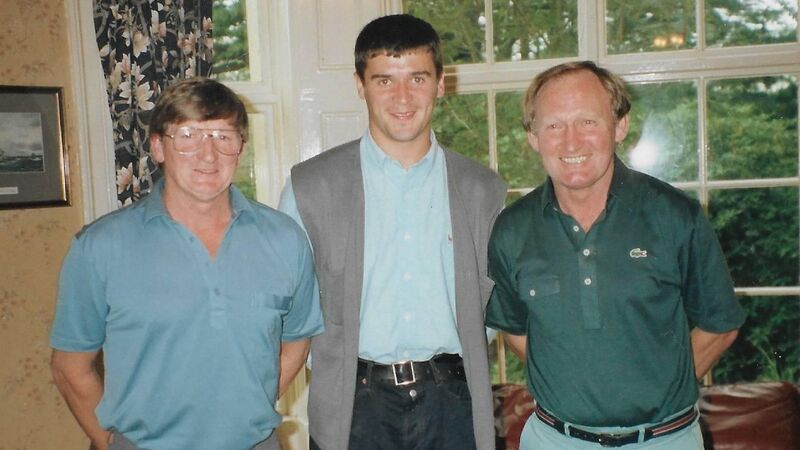
Alfie Hale (right) and Paddy ‘Stinger’ Ryan pictured with recent Manchester United signing Roy Keane in Waterford in September 1993. Alfie was impressed by Roy’s potential while managing Cobh Ramblers.
It’s the summer of 1989. I had just completed my first season as Cobh Ramblers manager which, unfortunately, had concluded in our relegation from the Premier Division, so my thoughts had quickly turned to the new campaign.
Roy Keane, one of a trio of footballing brothers alongside Pat and Denis, was 17 years old when he came onto Cobh’s radar. Mossie, Roy’s father, sought me out for a chat about his three boys, with much of it focusing on Roy. "He’s with Cork City, Alife," Mossie told me, "but he’s not getting a look in there and all he wants to do is play football. So I’m wondering would you be interested in bringing him to Cobh?"
Critically, Roy was only with Cork City on amateur terms but they would still have to be willing to let him go before I could consider him for Cobh. I told Mossie to send his boy out to me for a training session. "You won’t regret it, Alfie," Mossie replied. "I know you’ve always been great at giving young fellas a chance."
Timing was everything when it came to Roy becoming a Cobh player. That summer, the Irish government had established a new FÁS academy programme that young League of Ireland players (mainly aged from 16 to 18) were eligible for. Every club in the league was asked to recommend a player or two for the scheme, which took place in Dublin, with the FAI covering the players’ travelling and overnight expenses. Cork City wanted to sign Roy but he felt he was going to get a better opportunity elsewhere – and the fact that they’d given their FÁS slot to another player played into Cobh’s hands. And once Roy knew he could sit the course through Cobh, that made up his mind. And I have to give Eddie O’Rourke, Cobh Ramblers’ youth coach at the time, his due here. Eddie had been monitoring Roy’s progress since his days playing for Rockmount and had been urging him to leave Cork City for quite some time. Collective persuasion served Cobh well on this front.
I’d a good relationship with Waterford Crystal AFC and the club made their facilities available to Cobh’s Waterford-based players for training, which I was very appreciative of. As part of that agreement, I brought Cobh up to Waterford for a pre-season friendly against ‘The Glass’ and Roy was part of the starting team that evening. Roy played very well but to me he didn’t look any better than Paul Cashin on the night. However, Roy was so tidy; he’d win and control the ball and, as he’d later put it himself, pass the ball to a better player. From the off, he saw himself as a link man between defence and attack, always passing forward – of course, in the fullness of time, we’d all see just how great a player he was.
A few days later, we played West Bromwich Albion and Roy had retained his place in the starting XI. Brian Talbot was in charge of West Brom at the time while Keith Burkinshaw, who had become a great friend of my brother Dixie since their days playing together for Workington, had also travelled over to watch the match. Keith, who went on to be assistant manager and manager at West Brom, remains the most successful Tottenham Hotspur boss since the great Bill Nicholson thanks to his two FA Cup and UEFA Cup victories. I knew Keith very well and had a word with him before the match about keeping an eye out for both Roy and Paul Cashin.
"They’re two terrific players, Keith," I said. "And I’ve no doubt that they’re both good enough for English football." The match ended 2-2 and both Roy and Paul, in the middle of the park, were excellent. After the match, I mentioned both of the lads specifically to Brian Talbot but he told me: "I’m not interested, we have our own lads."
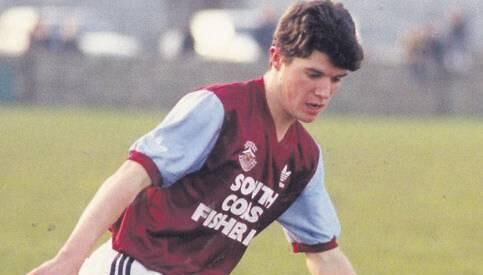
Straight after the match, I took Roy to one side for a word and explained why it was important for him to sign professional terms with Cobh. "I’ve got to know whether you’re 100 per cent committed or not," I said. So I offered Roy £20 a week. "No, Alfie. I want £40." I was slightly taken aback – Roy still hadn’t played a single minute of League of Ireland football. So I spoke to club secretary John Meade and explained the situation with Roy. "I’ll stop you there, Alfie," said John. ‘We don’t pay young lads."
By then, I reckon I was looking at John the way Roy had been looking at me after the initial offer. "So you’re prepared to let him go, even if he’s better than any other player that’s on our books? I don’t understand how this can be club policy; I don’t agree with it at all. I’ve spoken to Roy’s father; I want to sign Roy because I believe he’s a good player who will do a very good job for us." John replied: "If you sign him, it’s on your head. And secondly, there’ll be no increase in the budget so you’ll have to let one or two players go."
I knew there was one or two lads I was prepared to let go anyway but kept that to myself for the time being. I went back to Roy and didn’t varnish it: I told him the club didn’t pay lads at his age. "So what am I going to do?" he asked. I replied: "I’ll sign you and give you £30 a week. I can’t give you £40; I might be able to get you a £5 winning bonus but £30 is the offer." Thankfully, Roy, a precocious, serious lad who knew he was a good player, decided to sign for Cobh Ramblers.
In recent years, Roy has spoken about supporting Tottenham Hotspur in his boyhood and how much he admired players like Glenn Hoddle and Clive Allen. Had Spurs paid attention to me during the summer of 1989, they could have bought a future British transfer record holder for a song. John Hollins, the former Chelsea and Arsenal player, had been with me at Cobh during 1988/89 but left to work for Spurs as a coach. When word got out that Roy was signing for Nottingham Forest, John rang me and asked why hadn’t I mentioned Roy to him.
But the thing was, I had – three or four times before Forest had come in with an offer. "Sure you’re only listening now on account of Forest making a move," I said to John. To the best of my knowledge, John did contact Roy but by then, his mind was made up. He was heading to Nottingham, signing for £30,000, with a further £17,000 added to the fee if he made 20 first team appearances and won five senior caps with Ireland. A pre-season friendly between Cobh and Forest the following summer was another sweetener in the deal. The club should have got a lot more than, but I’d left by then so I was hardly going to be consulted about how many clauses the transfer should have included.
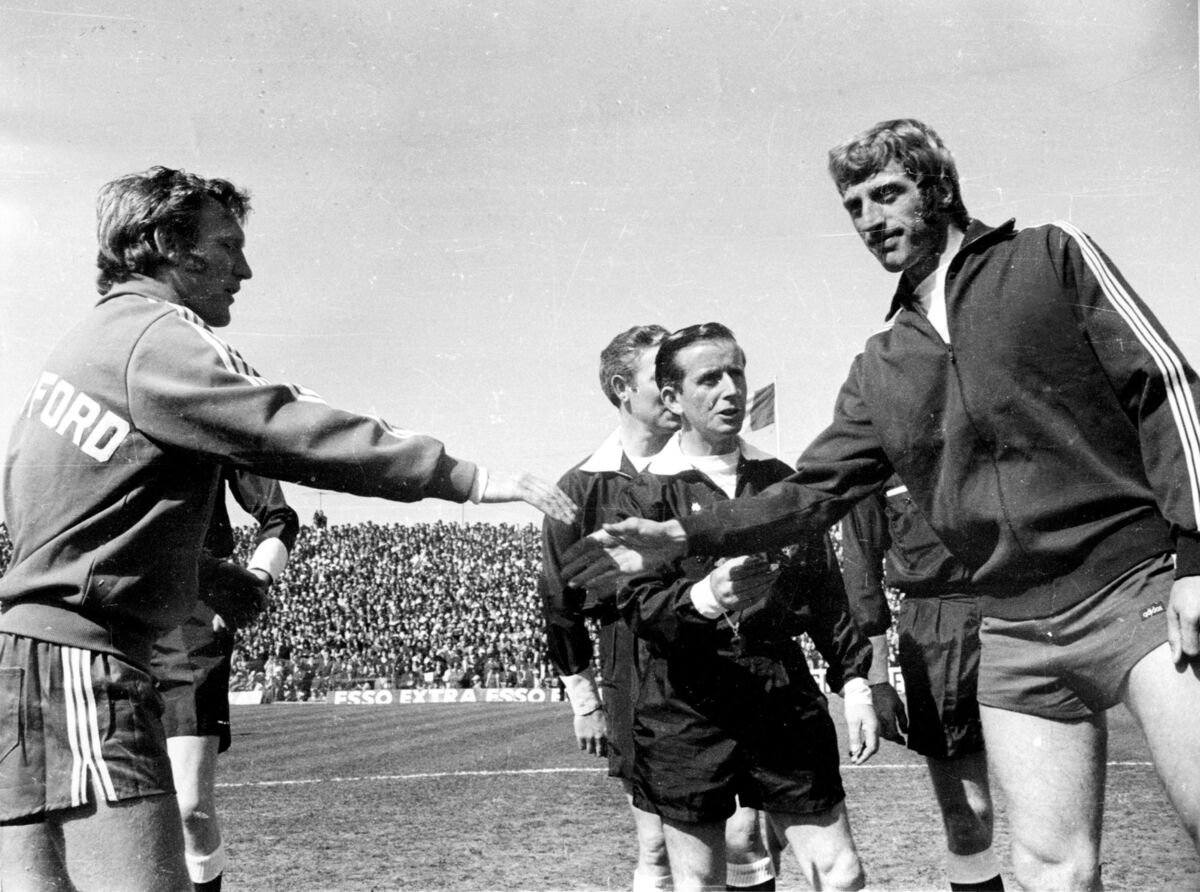
In the intervening years, the story of Roy’s move to Cobh has generated varying accounts. More than a few people have put it to me that I didn’t sign Roy for Cobh; claiming instead that John Meade had signed him. But I know if I hadn’t had that conversation with Roy after the West Brom match about signing professional terms with the club, he could have left Cobh for absolutely nothing. I gave Roy the opportunity to play League of Ireland football but what he went on to achieve after that was mainly down to himself, then Brian Clough, followed by Alex Ferguson. The coaching he received at Rockmount, along with Forest scout Noel McCabe, who saw Roy play in a youths’ cup match at Belvedere is where the real credit lies in terms of Roy’s early development.
But I know my chats with both Mossie and Roy made positive impressions, so much so that Roy assured a Waterford audience in 2015, during a Q&A session alongside Martin O’Neill, that he had signed for Cobh following a conversation with me. "I signed for one man and one man only - that was Alfie Hale - and I’ve an awful lot to thank him for," Roy said that night. "And if he was here tonight, I’d thank him personally."
Just after he had signed for Manchester United in the summer of 1993, Roy was in Waterford at the invitation of Seaview Celtic FC and he arranged to meet Paddy Ryan - a long-time member of my backroom team - and myself in a hotel just outside the city later that day. "I just wanted to say thank you, Alfie," Roy said, and that meant a lot to me.
Over the years, our paths have crossed a few times and he’s always been great company. Roy’s success speaks for itself. What a great player he was – and he never forgot where he came from. Roy knows what happened at Cobh and so do I. I signed him. And the rest is history.
League of Ireland glory with Cork Celtic
Winning my sixth League of Ireland medal in Cork Celtic colours in 1974 (whom I’d joined the previous December) on the back of a 21-match unbeaten run was truly a case of everything coming together at just the right time. Having lost 7-0 to Bohs in the second round of games, to go all the way from there to the championship presented quite the turnaround.
We claimed the title with a game to spare thanks to a 3-0 win over St Patrick’s Athletic before a 5,000-strong Turner's Cross crowd. I opened the scoring in the 25th minute, with John Carroll and Bobby Tambling adding to our tally to secure the club’s maiden League of Ireland crown.
The following night, a reception to mark our title win was held at Murphy’s Brewery, with several speakers – including myself – joining in the revelry. And a great night was had by all.
The family of club chairman John Horgan had suffered a bereavement in the closing weeks of that season. He’d made a huge investment to bring the club up to such a level and as far as I was concerned, he’d earned the league medal more than I had. I made it known to Club Secretary Donie Forde that I wanted John to have my medal. To this day, I actually don’t know if John ever received it. I can only hope he did.
I got to play with a lot of good players, but John Giles stands out due to his skill and his brilliant attitude towards the game. John was an awesome footballer. We’ve known each other since 1959 and he’s a man I hold in the highest respect. Back in those early days, anyone with an interest in Irish football wanted to see John play and heaven only knows the transfer fee he’d command in the modern market. He’s one of the most intelligent sportsmen I’ve ever met and away from football, John wears his general knowledge very lightly.
When talk of the Republic of Ireland’s best ever player comes up, for me, it’s John Giles given the application of his talent, how brilliantly he read the game, and his on-field leadership and influence for both club and country. John always means what he says and he’s an exemplar of the moral courage he regularly referenced during his TV punditry on RTÉ.
For me, John spearheads the ‘Blessed Trinity’ of Irish midfielders, joined by Roy Keane and Liam Brady while Jackie Carey and Paul McGrath deserve honourable mentions for their skill and versatility. But John was the complete package. Just outstanding.
Within 24 hours of his appointment as Republic of Ireland manager in 1986, Jack Charlton picked up the phone and asked me (on a recommendation of then Southampton manager Lawrie McMenemy) to become his ‘number two’. I thanked Jack for the offer but politely declined. In hindsight, it was just as well I did given the way Jack undermined Liam Tuohy, a long-time friend of mine. Not too long after his appointment as senior manager, Jack took over a half-time team talk while Liam’s Irish youths team were trailing 2-0 to England at Elland Road. Liam, who understandably felt undermined, resigned immediately and returned to coaching at Home Farm. Jack was out of line that night and Liam, a great servant of Irish football, certainly deserved better. Jack, whose success with Ireland hardly needs repeating here, became a good friend of mine subsequently, while Maurice Setters served as Jack’s assistant from 1986 to 1995, taking in two World Cups and a European Championship.
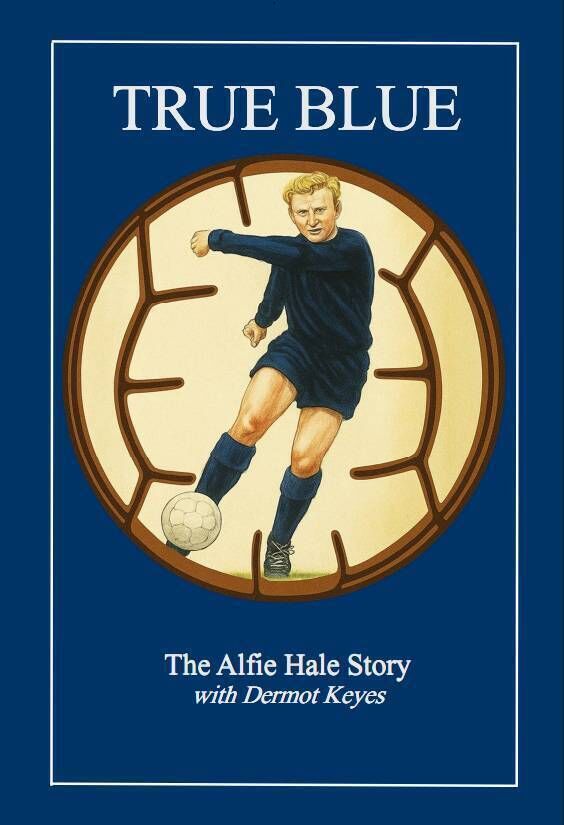
will be launched at The Book Centre (Waterford) on Friday, November 21st.
CONNECT WITH US TODAY



Be the first to know the latest news and updates