League of Ireland director Mark Scanlon: Disparity in UEFA solidarity fundings isn’t ideal for Cork City
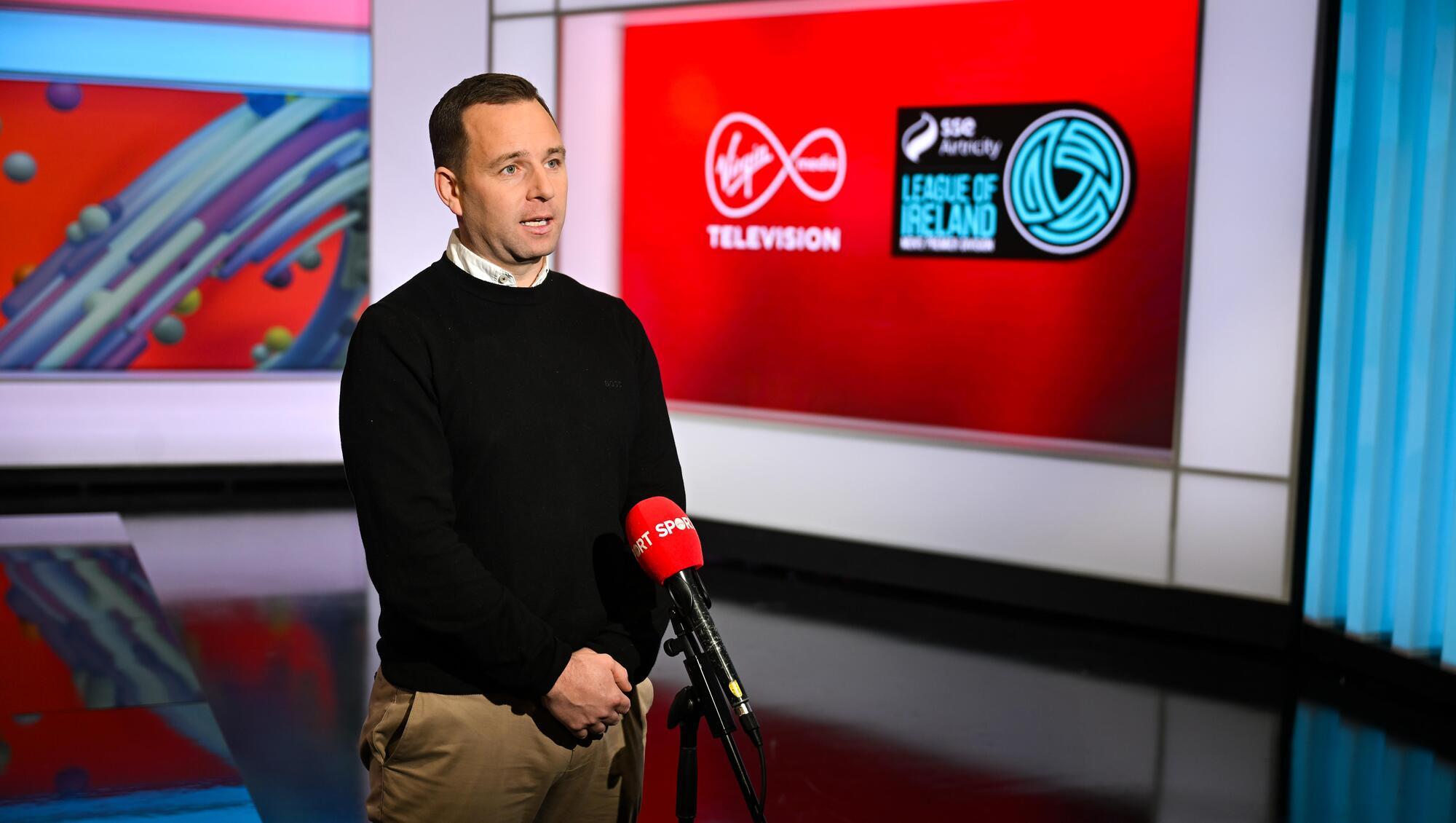
NO INCREASE TO PRIZE MONEY: Pictured at the announcement of Virgin Media Television's new deal is League of Ireland Director Mark Scanlon. Photo by Stephen McCarthy/Sportsfile
League of Ireland director Mark Scanlon admits the disparity in Uefa solidarity fundings isn’t ideal for newly promoted teams like Cork City.
Within a league starved of investment, the European governing body increasing their payout from four to seven percent of blockbuster broadcast deals to member associations is a boon for Irish clubs.
Well, it is for top-flight clubs.
That hike sets the overall pot for Irish clubs at €3.05m, with an extra €700,000 earned by virtue of champions Shamrock Rovers marching through European competition to the Conference League playoff.
What comes with that boost is a change of Uefa criteria. Whereas all of the 20 men’s clubs received an equal share - €72,500 in 2024 – the new cycle weighs the payout heavily in favour of Premier clubs.
Despite voting internally to permit the maximum 15% to First Division clubs, they will be worse off under the enhanced package, their annual sum reduced to €45,840.
Not only will the Premier clubs see their earnings rocket to €288,622 but the Rovers revolution swells their yearly largesse to €356,399.
Cork City, as First Division champions, won’t benefit next month when the cheques are written. It will be relegated Dundalk, still tackling non-football liabilities from last year, who’ll be in the money, as Ireland’s season is one of 20% under Uefa’s umbrella operating a summer format.
“That scenario isn’t ideal for a club coming up trying to compete at that level because they’re starting €240,000 behind,” said Scanlon. “Unfortunately the structure is such that we’re a year behind.”
Another tweak applying as part of the new package is that monies no longer must be allocated to youth development. Any manager interpreting that change of condition as freedom to boost into first-team budgets will be disappointed.
“It cannot be used for senior player wages,” asserted Scanlon.
The areas allowed for the spend are finance departments, youth team structures, medical care, child protection, training facilities, women’s football activities, supporter liaison officers and social responsibility.
One distinction from the men’s, based upon that list, is that the cost of coaching in the women’s senior league is allowable.
That was the only welcome news on the financial front, for the LOI’s new TV deal with Virgin Media won’t translate into increased prize-money.
Earlier this week, the FAI announced a landmark four-year package that guarantees for the first time all 36 series of the season including a live televised game. State broadcaster RTÉ were only prepared to show 20 matches as part of their pitch.
This season, kicking off on February 14, will see prize money remain static. A paltry €125,000 is paid to the Premier Division champions, with the FAI Cup winners receiving €32,000 plus a share of the final gate receipts.
With the FAI still shouldering €42m of debt, scope for outlay is limited.
Scanlon was keen to stress other financial support to clubs such as travel and academy grants as well as the abolition of affiliation fees.
“We don’t just put funds into prize money,” he said.
“If we just put it into prize money, then all of a sudden we’re taking away any criteria that we have and it can just be spent on wages. That’s not sustainable.
“We don’t want to get it to a stage where we put all of the money into the prize fund because if you have for one particular year, clubs expect that level.
“We want to ensure that some of the funding that is distributed is spent in specific areas.
“Everything that we’ve brought additionally, in terms of broadcast and commercial, we will make sure it gets spent back in the clubs.” Asked if there were plans to increase the prize pot, he replied: “Yes, we do. We’d love to get additional commercial partners in. That will take time and hard work.
“We’ve done a lot of that over the last few years. There is real positivity around the league right now and we will try to utilise that to bring in more partners and more funding. When we do that, it will go directly back to the clubs.”
Virgin’s first tranche of live games will be announced on Wednesday, with a double bill of Shelbourne’s opening title defence against Derry City on Valentine’s Night, as well as the Dublin derby between Shamrock Rovers and Bohemians at the national stadium two days later, expected to act as their launchpad.
There’s still no white smoke on the funding of LOI academies that consumed much of last year’s discourse.
Mixed messages emerged from Sports Minister Thomas Byrne on the FAI’s €8m-per-year request but there’s likely to be a different deputy appointed to the portfolio, potentially Niamh Smyth.
“With the timing of the election and formation, we haven’t had the opportunity to sit down with the new minister,” he said of an overall department led by Limerick TD Patrick O’Donovan.
“Hopefully that will happen in the next couple of weeks - and we progress from there.
“We’d be confident and are pushing for that investment as soon as possible. Hopefully that comes within 2025 but we’re encouraged by Academy funding being mentioned in the programme for the government.
“We wouldn’t be certain on that (2025) as we don’t have a guarantee after submitting our proposal.”
CONNECT WITH US TODAY



Be the first to know the latest news and updates