Is Ruben Amorim right? Is this really the worst Manchester United team of all time?
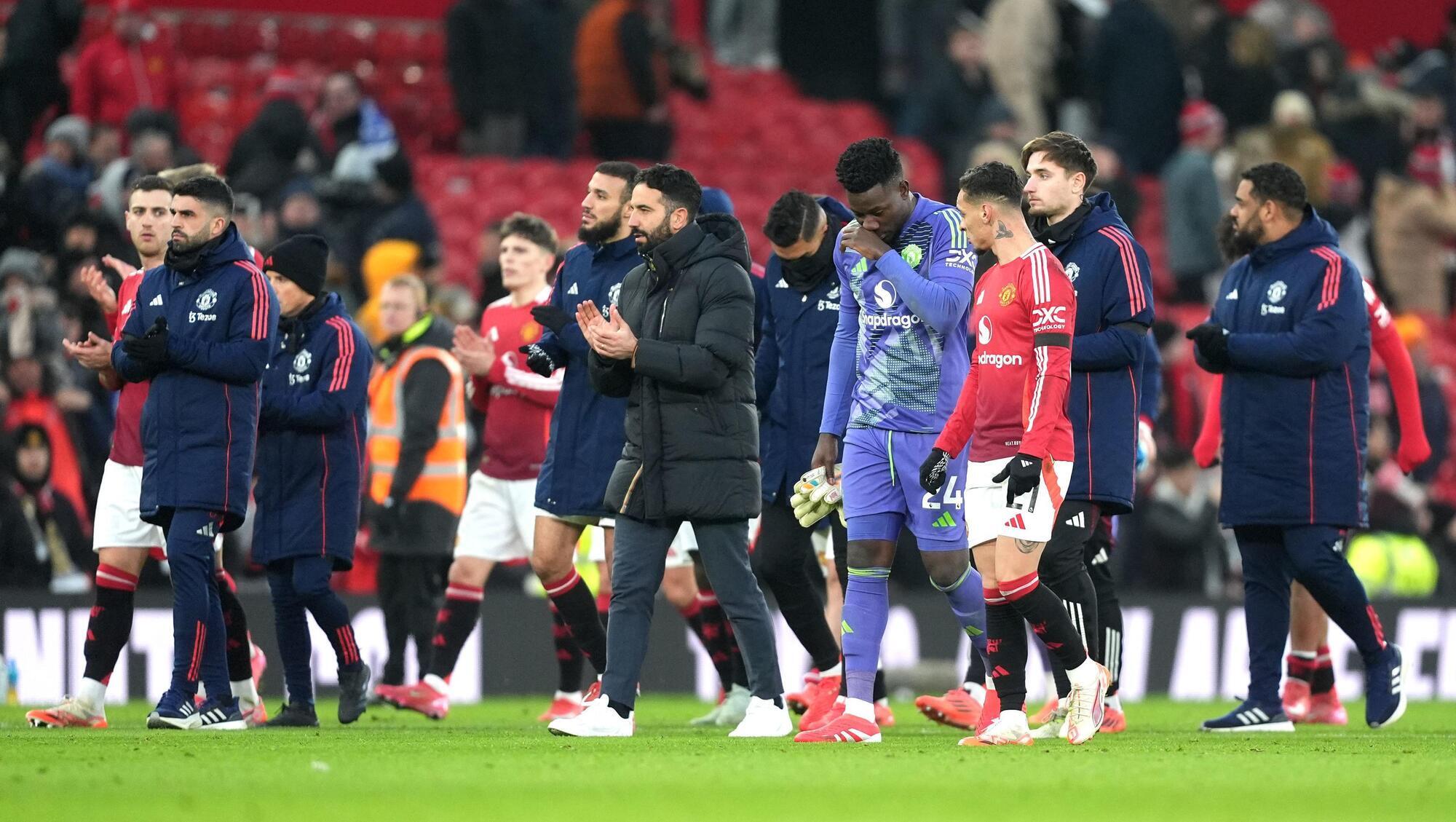
WORST UNITED TEAM EVER?: Manchester United manager Ruben Amorim and players applaud the fans. Pic: Martin Rickett/PA Wire.
If United’s current state feels like a lost decade, then the 1930s were its progenitor, much of it spent in the second tier, fans yearning for the early 1900s glory years under Ernest Mangnall, one of only three United managers – with Matt Busby and Alex Ferguson – to win the league title.
United finished last in the First Division at the end of the 1930-31 season, winning seven games, losing their opening 12, conceding 115 goals, the manager Herbert Bamlett, better known as a referee, sacked with six fixtures to play.
The previous owner, John Henry Davies, who had funded the Mangnall years, had died in 1927, stretching finances. According to the author and broadcaster Eamon Dunphy, the final game, against Middlesbrough, drew 3,900 to Old Trafford, marked by an “uncanny atmosphere” with “the shouts of derision echoing through the empty grandstand”.
United would spend the next couple of seasons fighting off relegation to the Third Division North.
The years that followed the 1958 Munich Disaster harmed the understudies to the Busby Babes, cutting short the careers of talented youngsters such as Alex Dawson, Ronnie Cope and Mark Pearson by overexposing them.
Not that the fateful event was ever mentioned within United. Busby, still mired in grief, visibly affected by the injuries sustained at Munich, was known by his players as “the Old Man”. He was still in his early 50s. His lack of belief in modern tactics meant he continued to demand his team “keep it simple” and “give it to a red shirt”. Noel Cantwell, signed from West Ham’s academy of football thinkers, asked the young professional Dunphy: “How do you find a red shirt if you haven’t worked on it?”
These were insurrectional times with Bobby Charlton going through a career dip and the banishing of the maximum wage making United players realise that Busby was not a benevolent man. United finished 15th in 1961-62, a run to the FA Cup semis a fig leaf for a relegation battle.
“It’s very good to have you around,” Charlton told the late Denis Law, signed that summer. “It went against the idea the club would never again touch the levels of consistent brilliance,” he wrote later.
Six years after winning the European Cup, United plunged to the Second Division. If Law’s backheel for Manchester City did not confirm relegation – results elsewhere had sealed United’s fate – it remains symbolic.
The last of the holy trinity of Law, Best and Charlton had departed in January 1974, Best walking out after Tommy Docherty, the manager, dropped him, claiming he had turned up drunk and in female company for an FA Cup tie.
Best, who later said he sobbed in the stands, would forever protest his innocence. United’s fate was already signposted: Charlton’s final matches the previous season were spent averting relegation. Lou Macari, signed the previous January from Celtic, would remark: “The discipline was much more lax, the quality of training much poorer.”
When it became clear United, who could not score goals, were headed down, Busby, still the patriarch, his pipe smoke filling the halls of Old Trafford, told Docherty that United must go down playing “the right way”: attacking football.
It made no difference and, in Charlton’s words, United had become the “laughing stock” of football.
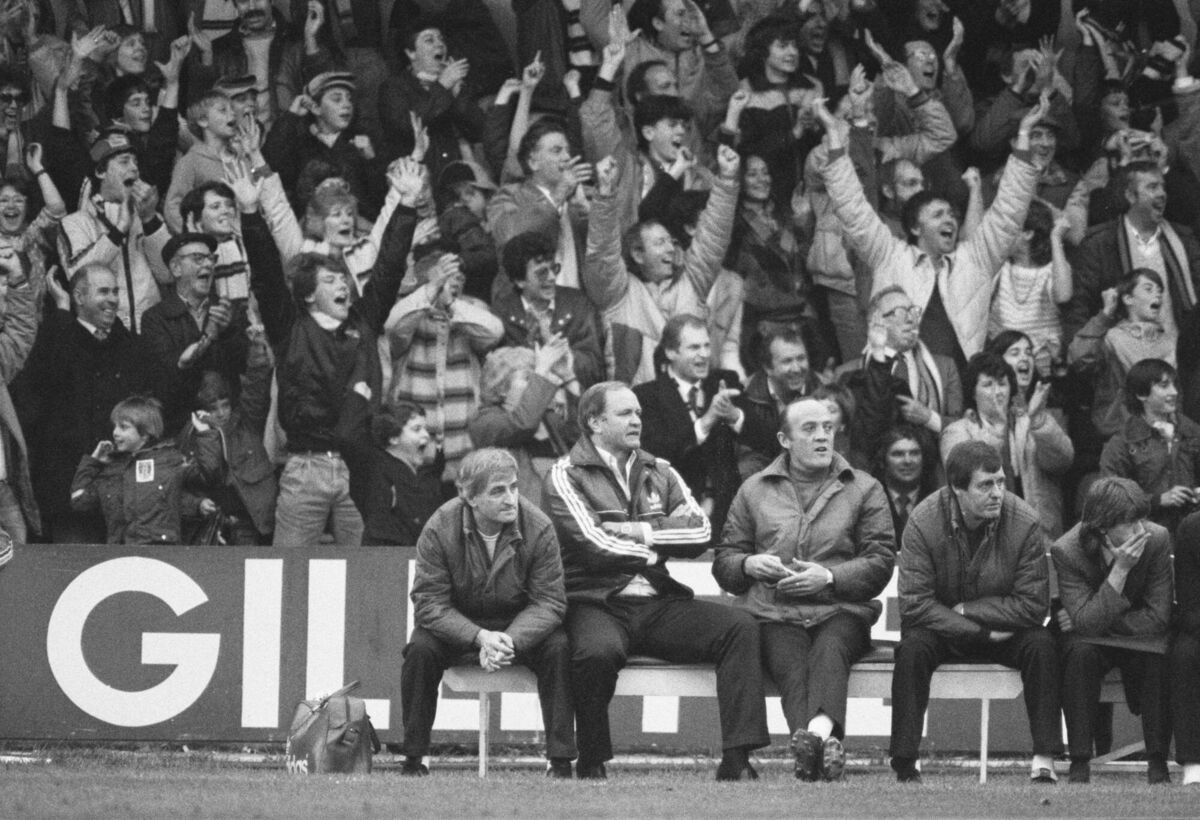
The mid-1980s are well regarded by United fans, an era of FA Cup wins and snotting the nose of otherwise dominant Liverpool.
They were also a time of underachievement. Far less talented United teams won the Premier League than the one from 1985-86 with a spine of Paul McGrath, Bryan Robson, Norman Whiteside and a young Mark Hughes.
That season United had won the first 10 matches of the First Division season but finished fourth. The former United player Paddy Crerand’s Altrincham pub was just one of the regular haunts of a group that played hard on and off the field.
Ron Atkinson was an indulgent manager who kept the club’s sun bed in his office. With Hughes sold to Barcelona, Robson recovering from a shoulder problem aggravated at Mexico 86 and Whiteside also sidelined, United began the following season in ruinous form.
“We are not fickle enough to sack a manager on the strength of three games,” said the chairman Martin Edwards after three opening defeats. On 6 November, Atkinson was removed “in the best interests of club and fans”.
The end was celebrated by a party in Atkinson’s office, the sun bed doubling as a drinks trolley, and though not all Atkinson’s players were invited, Alex Ferguson, on meeting his new charges the next morning, noted “a few of those excluded had no difficulty in generating a celebratory spirit among themselves”.
A pattern of United’s post-Ferguson managers is improvement followed by regression. Ferguson himself did the same, and modern football might well have cut him down before any glory years could occur.
A runners-up spot in 1987-88, Brian McClair netting 31 goals, was followed by mid-table mediocrity, and 11th place. Paul Gascoigne had opted for Tottenham and Hughes’s return only divided the goals with McClair; they scored 16 each.
A brief flush of the original-issue Fergie’s Fledglings – Tony Gill, Russell Beardsmore, David Wilson, Giuliano Maiorana, Lee Sharpe – gave hope. All bar Sharpe failed to live up to their promise. Long-time United fans will recall the cult of Ralph Milne.
Short of answers, Ferguson signed Milne, a winger brilliant in Dundee United’s run to the 1984 European Cup semis. Milne, struggling with the personal issues that led Jim McLean, an even tougher disciplinarian than Ferguson, to jettison him, became just the latest player swallowed up by what was an emptying, discontented Old Trafford.
“I couldn’t look round the dressing room and say, hand on heart, that the team mirrored me in any shape or form,” wrote Ferguson later.
“We are the worst team maybe in the history of Manchester United,” said Ruben Amorim, staring ignominy fully in the face after Sunday’s defeat by Brighton. His seventh defeat in 15 matches continues the worst start made since John Chapman took the reins in the 1921‑22 season and ended the campaign relegated.
Marcus Rashford’s continued exile recalls Best’s, the most famous player disbarred by a manager who, like Docherty 51 years ago, wants a clearout. Is relegation a possibility? It’s perhaps unlikely, with Southampton and Leicester also finding a new manager is no cure. But it’s not impossible.
Amorim, in defeating Manchester City in the league, beating Arsenal in the FA Cup and drawing with Liverpool, has shown his tactical plans can work. Losing badly to Brighton and Bournemouth shows his squad, so indelicately constructed, struggles with the Premier League’s more progressive outfits.
The talismanic Amad Diallo, and the use of the counter against bigger sides, may save Amorim. With Sir Jim Ratcliffe unlikely to spend big amid profitability and sustainability concerns, there appears to be a longer way back than from any previous slump.

CONNECT WITH US TODAY



Be the first to know the latest news and updates