From behind the iron curtain: how a motley crew of Yugoslav players began the foreign influx into English football
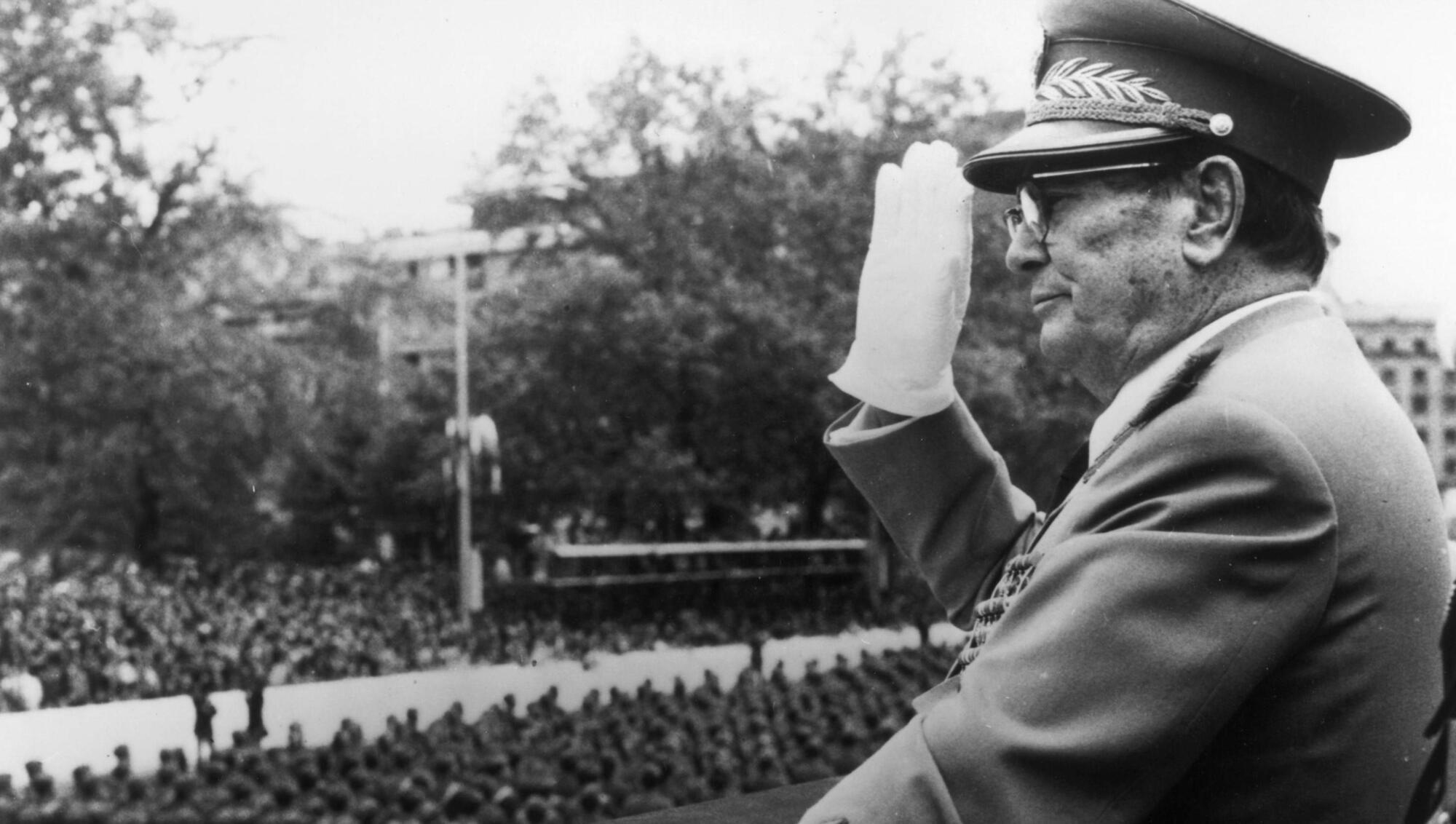
IRON WILL: Yugoslav statesman and president, Marshal Tito salutes as troops march past at a military parade at Belgrade to mark the 30th anniversary of liberation.
IN the early ’80s, a raft of Yugoslavs plied their trade in English football. They came in different shapes and sizes and enjoyed varying degrees of success in English football. There was ‘big’ Boško Janković, the balding Middlesbrough striker who became an unlikely cult hero for Aston Villa fans when he scored a brace of goals against Ipswich in a 2–1 victory in the final game of the 1980–81 season, as Bobby Robson’s men conceded the title to Ron Saunders’s team. Gigantic defender Nicola Jovanović, a £300,000 purchase from Red Star Belgrade, became the first non-Brit/Irishman to play for Manchester United.
A back injury meant that Jovanović was jettisoned by United after just 30 often-underwhelming displays. Midfielder Ante Miročević scored for Sheffield Wednesday in the loss to Brighton in the 1983 FA Cup semi-final. He loved going fishing with manager Jack Charlton near Barnsley and enjoying copious amounts of ale and whisky chasers. ‘I’d drink ten, twenty a night and then we’d train the next day. That’s what England taught me, how to drink and play,’ he told Charlton’s biographer Colin Young.
Full-back Džemal ‘Jimmy’ Hadžiabdić – signed from Velež Mostar – is still fondly remembered by Swansea City fans, after playing a starring role in John Toshack’s team which reached the First Division in 1981.
Some cultural hurdles were tricky to overcome. ‘Jimmy’ initially believed that the parking fines on his car’s windscreen were requests for autographs from Swansea fans. Understandably, Notts County keeper Raddy Avramović was baffled as he observed manager Jimmy Sirrell’s curious habit of licking the rim of the tomato ketchup bottle before passing it round to his players at the meal table.
The Yugoslavs came in different guises. There was Petar Borota, Chelsea’s eccentric ‘sweeper-keeper’ who dabbled in fine art and alarmed team-mates and Blues fans by bouncing the ball off his own cross bar when it was still in play and dropping crosses. ‘I played with Petar at Partisan. He was superbly gifted but liable to drop clangers,’ said Ivan Golac in classic English footballer speak of the goalkeeper who insisted that Homes & Gardens was his favourite reading material. Vladimir Petrović, a delicate and somewhat pallid-looking playmaker, both delighted and frustrated Arsenal fans in equal measure during his four-month spell at Highbury in the second half of the 1982–83 campaign, following his arrival from Red Star Belgrade.
Until the age of 28, the state’s footballers were contracted to play within the Federal People’s Republic of Yugoslavia. Beyond that, they were permitted to ply their trade abroad, as long as the authorities deemed that they were loyal to the Marshal Tito-led regime. When Tito died in May 1980, the clash between Hajduk Split and Red Star Belgrade was paused just before half-time. Split’s President and a local politician announced Tito’s passing to the crowd, and the lined-up players either sobbed or looked uncomprehendingly into the distance. ‘We’d been told that life without Tito was impossible,’ explained (then) Red Star midfielder Vladimir Petrović. After Tito’s death, the Communist authorities tightened their grip on the sport.
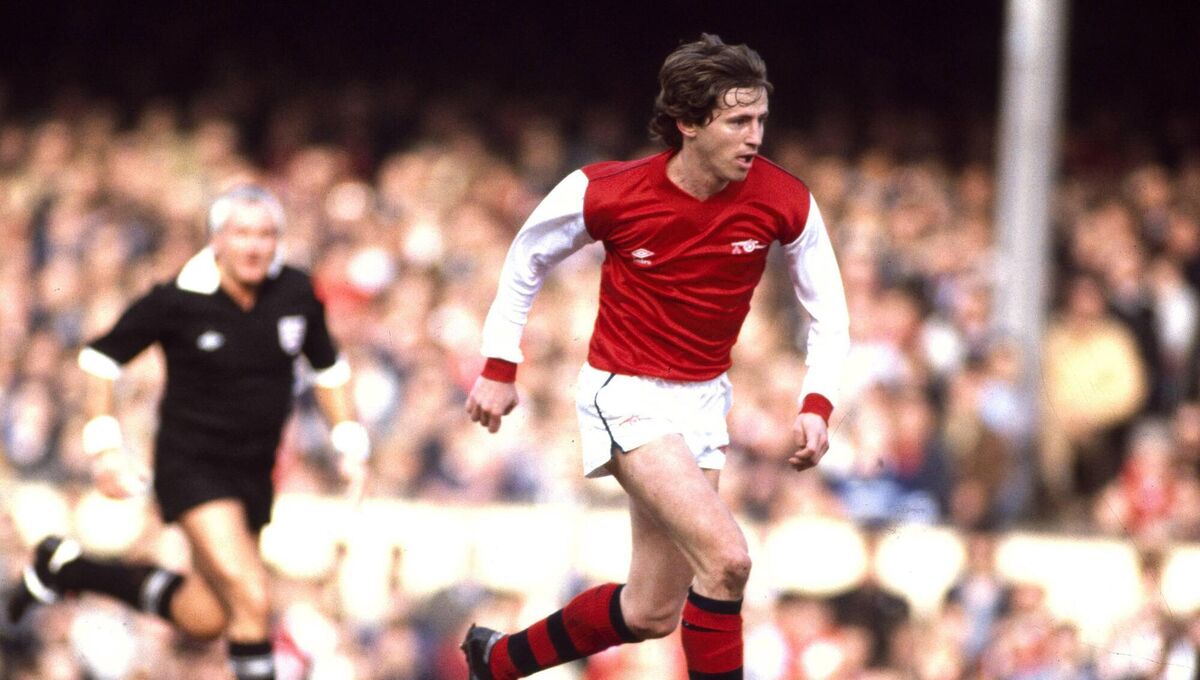
Petrović was poised to join Arsenal for £250,000 after the 1982 World Cup, but due to Yugoslavia’s poor displays (they failed to progress through the first group stage), the authorities delayed his move to N5 for six months. ‘We were punished, and when I eventually arrived I was thrown in at the deep end in January, with Arsenal struggling in mid-table,’ Petrović told me. ‘It was tough to acclimatise.’
It was the imposing Golac, whose mane of long hair gave him the appearance of a rock star, who proved the most adaptable of the Yugoslavs in English football. Unlike the other Soviet satellite states, the republics of Serbia, Croatia, Bosnia and Herzegovina, Montenegro, Slovenia and Macedonia had been granted autonomy over some of their affairs. Citizens had greater access to foreign travel, and Yugoslavia became a popular tourist destination for westerners. The cultural flow between east and west was also freer. ‘We were very much aware of English football and music – the two most important things in life,’ Golac laughed. ‘I had hundreds of vinyls,’ Golac told me. ‘I loved The Kinks, The Who, The Rolling Stones, The Beatles… anything that English ’60s music had to offer. I learnt to speak English through music! My taste in music was far more English than any English footballer I ever met.’
Golac arrived at The Dell in the same month as World Cup winners Ossie Ardiles and Ricky Villa signed for Tottenham. Six months earlier, the European Community had ruled that the Football Associations of its member states could no longer deny access to players based on their nationality, and that summer, the Football League lifted its 47-year ban, with the number of foreign players at any one club capped at two. In contrast with the fanfare of publicity that surrounded Tottenham’s Argentinians, Golac remembers only ‘mild curiosity’ about his signing. Keen to impress his teammates straight away, he set about them in training with gusto.
‘Alan Ball was brilliant, and I quickly formed a great partnership with him. But he wasn’t impressed when I tackled him too hard in training a few days into my Southampton career. As he lay on the floor, I thought he was going to get up and punch me, so I said: ‘Welcome to English football, Bally,’ to make him laugh. Golac loved the Hampshire countryside, smiling as he recalled the long walks he enjoyed taking along the River Itchen near Shawford, ‘where I could see herons and kingfishers’.
Southampton finished a creditable 14th in Golac's first season. Aware that his side couldn’t lavish huge transfer fees on players, manager Lawrie McMenemy opted to bring in older players. Club icon Mick Channon returned from Manchester City, and Charlie George arrived from Derby County. ‘Mick, Bally and myself formed a beautiful partnership on the pitch, and they occasionally got me to go to the horse races with them too,’ Golac recalled. The team’s profile grew further when Kevin Keegan was unveiled as a new signing in August 1981. ‘No one knew anything about it,’ Golac explained. ‘The press and the players didn’t have a clue what was happening until Kevin walked out at the press conference with his wife and young baby.’
Golac’s finest moment in a Saints shirt came in February 1981, during a home match with West Brom. After defender Dave Watson lofted a ball towards forward Mick Channon, Golac, motoring down the right wing, sensed what was coming. ‘That old b*****d (Channon) and I could read one another’s thoughts on a football pitch,’ said Golac of Channon, who taught him to swear in English. Channon flicked the ball towards Golac, now on the edge of the area and, without breaking his stride, the Yugoslav half-volleyed the ball home from fully twenty-five yards past a helpless Tony Godden. ‘It went in like a f*****g rocket,’ Golac explained. Those sweary English lessons with Channon obviously proved a roaring success.
In 1983–84, with Peter Shilton now in goal and Danny Wallace starring as a goal scoring winger, Southampton finished in runners-up spot behind Liverpool. ‘We were always two players short of a title-winning side,’ Golac admitted. He threw his hands up. ‘But we played some beautiful football.’
The Yugoslav players’ paths rarely crossed, either on or off the pitch. Džemal Hadžiabdić left Swansea in 1983, following his team’s relegation from the top flight. ‘He lost his life savings in the civil war and started coaching in the Middle East,’ said Golac. ‘Jimmy’ – a Muslim by birth – now goes by the name of Jamal Haji. Golac never faced Arsenal with Petrović on the pitch, but he reckons that ‘English football wasn’t ready for him at that time’. Petrović, given precious little protection from referees, flitted in and out of the team, and manager Terry Neill opted against paying the full £400,000 for the player.
As for Petar Borota, by the early ’80s, Chelsea were mired in Division Two, and Borota – who was still swinging from the cross bar and talking to fans during breaks in play – lost his place in the Blues team after his side suffered a 6–0 shellacking at Rotherham, with Borota culpable for three of the Millers’ goals. Borota was later jailed after being implicated in a theft of Serbian painter Paja Jovanović’s work, before dying in 2010 after a long illness.
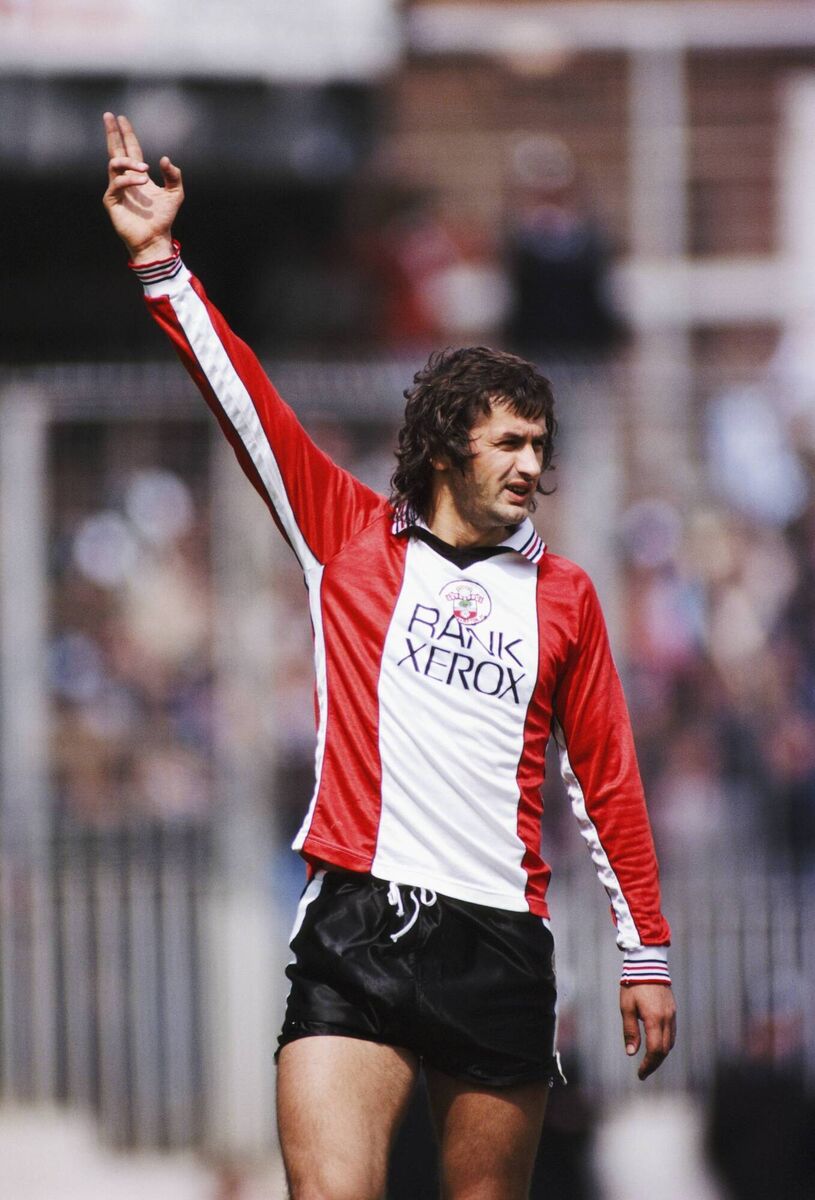
Golac was the last of the original ‘band of Yugoslav brothers’ – as he put it – to last in English football. After departing Southampton in 1986, he went on to manage Partizan and won the Scottish Cup with Dundee United in 1994. Before our interview ended, I asked Golac whether he ever convinced his Southampton teammates to read the poetry of Yevgeny Yevtushenko, a Russian beat poet. His eyes widened. ‘How do you know I like Yevtushenko?’ he asked. ‘You said so in your Shoot! profile,’ I replied. ‘No, I couldn’t interest them,’ he smiled, before pondering the question a bit longer. ‘I did lend Mick Channon a copy of 'One Day in the Life of Ivan Denisovich (by Aleksandr Solzhenitsyn), but he told me he preferred the Sporting Life. These days, Golac is delighted when older Saints fans still recognise him. They’ve long since forgiven him his brief loan spell with arch rivals Portsmouth.
‘My heart is still at The Dell,’ he admitted, with a wistful smile.

CONNECT WITH US TODAY



Be the first to know the latest news and updates