A terrible performance but victory over Finland, John O'Shea would take that
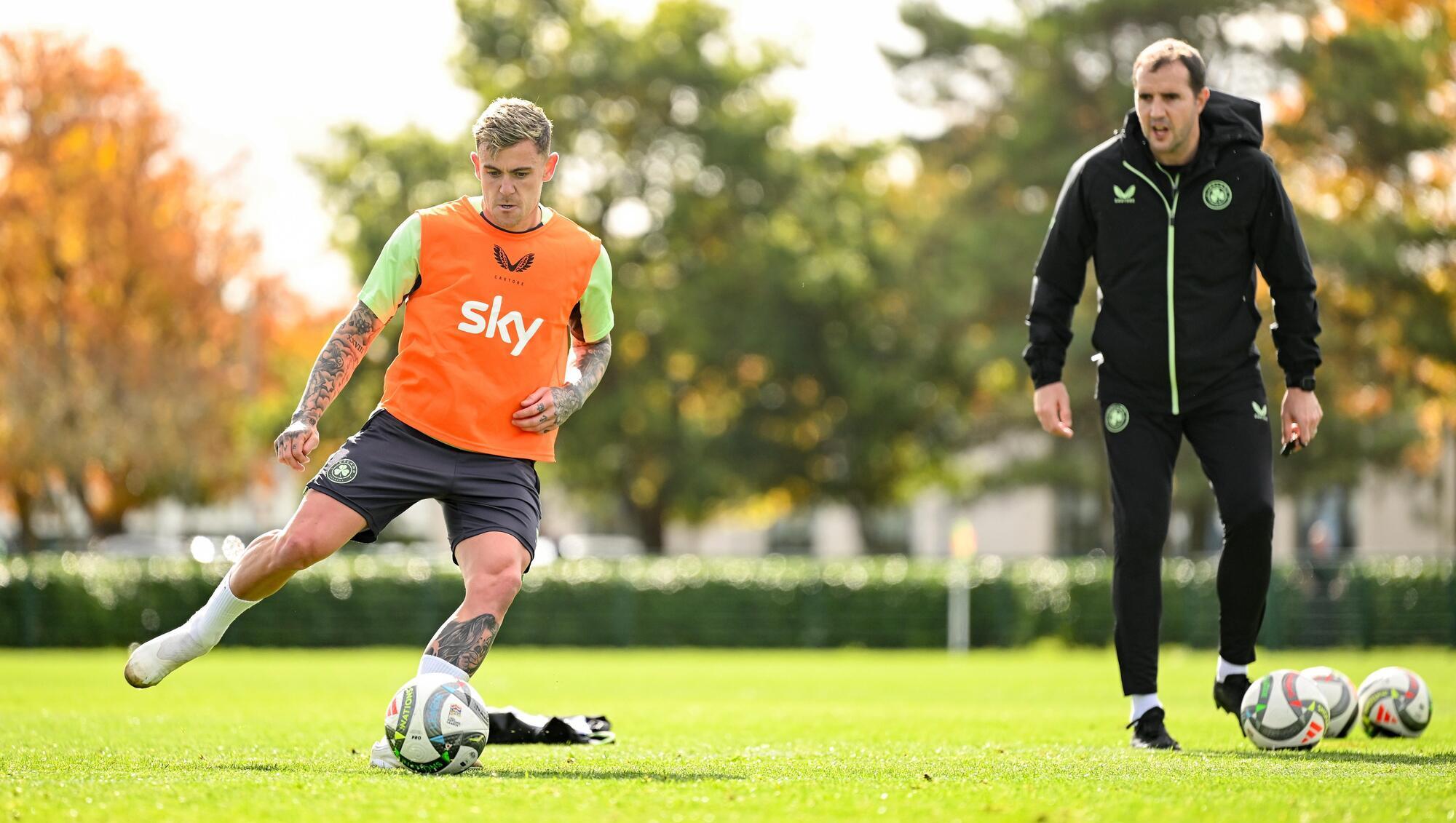
BALANCE REQUIRED: Sammie Szmodics and assistant coach John O'Shea during a Republic of Ireland training session. Photo by Stephen McCarthy/Sportsfile
We are at the stage with the Republic of Ireland men’s team now where everything there is to be said has been said. Way beyond it, probably. The only thing that can generate fresh conversation now is the same thing that will make people hope again: results.
The stats speak for themselves. No competitive win in the last eight games that haven’t thrown up Gibraltar as the opposition is the most stark of all. The lack of goals and the surfeit in performances have generated too much doom and gloom all of their own.
John O’Shea has seen it all with his country. The good and the bad.
The assistant manager referred on Monday to the 28 years that he has been involved with Irish teams as a player and as a coach, and how no-one reports for duty on weeks like this embracing the negativity that comes with recent realities.
There was no magic formula to share. The Waterford man touched on bread and butter ingredients – hard work, basics, a slow brick-by-brick approach to better days – that are needed to feed into a more digestible discourse from here on in.
Improved performances would lead to an upturn in results, he said, but O’Shea didn’t demur either when it was put to him that Mick McCarthy, the man who gave him his senior debut back in 2001, used to say that he would take a terrible display and a win all day every day.
“The big one will always be the result ultimately, because that's the massive one. If you're trying to get new ideas across and implement them as well, there has to be a balance with that too. But we want to win.
“We're going into these games wanting to win and wanting to see what we're looking for from the group, in terms of how we want to win and how we want to go about it too.
“It's striking that balance but ultimately any coach or manager will say the result is ultimately the key. If you're telling me now that we're going to play terribly but beat Finland, we're going to take it. You know what I mean? It's obvious.”
O’Shea is the most measured of public faces. Nothing seems to jar him into extremes of emotion on the sideline but even he has his limits when it comes to the inevitable waves of negativity that are crashing down on this Irish squad now.
Some of that opprobrium has emanated from ex-teammates, men who have soldiered in the same ranks for their country, with Glenn Whelan’s biting remarks making an especially large imprint in the court of opinion.
The former midfielder observed that there is “not a positive thing in this Ireland team at the moment” and talked about the lack of belief with it. O’Shea seemed to reach his limit with all this when criticisms over the lack of midfield quality was put to him.
“We need to get away from almost that negative aspect of positions in the team and the squad, and players. The dedication and the sacrifice that every player, and the levels these players are playing at, is sometimes forgotten about.
“They are really good players, playing at a really good level, and I think it's a bit of, not a nonsense, but we are too derogatory towards these players. They are really good players playing at a really good level, and they are showing dedication, they want to come and play for Ireland, we should be getting behind them a bit more.”
Heimir Hallgrimsson spoke last week about the need to ‘stop the bleeding’ first and the need to latch on to the first-half performance against the Greeks last month when the team showed flashes of play that gave some cause for optimism.
It still makes for a long road back to respectability and the fact of the matter is that the intense focus which the Icelander admitted took him by surprise during the September window will only magnify further with every loss and poor display.
Leaving Matt Doherty and a handful of other experienced players out of this gathering didn’t generate any wave of dissent from the masses which, in itself, may back up Halgrimsson’s assertion that too many players are of a similar level as it stands.
Of slightly more interest was the brouhaha that boiled up over the new man’s preference to watch club games remotely rather than subject himself to the trials of traversing the highways and byways of England on a weekly basis.
“It is good to see lads but you miss things at a game too,” said O’Shea. “And that's why the video footage can cover every angle. The chance to meet and talk to players, is important, but depending on where you are sitting you might not see the full picture.
“You think someone is in the right position all the time until you watch it on the video he could have been in a better position. It is a balance of both.”
Balance will be harder to find the longer this run goes on.
CONNECT WITH US TODAY



Be the first to know the latest news and updates