€10m per year would transform academies in Ireland says Marc Canham
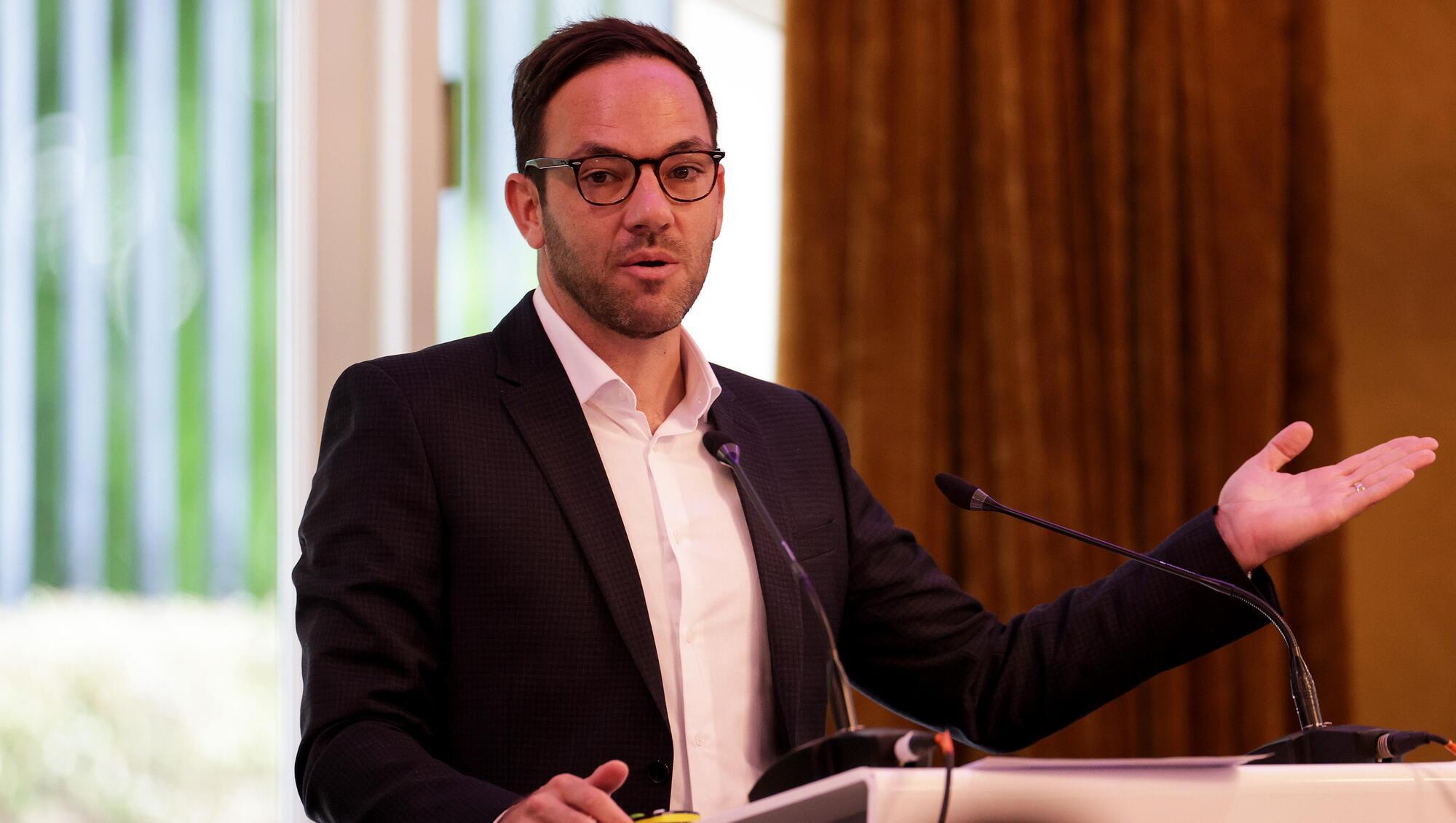
GRANT HOPE: FAI Chief Football Officer Marc Canham is hoping to secure more funding. Pic: ©INPHO/Laszlo Geczo
While the FAI are hinging their state support hopes on positive conversations with the Government, they must be speaking different languages.
For well over a year, the plea to be patient for academy funding has revolved around the softly, softly approach. History has proven, however, that the best prospect of promises converting into action is during the run-up to an election.
Football is the largest participative sport in the country but remains chronically underfunded by the State. That much we know.
What’s also apparent is the FAI’s recurring failures to remain out of the limelight. Jonathan Hill didn’t realise the job specification for being John Delaney’s successor centred on being whiter than white.
Then his interim replacement – who wishes to become permanent – floats a scheme for state funding that was closed.
It took just 11 days from David Courell championing the Brexit Adjustment Fund at their AGM to Paschal Donohoe, Minister for Public Expenditure, wiping out a €20m target over two years.
“All the negotiations on the BAR concluded some time ago,” he said yesterday morning.
“I’m very much aware of the FAI’s funding needs but in the analysis, even as recently as this morning, what I’ve heard back is that Sports Capital Grants is a big part of the answer. We’re delivering against that.”
The FAI wants more, much more. With BAR mothballed, the plea for €10m of annual state support to majority fund their 24 academies revolves around increasing the betting tax and deriving a slice from the Euro 2028 economic benefit. Both are a few years away. at least.
“Before the end of the year we'll know where we are,” said Marc Canham, formerly director of football, newly elevated to chief football officer.
“I don't know what an announcement will look like but, certainly based on our conversation with the Government on that specific item, we'll have a good understanding of where we are by the end of the year.”
Time is of the essence on this three-tier academy proposal, given the declining fortunes of the Ireland senior men’s team, but Canham insists this crusade – ongoing since Brexit in 2020 placed the onus on the Irish system to hothouse gems – is in full flight from the FAI side.
He added: “I wouldn't say we're leaving this deliberately. We are very proactive speaking to the Government regularly on a number of matters, including League of Ireland academies. So I wouldn't say we're leaving it and being complacent in any way.”
At a time when the state coffers are awash with tax surpluses – even before the incoming €12bn windfall from Apple – Canham is adamant football is worthy of its cut. And, not just a short-term hit, rather a yearly payout.
“We believe around €10m per annum would absolutely transform player development and academies in this country,” he continued. “Will we get all of that? Not sure.
“But we presented different ways you can do that. We think around €10m would help us catch up and accelerate. Lesser money would mean that we might not go at the rate we want to go.
“That’s forever. We might have to be cognisant that the Government might not be the sole funders of that, whatever the figure is forever.” Gone forever is the Emerging Talent Programme. That was the regional scheme operating since 2006 that provided supplementary specialist coaching to youngsters from 12 years of age.
That annual budget of €700,000 has been culled and though the FAI insist it’ll be redirected into boosting contact hours for the 14-17 age-group, no details were forthcoming on how it will compensate.
“There are three different player development models internationally,” outlined Canham, who pointed to the English FA’s reset after failing to reach the Euro 2008 as a template.
“The first is a small country, really small, where the association runs that player development. You have a national academy where all the best players come and train everyday.
“The second model is a bigger country like Germany, Spain or England, where they have a really developed professional game and professional clubs where their players train and they come to the international programme 40-50 days a year. Clubs take a lead on professional development.
“The third model is where we are at the moment - needing to be a hybrid between the FAI and clubs.
“Over time, we want clubs to take more responsibility for that development, but at the moment we need to work together.”
That collaboration hasn’t triggered a meeting of minds on their target of summer soccer format across the board by 2026.
For the first time, Canham admitted the timeline could be extended.
“There is more engagement in the process now on what we're trying to do than what there was before,” he said about the multiple workshops nationwide.
“Some people are now suggesting ways of doing that so maybe instead of going straight in in January 2026 and the whole games, adult games, move across. Why not try a phased approach to what that looks like.
“This is coming from the game, not our suggestion and there's definitely a different atmosphere and noise, for want of a better word, coming from the game than there was four or five months ago. I'm more confident now than I was then.”
CONNECT WITH US TODAY



Be the first to know the latest news and updates