Ireland can't be ball-watchers or Greece lightning will strike again
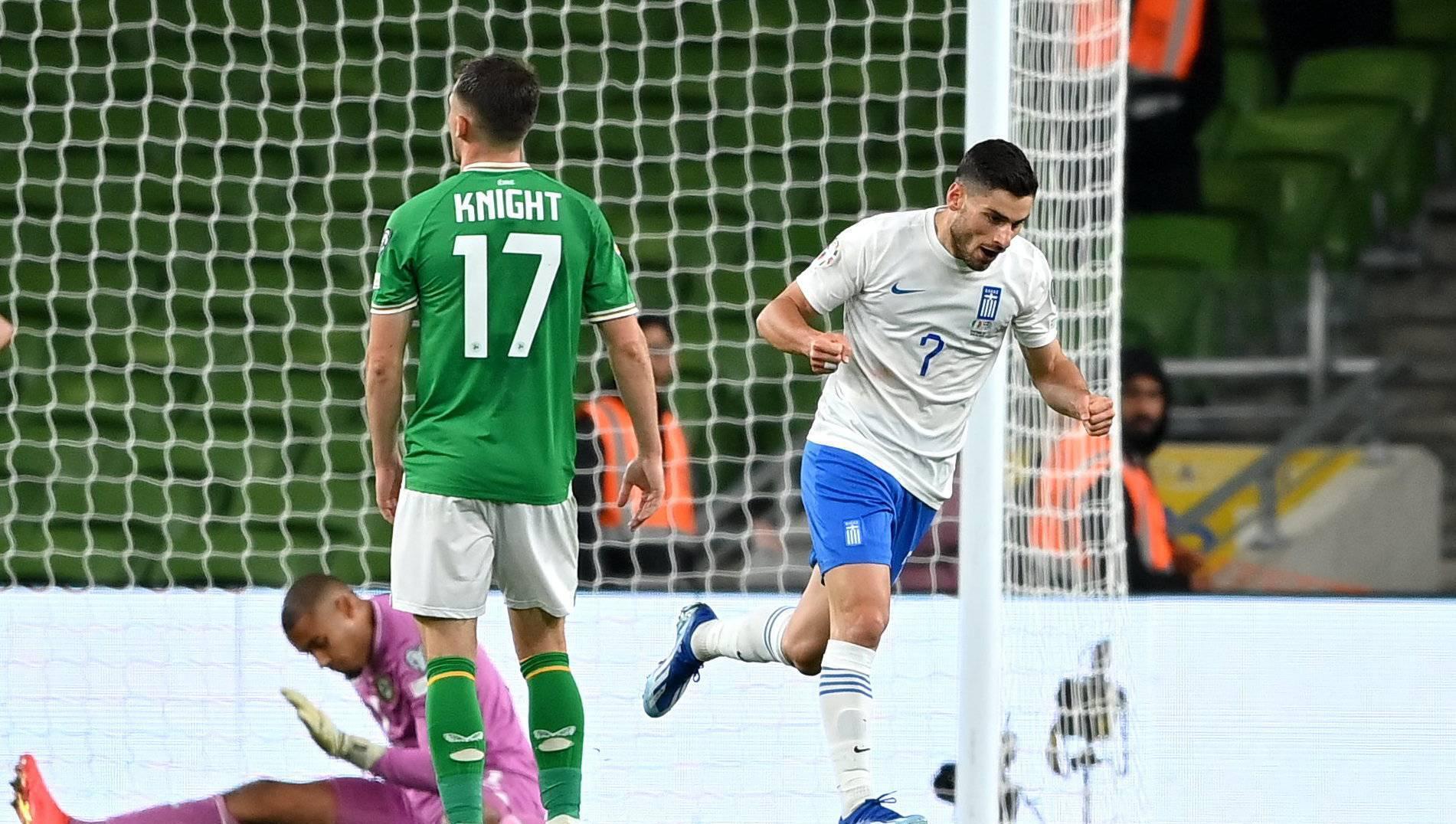
Giorgos Masouras of Greece celebrates after scoring his side's second goal during the UEFA EURO 2024 Championship qualifying group B match against Ireland. Photo by Seb Daly/Sportsfile
Heimir Hallgrímsson has been occasionally requested to pronounce his name in full since being appointed Ireland manager and this is the first time he’ll really need to find his voice.
It appears the only person immune to the outrage over his peripheral involvement during this debut window is himself, for the man he beat to the vacancy even visibly baulked at the suggestion of distortion yesterday.
That the role reversal is in operation, to onlookers anyway, is an arrangement agreed in advance, asserted John O’Shea yesterday. That was the explanation for him conducting the press duties Uefa decree are the preserve of the manager.
He’s the No.2 despite being the No.1 for four friendlies earlier in the year, eventually declaring during his caretaker stint his candidacy for remaining as No.1.
O’Shea’s inexperience relegated that prospect to back-up status while the FAI awaited a final answer from the Icelander once his Copa America commitments with Jamaica concluded.
Everything surrounding the opening game of the new era against England on Saturday - from Hallgrímsson’s pre and post-match comments to the in-game coaching - indicated the newcomer was working with O’Shea and fellow assistant Paddy McCarthy by means of consensus.
That came on top of the manager delegating scouting and squad selection responsibility to his coaches, contending their awareness from the caretaker stint was the overriding factor amid the tight turnaround from his appointment to these matches against England and Greece.
All of that constituted a strange way for a new manager to go about his business. O’Shea demurred at the oddness angle, seemingly contradicting his chief’s early default position.
“The manager has plenty of knowledge of the players,” he said initially, repeating that line twice.
“I am the assistant coach, the No.2. He’s the boss.”
When we’ll see that manifest is the pressing question. There’s no shame in losing to England, a team talked of in terms of winning tournaments Ireland got nowhere near to qualifying for under Stephen Kenny’s four-year reign.
Between now and completing this series on November 17 at Wembley in the return derby, four games against two beatable opponents await Ireland.
Although Fifa rankings are an inexact science, there’s little else to compare nations and Ireland reside in 57th, sandwiched between Greece in 54 and Finland on 63.
Greece not only beat Ireland twice in last year’s Euro qualifiers but beat them well.
No defensive masterclasses were required to see out their 2-1 and 2-0 victories. Indeed, the chasm between the third seeds Ireland and fourth in the pool was the most concerning aspect of a miserable campaign.
Hallgrímsson’s brief centres on improving Ireland, whether that’s rattling the higher teams or avoiding slippages against those in and below them.
Whereas a grandiose target of topping the pool in the last Nations League competition perished within 90 minutes away to Armenia, England’s 2-0 win in Dublin doesn’t alter the 57-year-old's objectives.
He didn’t need to be present in the press conference room to reiterate the primary mission is avoiding relegation.
That will befall the bottom team in the four-nation pool and the second-bottom if they can’t survive the playoff series next March, an addition to the format causing chaos to the World Cup qualification series starting in 2025.
Greece will fancy challenging England for promotion to League A.
Kostas Tsimikas tormented Ireland in both wins and the whippet of a full-back from Liverpool is again the player to coral, if a hat-trick of defeats in a row for the visitors is to be avoided.
They, too, have a new manager at the helm and Ivan Jovanovic feels Greek after emigrating from his native Yugoslavia all of 35 years ago.
“The Irish public might be thinking, ‘Ah, it’s Greece’,” warned O’Shea, part of Kenny’s staff for those losses.
“You must remember the knowledge of this team. When you delve into what clubs their players are at and their profiles, it’s a really hardened, experienced team.
“The new manager got a good start by beating Finland 3-0 on Saturday. He likes to keep things fairly similar, based upon what he did in club football.”
Whatever about being outplayed by England, acting as ball-watchers over the next blitz of fixtures is not an option.
Hallgrímsson’s concession of the perils attached to the three central-defenders format offers clues of a change looming.
Séamus Coleman’s injury-enforced absence means it's likely Matt Doherty will occupy the right-back berth in a recalibrated flat four.
Introducing a third midfielder appears logical in the overall tactical desire of gaining control and denying space to the marauding Tsimikas. Alan Browne and Jason Knight may profit.
“It’s always a case of the team being compact as a unit,” O’Shea added in the context of the manager bemoaning a ragged backline exposed by Trent Alexander-Arnold’s diagonal pass for Saturday’s breakthrough.
“That must come from everyone in the team, not just the back-four or back-five. It’s about pressing in combination all together in all areas on the pitch. We’re looking for triggers.”
What they’re not looking for is Greece lightning striking thrice.


CONNECT WITH US TODAY



Be the first to know the latest news and updates