Joe Kinnear: Great company, sharp-witted, controversial and never afraid to speak his mind
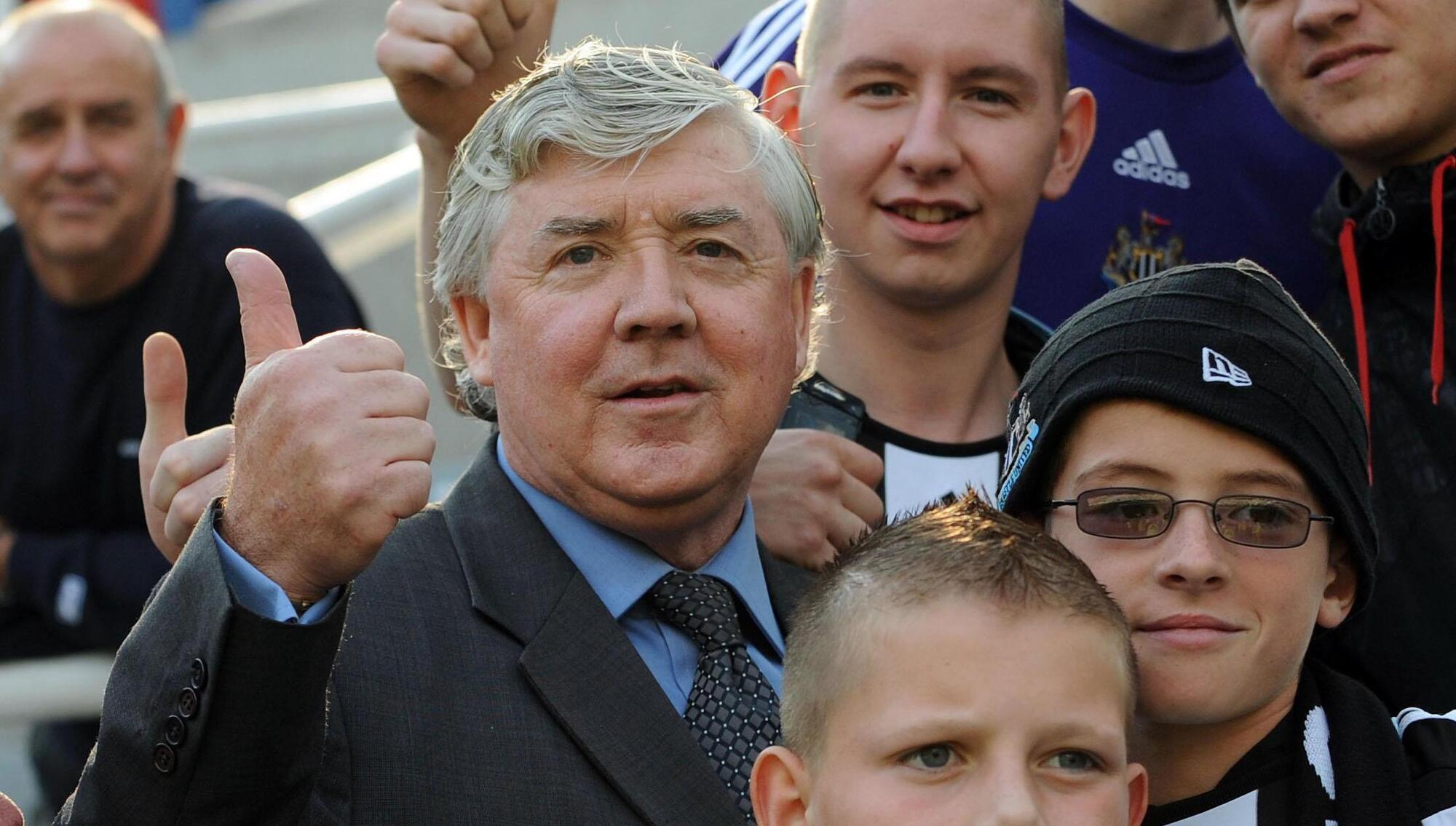
NO ORDINARY JOE: Former Tottenham and Ireland defender Joe Kinnear died at the age of 77 on Sunday. Photo credit: Owen Humphreys/PA Wire.
Some of the less-informed 'tributes' to Joe Kinnear, who passed away at the weekend, were written by a younger generation of reporters who have little idea of his remarkable career, but remember him mostly for an expletive-laden press conference after his appointment as Kevin Keegan's successor at Newcastle United in 2008.
And while the colourful language and combative demeanour were typical of Kinnear, the former Spurs and Ireland defender was so much more.

A decorated player during a decade at Tottenham, the Dublin-born right-back turned into an innovative coach at unlikely outposts including India, Nepal and Doncaster before becoming a successful manager at Wimbledon, being voted Manager of the Year in 1994.
If it is true that you should judge a man by the company he keeps, Kinnear was up there with the very best.
His good friend and first mentor was Scottish legend Dave Mackay, who won the League with Derby County, and Kinnear was also close to Terry Venables and Sir Alex Ferguson, swapping tales and tips with them. Arsene Wenger lived in the same village as Kinnear and the two of them would meet for coffee and a chat from time to time.
Yet the closest he got to managing a big club was with Newcastle, but they were in the relegation zone when he took over. Of course he kept them up.
He regretted never being considered by his beloved Spurs, whose owner Alan Sugar disliked him, calling Kinnear a 'barrow boy' – which was a bit rich coming from the former market trader.
Kinnear's comeback was to beat Tottenham on the way to taking unfashionable Wimbledon to a club-best sixth place finish, above Liverpool, Chelsea and Tottenham in 14th.

He won three Manager of the Month awards and was voted Manager of the Year by the LMA, who recognised his achievements against the odds. Wimbledon had no home ground (playing at Selhurst Park), trained on a public park where they shared dressing rooms with a local school, and had by far the lowest budget in the top flight.
Kinnear himself was paid modestly by comparison to his friends Venables and Ferguson, who was earning over €1m Euros a year in the mid-1990s. Kinnear's Wimbledon salary was less than €100k per year, and when the FAI approached him to succeed Jack Charlton in 1996, they offered him substantially less, explaining that Charlton 'topped up' his earnings through lucrative deals with the Irish team's major sponsors, and said he could do the same.
He did some research, however, and discovered that the canny Charlton had renewed all his commercial deals shortly before announcing his retirement as Ireland manager, so there was no scope for Kinnear to top up his earnings. He declined the offer.
Back then I was a young reporter who covered the Dons closely and ghosted his columns for another Irish paper, and he was fantastic to work with. Wimbledon's training ground was off a roundabout on the A3 in south-west London, and he'd invite me in to the staff cafe with the players – Vinnie Jones and all – and treat me as one of the lads.
We'd go to the Robin Hood pub over the road to discuss his column over gammon and chips, washed down with Guinness, hardly an ideal diet for a man with such a stressful job. Joe also loved a glass or three of red wine, and it meant he was always chunkier than he had been as a player.
So in some ways it was not a surprise – though still a great shock – that he suffered a heart attack at the age of 52 while preparing Wimbledon for a game at Sheffield Wednesday in 1999. As he said at the time, “It was a tap on the shoulder from the Big Man. I was lucky to be at Hillsborough with its first-class first aid facilities – anywhere else and I might have died.”
Kinnear did not return to management for some time while he recovered, cutting back on alcohol and fried food. He later joined us at the Footballer of the Year dinner, always a boozy occasion and when I spotted him chatting to Mackay at 3am with his second bottle of red in hand, he said: 'It's ok, son. The doc says red wine is good for the heart!”
The Hart was also his nickname for John Hartson, whom he'd signed for a club record fee of €8m Euros earlier that season. He'd rung me late at night from the Dover Street Wine Bar, the London bar where he and the players would often hang out.
He was with Hartson and Vinnie Jones – the three had shared ownership of greyhounds – and he'd just sealed the deal over drinks. “Can you get it in tomorrow's paper?” he asked.
“If you're quick with quotes,” I responded, conscious of looming deadlines. Having told me his thoughts, I asked him to put Hartson on. “John's gone, but what he would say is 'I would not have signed for any other manager than Joe...”

When I asked if chairman Sam Hammam was still around to talk, he added: “Sam's gone too, but he would have said: 'I would not have entrusted this amount of money to any other manager...'
It made for a great story.
Hammam was a colourful owner. Having failed in his audacious bid to relocate the Dons to Dublin, he sold the club to Norwegian millionaires Bjørn Rune Gjelsten and Kjell Inge Røkke for a fee that might have been inflated by Kinnear's blarney.
“They asked me and Sam over to Norway and took us shooting reindeer from a helicopter. Later we had a meal with ridiculously expensive wine shipped in from California before we got down to business.
“Sam was haggling over the value of the club, so he said: 'Joe, tell them what the squad is worth.' By the time I'd gone through the transfer valuations of our players, Sam's asking price had shot up – and amazingly they agreed on it.”
Kinnear never returned after his heart attack in March 1999 and Wimbledon were relegated the following year, having been as high as second in the Premier League under Kinnear, and reached three cup semi-finals.
He was sounded out by Celtic, whose majority shareholder Dermot Desmond was a friend, before the club appointed Martin O'Neill.
Kinnear never really hit the heights again, working briefly at struggling Oxford United, then Luton Town, Nottingham Forest and his ill-fated two stints at Newcastle, as manager and then director of football. His heart problems recurred, and by 2013 the early signs of dementia were becoming apparent to those closest to him.
The man who'd left Dublin for England as a 7-year-old after his father died had always battled against the odds, been a success as a player winning 26 caps and four major trophies with Tottenham, and then moving around the world, from the United Arab Emirates to Nepal to end up at Newcastle.

He was great company, sharp-witted, controversial and never afraid to speak his mind. One Sunday morning he rang me at 7am to rant about the referee in Wimbledon's defeat at Old Trafford the previous day.
“I kept my mouth shut at the time but after watching it again on Match of the Day I'm livid,” he said. “We were cheated, and you can quote me on that!”
When I warned him he'd be censured by the FA if he went public with that statement, he said: “I don't care – I'll pay the fine. It'll be worth it.”
And so he did. That was Joe Kinnear to a tee.