Irish Professional Footballers Benevolent Association offically launched
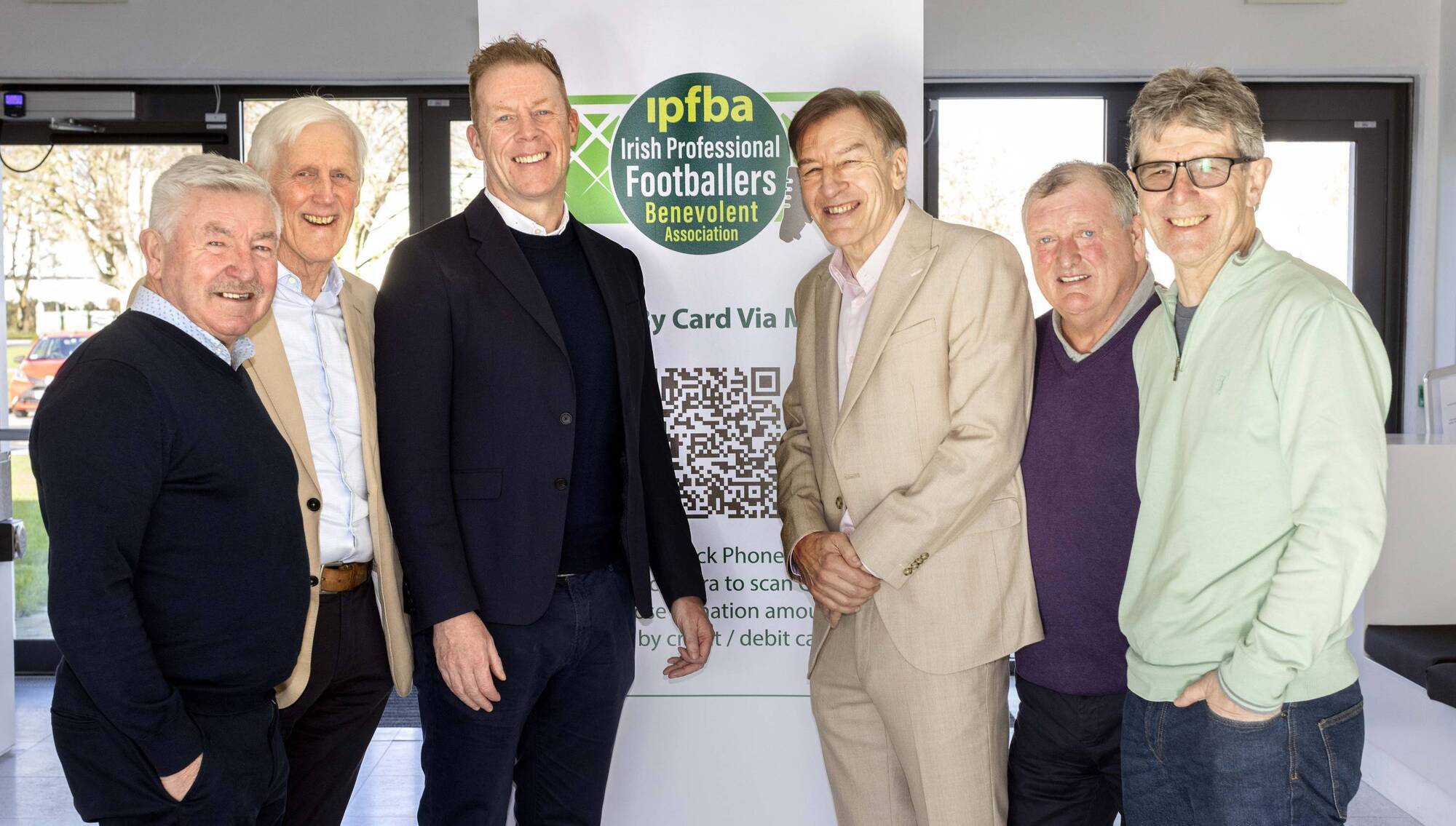
FUNDRAISING NEEDED: Pat Byrne, Harry McCue, Chairman, IPFBA, Stephen McGuinness, Gen Sec, PFA Ireland, Martin Lawlor, Secretary, IPFBA, Kieron Maher and Alan O’Neill at today’s launch of the Irish Professional Footballers Benevolent Association in the FAI Headquarters, Abbotstown. Pic: Tony Gavin
Now that the Irish Professional Footballers Benevolent Association (IPFBA) has been officially launched, the crucial next stage is hatching a range of fundraising initiatives.
While charity collections at various events have kickstarted the pot, the scalability rests within larger ticket items such as percentage of Ireland match ticket revenue and donation of match fees from international players.
Various guises of this concept have come and passed but the misfortune that befell former Shamrock Rovers defender and three-times capped Ireland international Jacko McDonagh prompted the current committee to form and press their case for financial support.
That Monday’s launch was held at FAI headquarters suggested unity of purpose and all agreed the necessity of cooperation with the IPFBA and Players (FAI) for this venture to succeed.
The group, led by Chairman Harry McCue, contend they are an outlier to other sports and require assistance from within the game to prosper.
Though reluctant to divulge details of proposals, it’s understood funding mechanisms being explored include a small percentage of net profits from senior men’s and two senior women’s internationals, tariffs on tickets for glamour friendlies and a cut of all fines imposed on national league clubs.
“The one that got me was the friendly last July between Manchester United and Athletic Bilbao,” asserted Stephen McGuinness, secretary of the PFAI.
“This was in our national stadium on a League of Ireland weekend so we wondered what Irish football was getting from this? I would have liked to see something from what the fans paid for tickets distributed to our game.
“It’s great that the FAI covers funeral expenses for former internationals but there’s nothing for someone who played 1,000 League of Ireland matches.
“From this launch, players will realise there’s something to help them. There’s a hell of a lot of money needed but it must involve the three of us. It won’t work unless the parties are all engaged on it.
“There are ideas in this which won’t be palatable to everybody, including ourselves and the FAI, but we have to get behind it because there’s thousands of former players who need assistance.
“Unlike other sports, we have no external funding. The GPA receive government grants and the rugby players are funded by the IFRU. There are no handouts to us.”
McCue, a key part of Dundalk’s double-winning team in 1988, admitted consistency of income streams were integral to generating the requisite funding.
Studies are ongoing in the UK about the effects of heading the ball to the upsurge in early onset of dementia among past players but, unlike the €30m received annually by the English PFA through Premier League broadcast deals and image rights, the Irish branch must paddle its own canoe.
“To make it substantial, there has to be ongoing fundraising,” noted McCue.
“We have a wide-ranging list of ideas that were brought to the FAI last October and we’re due to meet again before the end of February. Hopefully it will work long-term.
“If we get a certain amount, we can help ex-players who are struggling – and there are lots who need it.”
CONNECT WITH US TODAY



Be the first to know the latest news and updates