The Rhasidat Adeleke interview: 'She’s on cloud nine and it’s like, this is her area'
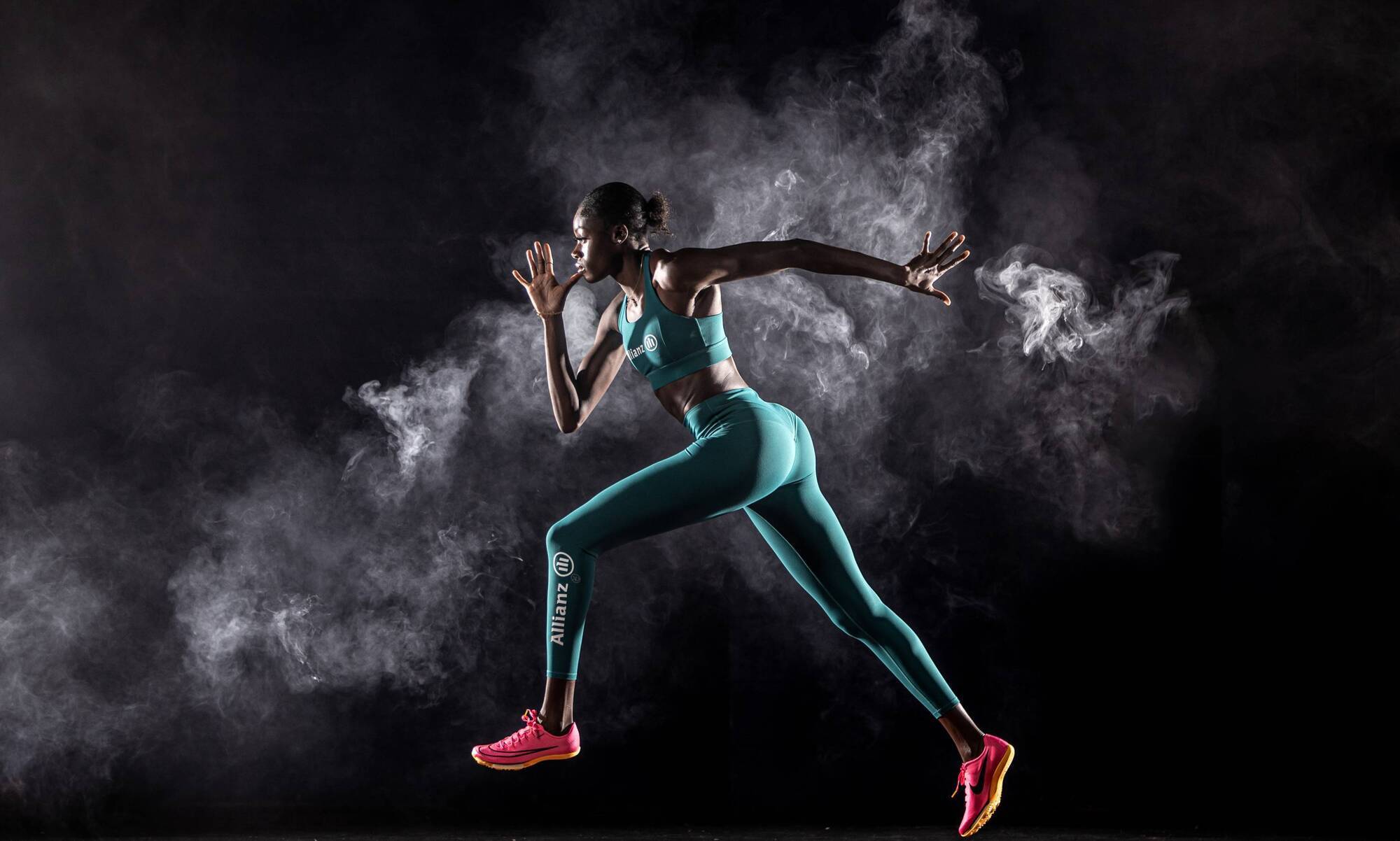
STAR POWER: Rhasidat Adeleke. Pic: ©INPHO/Dan Sheridan
The risk is in treating this any different, allowing that chaotic circus to dazzle your mind, envelop your thoughts, alter your actions.
A relaxed muscle is a fast one. A calm mind is a clear one. Rhasidat Adeleke knows this, as does her coach, Edrick Floreal.
And yet, an Olympic year is different, feels different. For those two weeks, the world will be watching. Flourish in that cauldron and you can dine out on it for life. Falter, and it’s a long old wait to set things right.
The Olympics are kind and they're cruel, they're generous and greedy, dispensing the treasured prizes to a special few with stinginess. Suffer an illness, injury or mental lapse on the wrong day? See you in four years. Maybe never.
That ruthless dichotomy lures so many into watching, but if you’re an athlete, a medal contender, you can’t believe the hype. It has to be just another race.
It’s a grey, wet Wednesday in Dublin, and Rhasidat Adeleke is at a photo studio on the city’s southside, a few miles from where she grew up in Tallaght. After the year she’s had, there are many things to ask her, but the key question is about the future.
What’s it going to take to win a medal in Paris?
“Definitely like 48 (seconds),” says Adeleke, who clocked a championship record of 49.20 to win the NCAA 400m title this year.
“I see statistics that my time would have won a lot of European Championships and made the podium at pretty much all the World Championships, but the 400m is changing really quick. It's becoming one of those events people really pay attention to.”
Adeleke is part of that rise. She turned 21 in August. Floreal, better known as Coach Flo, is 57. But if there’s one difference between them, it’s not age, but experience. Floreal was a two-time Olympian for Canada in the long jump and triple jump and he’s been around elite athletics since the '80s. I put to him Adeleke’s belief that it’ll take a 48-second run to win an Olympic medal.
“It never has and I don’t think it will,” he says, adding that the Dubliner “definitely has the skillset and talent” to run that. “We have to get very fortunate and lucky. But so do they.”
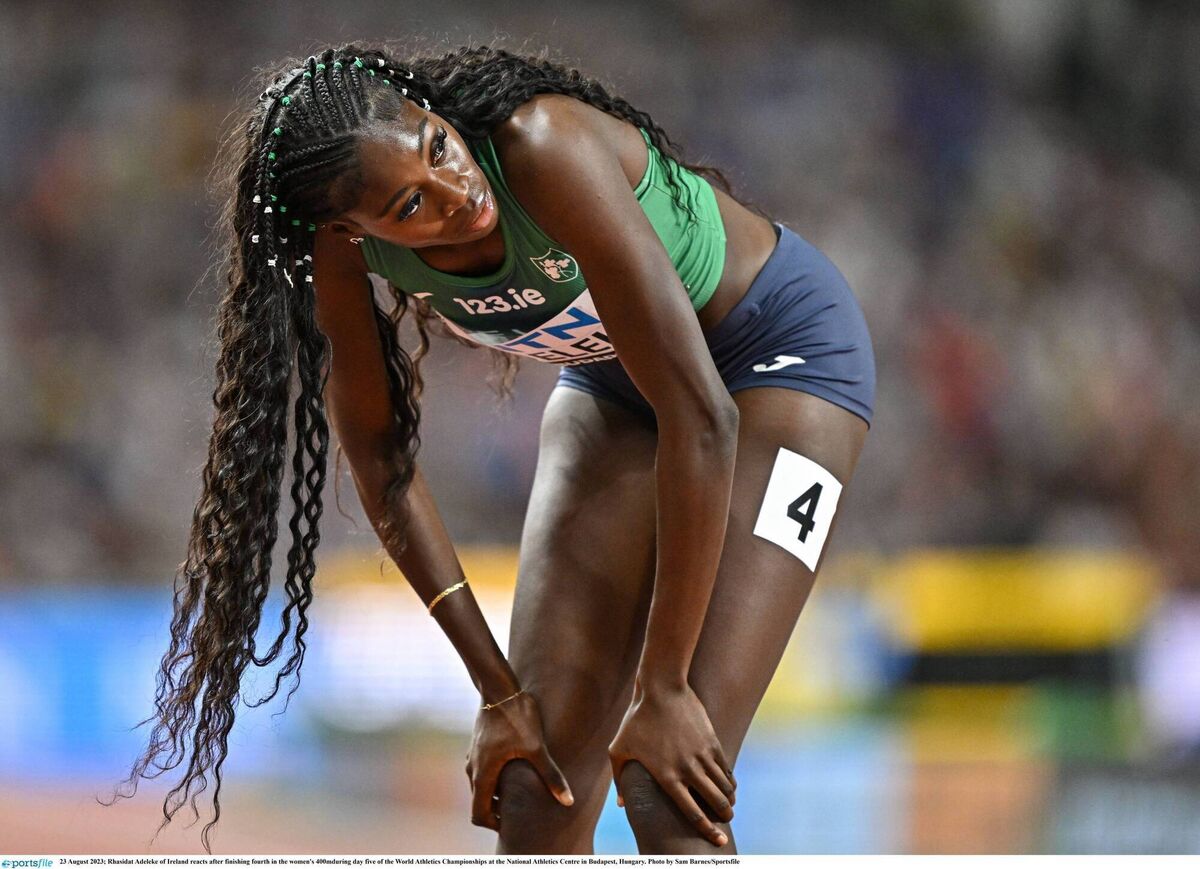
What seems certain is the standard will rise from this year’s world final, where 49.60 won bronze and 49.57 claimed silver – Adeleke finishing fourth in 50.13. Floreal knows that in the pressure cooker of Paris, not every star will bring their A-game.
“There are three or four women out there that can run 48 seconds; will they all do it? The reality is: there's multiple rounds, fatigue, anxiety, stress. Each round you can get a cold, muscle soreness.
“You've been around the sport long enough to know how likely it is that the three or four women that can run 48 show up to Paris unbothered, mentally and physically focused, with no death in the family, no ill Grandma, no boyfriend that broke up with them the week before. That can take you from 48.7 to 49.5.”
He cites Sydney McLaughlin-Levrone, the world record holder in the 400m hurdles, who Floreal coached during her time at the University of Kentucky. With the US star eyeing a potential double in Paris, she switched to the 400m this year, clocking a world lead of 48.74 in July. A few weeks later, she pulled out of the World Championships with injury.
“Things were going great and then, bam, it's a no-show in Budapest,” says Floreal. “It’s no fault of her own, no fault of her coach, but like we say here in the US: shit happens. Things never come to fruition like they're supposed to because people have to overcome shit. That's probably the most important lesson I need to explain to Rhasidat: it's not the best athlete or the most prepared athlete, it’s the athlete that can overcome whatever the hell shit is, because shit is going to happen and shit is going to get to you. It's going to distract you. It’s going to mess with your emotion. You have to survive shit.”
One of the dangers he sees? Adeleke thinking she has to do anything superhuman over the next seven months. “It’s thinking, ‘I’m gonna have to fight nine lions, so my preparation will be different,’” he says. “But you're not going to have to do that.”
***
At Mill Studios in Harold’s Cross, Adeleke sits by a vanity mirror lined with lightbulbs. It’s been a busy morning with a photoshoot followed by interviews. As a kid, she dreamed of being a model or a pop star – the next Beyonce – and since turning professional in the summer, signing a lucrative contract with Nike, she’s got a small taste of that life.
Did she treat herself when the money hit her account? “Not really, I keep the same lifestyle always,” she says. “Growing up, my Mam kind of spoiled us a bit so I was always able to do what I wanted, in a sense. I never really require too much.”
Her mother, Ade, has been the biggest influence of all. “She would work so hard and she would sacrifice so much to help us achieve what we wanted,” says Rhasidat. “She was very independent. It definitely motivated me and inspired me to work just as hard.”
Adeleke was 12 when she found athletics, her PE teacher witnessing her blazing speed and bringing her to Santry for a primary schools athletics event, where she rinsed her rivals in a sprint race.
After that, she gave Adeleke an application form for Tallaght AC, where she came under the guidance of Johnny Fox, who coached her to gold at the European Youth Olympics in 2017. The following year, she linked up with Daniel Kilgallon, who took a cautious, long-term view with her development.
“I said I could go for the glory, make sure she’s belting out times no one her age has run, or I can work on her technically – her start, her arm positioning, foot positioning – making her more economical,” said Kilgallon.
In 2020, they reaped the benefits, Kilgallon recalling sessions Adeleke did in Corkagh Park on a stretch that his group renamed Rhasidat Highway, given how she’d embarrassed some of Ireland’s fastest men in a series of 150-metre reps.
In January 2021, she left for the University of Texas, where she’s been based since. That summer, Adeleke did the 100m-200m double at the European U-20 Championships, but Floreal knew her real future was in the 400m.
Last year, aged just 19, she broke the Irish 400m record twice, finishing ninth at the World Championships and fifth at the Europeans. This year, she twice lowered the Irish indoor 400m record and broke the Irish outdoor record three times. That NCAA final, where she clocked 49.20 despite a vicious headwind on the back straight, showed Adeleke she can go under 49.
“If that wasn't that there, it definitely would have been a faster race,” she says. “Hopefully next year I’ll be able to break that.”
She ran her first race as a professional in Hungary in July, where she was approached by Sha’Carri Richardson, the US superstar who claimed the world 100m title in Budapest. “She was like, ‘Oh my God, I loved watching you in the NCAA season, your looks were amazing,'” recalls Adeleke. “I'm like, ‘Okay, so it was worth taking two hours to get ready before races.’”
Few NCAA athletes keep racing once the gruelling collegiate season ends in June, but Adeleke knew a world medal could be on the cards if she kept her body right until August. Easier said than done. She had to bail on Irish nationals in July and a back issue proved difficult to shake before Budapest. “Your body kind of wants to give up sometimes,” she says. “It was just general wear and tear, the body's way of saying you need a break.”
How does she reflect now on Budapest, and that fourth-place finish?
“It was a good experience, honestly. I tried to look at it as something positive. I don't know exactly what I would have changed (to get a medal). All the things that happened, I needed to learn from and I’d rather learn from Worlds than the Olympics.”
With 50 metres to run, Adeleke was in a line of four, battling for silver, but then the wheels came off, her shoulders rocking, her back arching. Close, but not close enough.
“Obviously, it didn't end up like we anticipated,” says Floreal. “The goal was to get a medal.”
Over the past four months, that race has proven an invaluable tool in his coaching. "When you come fourth, it brings a whole band of emotions. ‘There's so many things I could have done different, could have done better.’ You learn to live in regret and that's really when the coach can captivate the athlete’s mind, because they came so close, they can see the things they desire the most being touchable.
“Let me say this: Rhasidat is an extremely hard worker. She doesn't miss workouts. She doesn't miss a rep or a set, ever. But unfortunately, that's not the difference between the medallists and the other people; it’s the things that happen at night, the yoga session, the 100 sit-ups, the planks. Those are the things that make that one-percent (difference), tiny things that seem very insignificant. I think she's realised that training hard doesn't equal podium. Training smart equals podium and that involves taking all the things you're not good at and making them better.”
For the past three years, Floreal hasn’t had the leeway to make all the changes he’d like in Adeleke’s stride, given the racing demands of the NCAA. But now he has that chance. He considers the collegiate season like a mountain range with several peaks, bringing athletes up and down all season. This is the first year it'll be one long ascent.
“Giving me eight, nine months to get ready for one meet? Jeez, I could do that with my eyes closed," he says. "But having to get ready for five or six races and then having to be ready for the World Championship? That's difficult. Now, you're able to really develop the athlete, really tend to the details, whereas the college kid has 10 details that we’ve not got done yet because we gotta race next week. The difference now is I can just take my time. I can be like an absolute turtle.”
The idea being that once it finally clicks, she’ll run like a hare.
***
For Adeleke, there’s no real way to avoid the attention, the expectation, given the level she’s reached. She senses it when scrolling social media after a race. She felt it in Budapest, walking out to see thousands of Irish fans in the stadium. Still, she’s long felt that wave of support is something that pushes her forward rather than weighs her down.
“It can be a little overwhelming sometimes,” she admits. “But I definitely take it in my stride. If I want to perform at a high level and achieve great things, this is part of the game.”
Who does she turn to when it gets too much? “No one, really. I'm a very action-oriented person so I don't really vent to anyone. If there’s a solution to a problem, I look for it. If there’s no solution, you just get over it.”
Floreal has no concerns about her mentality. He saw how Adeleke negotiated her own contract over the summer and knows she has wisdom far beyond her years. He knows the excitement is rising in Ireland, but he’s seen enough in the past three years to know Adeleke will be fine with what’s coming down the tracks.
“She thrives off of that: the attention, the people, the press conference,” he says. “She looked like she came out of the womb ready to handle these situations. It's like a lioness walking tall through brown wheat and they have this natural camouflage. This is her element. She walks into the track and if there's 65 cameras and the hair is done, the lashes are done, she's on cloud nine and it's like, this is her area.”
Only one woman, Sonia O’Sullivan, has won an Olympic medal in athletics for Ireland, and Floreal knows she and Adeleke have plenty in common. “I’ve hung out and talked to Sonia, and the person and the competitor are not the same,” he says. “You sit and have a cup of coffee and it's like, ‘this is a lovely person,’ and then you line up to compete against (her) and you’re like, 'This a f**king animal.”
Floreal saw that in Adeleke this year. Britton Wilson “kicked the hell out of her” to win the NCAA Indoor title in March, which sparked a fire when she got back into training.
“And you saw the outcome,” he says. “She responded well to getting kicked in the face and the idea is: you need to respond well without being kicked in the face. That's the true sign of greatness. You just do it on demand. That’s the thing I gotta get her better at. She can clearly respond to losing because she bounces back well, but it's not about losing or winning; it's about being able to respond at will. To summon your talent at will.”
The path to an Olympics has many potholes, and Floreal is readying Adeleke for that reality.
“I just need to explain to her that the Olympics have nothing to do with performance. They have to do with overcoming all the shit, and less shit happens to a savvy runner. You develop the alter ego, almost like a protective shell, to give you a way to block it out.
A younger person hasn't gone through enough shit to have developed that but by the end of her career, Sonia O’Sullivan had been through so much shit that she was unbothered by it.
“That's my job: to give the wisdom of an old man to a young woman to have that experience. Those are the things I'm worried about for her – not the press, the media, the expectations of Ireland.”
***
The work continues. Adeleke will spend this week in Dublin, watching movies with her family and catching up with friends, but she’ll be back in Texas next week, churning through the speed endurance work that makes her feel like she’s “dying”. The training group has many stars, from reigning NCAA 100m and 200m champion Julien Alfred to Britain’s Dina Asher-Smith, the 2019 world 200m champion.
Adeleke still attends classes in Texas and she’ll complete her major in corporate communications in May. Outside of track fans, not many people know her in Austin. Life is simple, humble, routine. The odd time she’ll join friends for a game of bowling or Top Golf or head to a college football game, but when she’s training hard, there’s not much energy left for anything else.
“Most of the time, if I have downtime, I literally do nothing,” she says.
In recent months, the focus has been on ironing any technical inefficiencies out of her stride, increasing her strength in the weight room, both of which will translate to more power going into the track and more speed as she goes around it. Adeleke saw what Olympic legend Michael Johnson tweeted about her running mechanics back in March – “Look out when she learns to use those arms” – and that’s an area she and Floreal have worked on. Then there’s that arch in her back, something the six-foot-tall Adeleke has run with since she was a kid, an unwanted habit that wastes energy and one that worsens when she’s in deep fatigue.
Getting all this stuff right comes down to focused, laborious repetition. In their off-season debrief, Floreal told Adeleke she had to become more intentional in training, not just churning out reps but concentrating all the time on how she’s moving. Adeleke’s pace judgement was amiss in both her heat and semi-final in Budapest – too slow through the first 200m – so she’s been making a conscious effort to improve her internal speed gauge, learning to feel the difference between, say, 23.6 and 23.8. Fine margins, but it could make all the difference.
“Sometimes I’d just go through the motions at training and the goal was to make the time, finish the rep, but you have to be more intentional with your form," she says. "At the end of the day it’s muscle memory, so what you do in training will transpire to a race. When you're fatigued, that’s when it most matters, when your form starts to fall apart.”
As Floreal says: “The athletes have to be meticulous in the things they hate. Most athletes spend more time on their strengths and not enough on the weaknesses.” The process is ongoing, and we might not see Adeleke in action until Floreal feels it’s complete.
“It's completely up in the air,” he says. “We’re working on things that are coming together. They could come together in a month, they could come together in two weeks, they could not come together until outdoor. If she has a chance to go to World Indoors (in March) and win a medal then yes, great. If it’s not looking good, if she gets sick, then we scrap indoors and move on. It's completely up to: does this preparation help our chances in Paris? All that matters is getting a medal in Paris.”
Adeleke thinks back to her childhood, and the thing that first drew her to this sport, long before the Olympics were on the horizon. “I just wanted to win,” she says. “Whatever race it was, I want to win.”
Fast forward nine years and it’s still the same. The stakes couldn’t be higher. The speeds are very different, the risks and rewards and fame almost unfathomable. But at its heart, the task is just the same. Adeleke wants to win. She’ll do everything she can to make it happen.
CONNECT WITH US TODAY



Be the first to know the latest news and updates