Jonathan Hill's FAI future under increasing threat as two FAI directors considered quitting
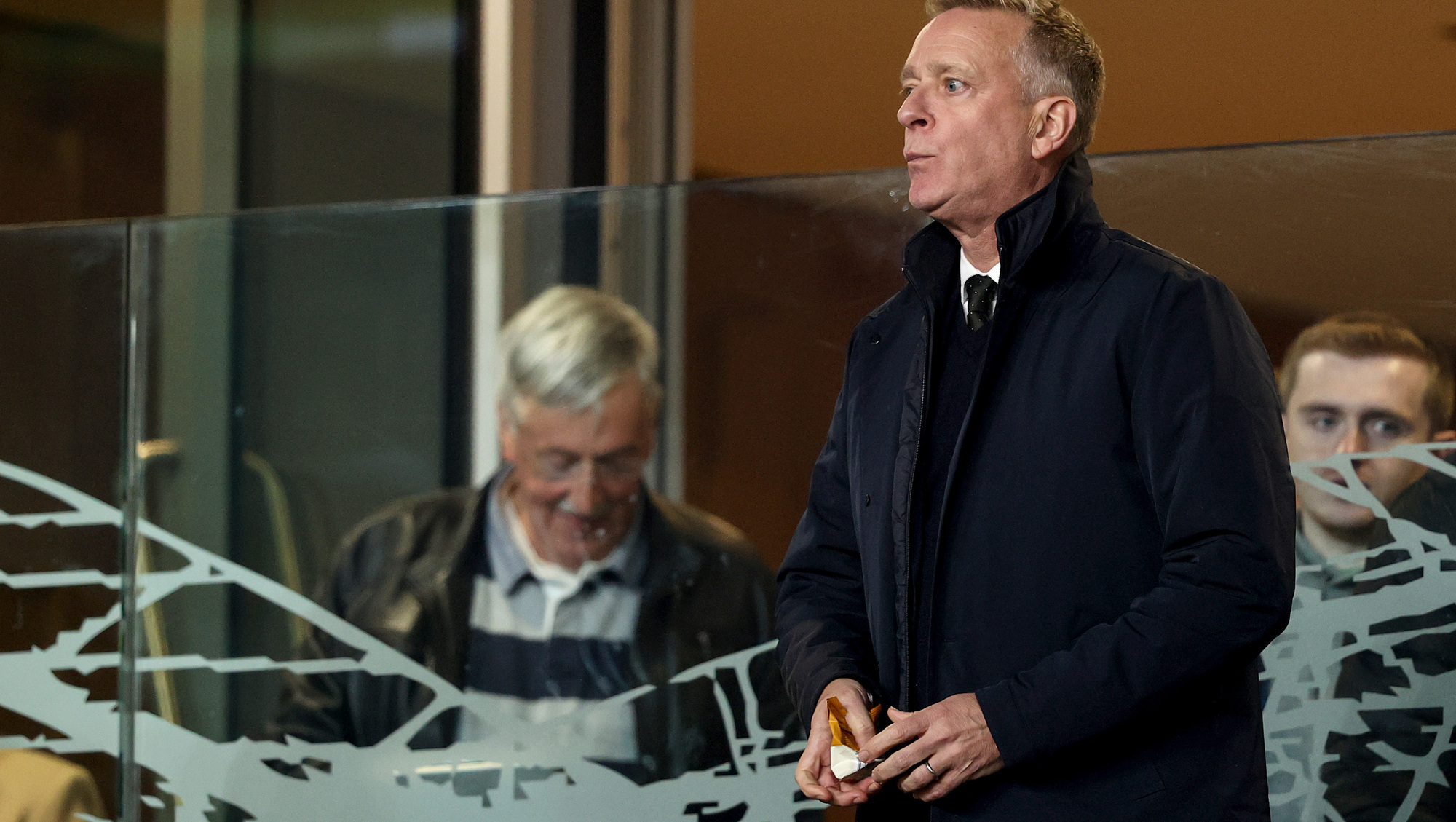
UNDER PRESSURE: FAI CEO Jonathan Hill. Picture: INPHO/Ben Brady
Jonathan Hill’s future as chief executive of the Football Association of Ireland is coming under increasing threat as it emerges that two directors considered quitting over his payments saga.
The FAI leadership is locked in a state of paralysis following the freeze on €6.8m of essential Government funding.

They have also been called before the Public Accounts Committee (PAC) for a grilling on the handling of overpayments to their supremo and other serious governance matters.
Hill’s attempt to contain the scandal by apologising to staff over receiving €12,000 in lieu of holidays not taken, despite this practice being outlawed, has failed to quell the controversy.
A Sports Ireland-commissioned audit by KOSI also revealed that €8,500 in benefit in kind (BIK) was liable on the expenses he was reimbursed for arising from his regular commutes. Monies have since been repaid.
Hill originally agreed to relocate to Dublin when appointed as John Delaney's successor three years ago but has remained at his London base since and only began shouldering his own costs since January.
The episode, coming four years after the corporate and financial crisis that led to John Delaney’s 15-year reign as CEO ending, has angered both staff and a rump of board members.
The has also learned that two directors considered resigning from the board after details of the top-up were first revealed at a meeting of the Audit, Risk Compliance and Finance committee (ARFC) at Abbotstown towards the end of October.
It is understood the payment was first brought to light - “in an almost casual manner” – in that forum at the end of October.
The meeting was attended by at least four directors, one of whom, Robert Watt, was unaware of the details prior to the meeting.
Watt, not one of the directors who subsequently threatened to resign, was said to be incensed at the discovery and voiced grave concerns to those gathered.
Watt, who is secretary general at the Department of Health, pointed out that the payments were completely against FAI company rules and in breach of the terms of the bailout agreement between the association and government to fund the body (Memorandum of Understanding).
The directors, who had been unaware of the secret payments, were convinced not to step down as the sense of disarray was already sweeping through the organisation.
Roy Barrett wasn’t due to vacate his Chairman’s seat until his successor was sourced but chose to do so by email on the night of a fractious EGM on November 9.
That was the day before revelations on the Hill issue appeared in public and Sport Ireland admitted the MOU’s terms were not ‘embedded’ in the FAI.
Ex-Tesco chief executive Tom Keohane has been proposed by the board to become Chairman but cannot do so until their delayed AGM on Saturday week, December 9.
That summit will now double up as an EGM, for the motion on increasing the female directors presence to 40 percent and maintaining the even split between independent and football directors must achieve a 75 percent majority at the second time of asking.
Four days later, an FAI delegation is due in Leinster House to be probed by the Oireachtas committee on Tourism, Culture, Arts, Gaeltacht, Sport and Media.
It remains to be seen who is present on the FAI side but Liz Joyce, Chairperson of the FAI’s Executive Performance and Remuneration Committee, is considered appropriate, given their brief, according to the latest set of financial statements, entailed reviewing the remuneration for the CEO as part of the annual performance review.
Hill is facing questions at the AGM and that committee but the PAC is the ultimate scrutineer when it comes to assessing use of exchequer funds.
Last Thursday at their meeting, James O’Connor TD raised the payments issue to Hill “as an item of deep concern”.
He wants the deep dive to encompass the distribution of Covid-19 relief fundings.
“Information, which has now entered the public domain, has made clear that urgent questions regarding the Memorandum of Understanding between the Department of Sport and the FAI require immediate scrutiny by the PAC,” said the East Cork Fianna Fail.
“Section 35 of the MoU between the FAI and Government states that the chief executive’s salary is capped at that of a secretary general – it has now transpired that the current CEO was paid in excess of €280k in 2021 and 2022.
“It is worth noting over €60m of Government funding was provided to the FAI in the past five years.”
When asked over the weekend if Hill would attend the meeting, which has been pencilled in as a priority for PAC, the FAI did not respond.
There is growing doubt about how the FAI can put the CEO in front of such a public hearing given that he has admitted culpability around the matter, first paying back the €12,000, then offering an apology to staff on November 17.
Meanwhile, the FAI board will convene this week to rubberstamp the job description and salary parameters for the boss to lead the men’s team.
A strong emphasis is to be placed in the role of head coach, insisting the figurehead concentrates on the personnel, tactics and developing a suitably professional environment for players during the brief five international windows per year.
The short-lived attempt to expand Stephen Kenny’s responsibilities into an International Football Director early in his tenure, entitling him to a place on the Senior Leadership Team (SLT), won’t be repeated.
The search to source Kenny’s successor officially began when his contract wasn’t renewed last Wednesday but Director of Football Marc Canham will be entrusted with interviewing prospective candidates based on the employment criteria laid out.
The salary available is expected to be around €560,000 but carrying hefty bonuses for earning a World Cup playoff berth through next Autumn’s Nations League, promotion to League A and, most lucratively, the unlikely feat of direct qualification for the 2026 World Cup.
Sixteen slots are available for European teams for the expanded 48-team showpiece.
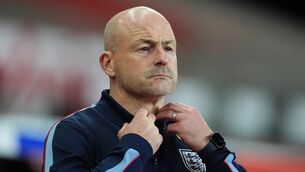
Lee Carsley and Chris Hughton remain the two frontrunners to land the post.
Both former Ireland internationals, Carsley would be available sooner as he’s known to have a short notice clause in his contract with the English FA to release him from the U21 role he enjoyed ultimate success in during the summer by overseeing the first Euros triumph for 39 years.
The FA were reluctant to lose Carsley in the middle of the most hectic blitz of the year, September to November, as the FAI were considering a premature jettisoning of Kenny.
With no international game until March, and England well placed to reach the finals to defend their crown, England won't stand in Carsley's way to open negotiations with the FAI.
Hughton has African Nations Cup commitments with Ghana in January.
Other candidates such as Neil Lennon, who declared his unequivocal interest in the vacancy on Saturday, and Roy Keane are possible too as the FAI will keep their options open.
Steve Cooper’s precarious position at Nottingham Forest could also become a factor in the hunt.
He enjoyed underage success too with England, for whom both Canham and Hill worked, and has accrued credit for taking Forest into the Premier League and keeping them there at the first attempt.
Ironically, his miracles were performed after replacing Hughton, whose major blot in management remains his relegation-threatened stint at the City Ground.