Venables brought joy back to Spurs and England and good humour wherever he went
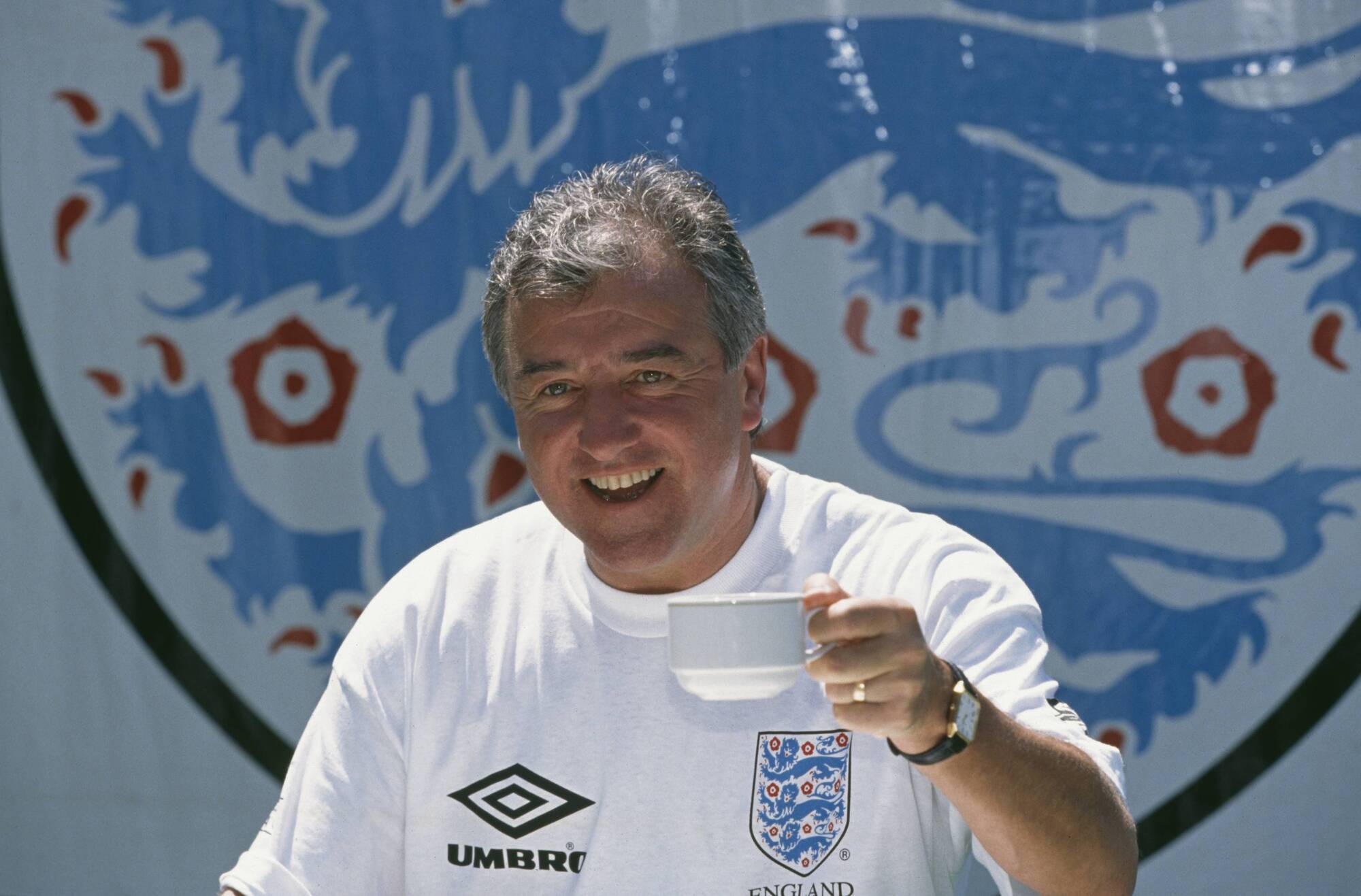
Manager Terry Venables holding a cup of tea at a training session of the England national football team at the Bisham Abbey sports centre in Berkshire, 4th June 1996. (Photo by Phil Cole/Getty Images)
Tributes poured in after the death of Terry Venables, the former Crystal Palace, QPR, Barcelona and England manager, but nowhere was his passing felt more keenly than at Tottenham, where he won the FA Cup as both a player and manager.
Shortly before kick-off ahead of Tottenham's 2-1 defeat by Aston Villa, a minute's applause was scheduled, but lasted longer, such was the strength of feeling from both sets of supporters. Older Spurs fans remember him as a stylish midfielder signed from Chelsea who lifted the FA Cup in 1967, who then returned as manager of one of their most entertaining sides in the club's history, winning the 1991 FA Cup with stars such as Paul Gascoigne, Gary Lineker and Gary Mabbutt.
He only left after an acrimonious rift with Alan Sugar, with whom Venables had taken over a share of the club's ownership after Tottenham's well-documented financial problems in the early 1990s. The fall-out meant Sugar was reviled by the majority of Spurs supporters for years afterwards, while Venables bounced back in typical style to manage England to within a whisker of reaching the final of Euro '96, losing to Germany in the semi-final on penalties.
But Venables' legacy was assured after bringing joy back to England's supporters after some bleak years, the high-water mark being his team's 4-1 defeat of the Netherlands, with Gascoigne, Alan Shearer and Teddy Sheringham in scintillating form.
A catalogue of Venables' achievements as a player and manager would put him into the top echelon of coaches from his era, taking unfancied sides such as Palace and QPR to record heights before leading Barcelona to their first La Liga title in many years. The following season it was another penalty shoot-out that denied his Barca side their first European Cup final win, and Venables was in great demand before he joined Tottenham in 1988, which is where this correspondent first met him.
I was the Tottenham reporter for Clubcall, the telephone news service that kept fans updated long before the dawn of the internet and 24-hour rolling sports news on Sky, Talksport and the like.
Back then, fans could dial a premium line to get updates from the training ground and matches, including interviews with the manager and players. Imagine the thrill – and nerves – from a young reporter given the task of speaking to Venables, Gascoigne, Lineker and the rest.
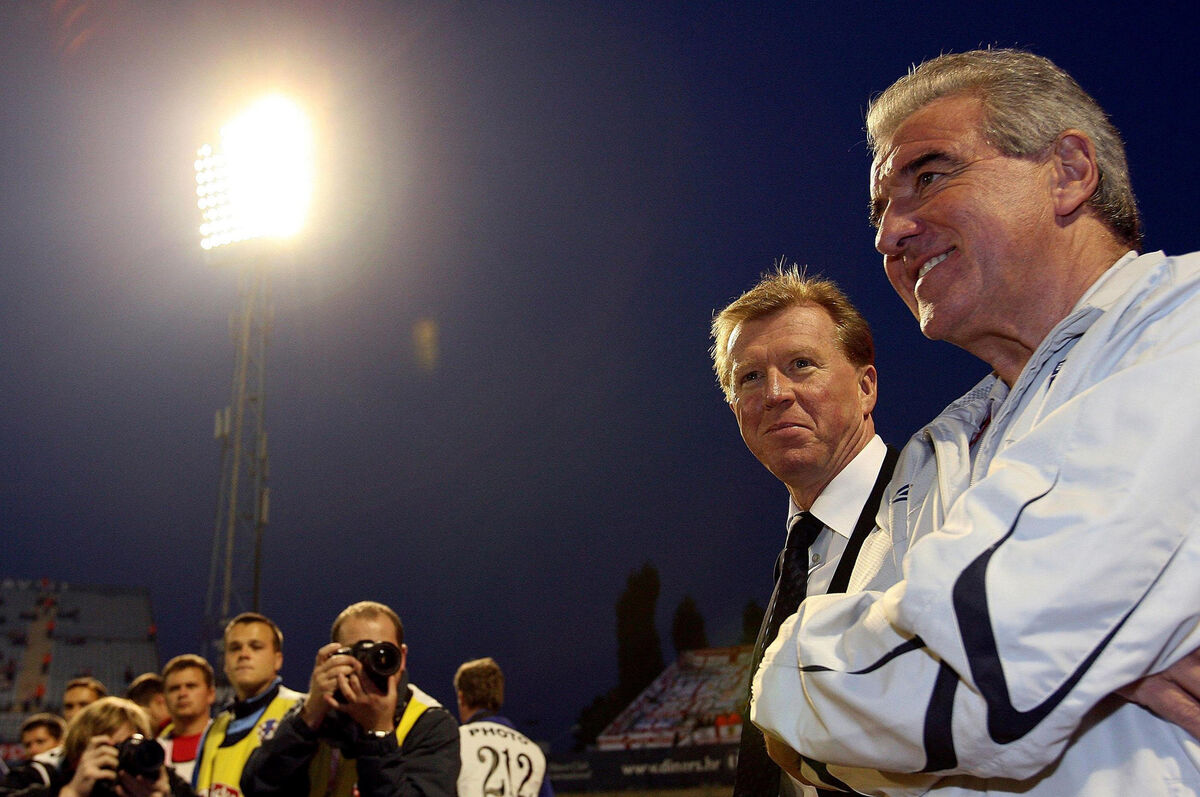
From the first day meeting him at his White Hart Lane office, he was always friendly, helpful and fun, only once losing his temper after a misunderstanding in the tunnel at Derby County's Baseball Ground. Typically of Venables, he quickly apologised and moved on.
He always had time for the media, understanding, unlike his great friend George Graham, that you were better off having the press on your side than alienating them. Early in my career covering Arsenal and Tottenham for Hayters, the renowned sports news agency, I discovered Graham's infrequent press conferences were combative and rarely productive, while Venables would invite you to the training ground every day of the week, and always come up with a newsline to send reporters home happy.
He was always approachable, even away from Tottenham, when those reporters close to him would regularly gather at Scribes, the west London club he owned. With his wife Yvette taking care of business, Terry would take care of us, playing host and entertaining us with stories and even songs – he had a fine voice and even recorded the odd single in his playing days.
More importantly, he fostered a similar mood of inclusiveness and generosity of spirit among his players, and he achieved the near-impossible task of getting the best out of Gascoigne with his superb man-management skills.
Gascoigne turned down Manchester United to join Tottenham from Newcastle United in 1988, and it has often been said that the livewire Geordie might have prospered better under the tutelage of Alex Ferguson.
But it is doubtful anyone could have managed Gazza better than Venables, who gave the maverick midfielder the freedom to express his full range of skills on the pitch while reigning in the worst of his excesses off the field.
Gascoigne, like so many young players, saw Venables as a father figure who might indulge them to some extent, but demand excellence when it mattered. More experienced players drew on the coach's sharp mind and innovative ideas, and his ability to communicate sometimes complex ideas in a simple and straightforward way. I still speak to many players from that era, including Lineker, who was signed by Venables for both Barcelona and Tottenham, and they all say the same thing; he was the best manager they ever played for.
Long after he retired from top level football, I used to ghost-write a column with him for a football magazine, and he once told me about his relationship with Diego Maradona, whom he had sold soon after arriving at Barcelona. Instead of being resentful, the great Argentinian respected the reasons and understood why it was to the benefit of manager and player, who both went on to great success in the ensuing years. They would keep in touch and became good friends, to the extent Maradona personally requested Venables be appointed manager when playing in a prestigious friendly for a Rest of the World XI.
In recent years dementia started to take its toll and Terry withdrew from public life. Sunday's sad news was not a great surprise to those who understood his situation, but was still felt with great sadness, not only by those who knew him, but also by the multitude of fans who loved him as a great entertainer, larger-than-life character but most importantly as a great football man.

CONNECT WITH US TODAY



Be the first to know the latest news and updates