Canada ponder what to do with legend Christine Sinclair
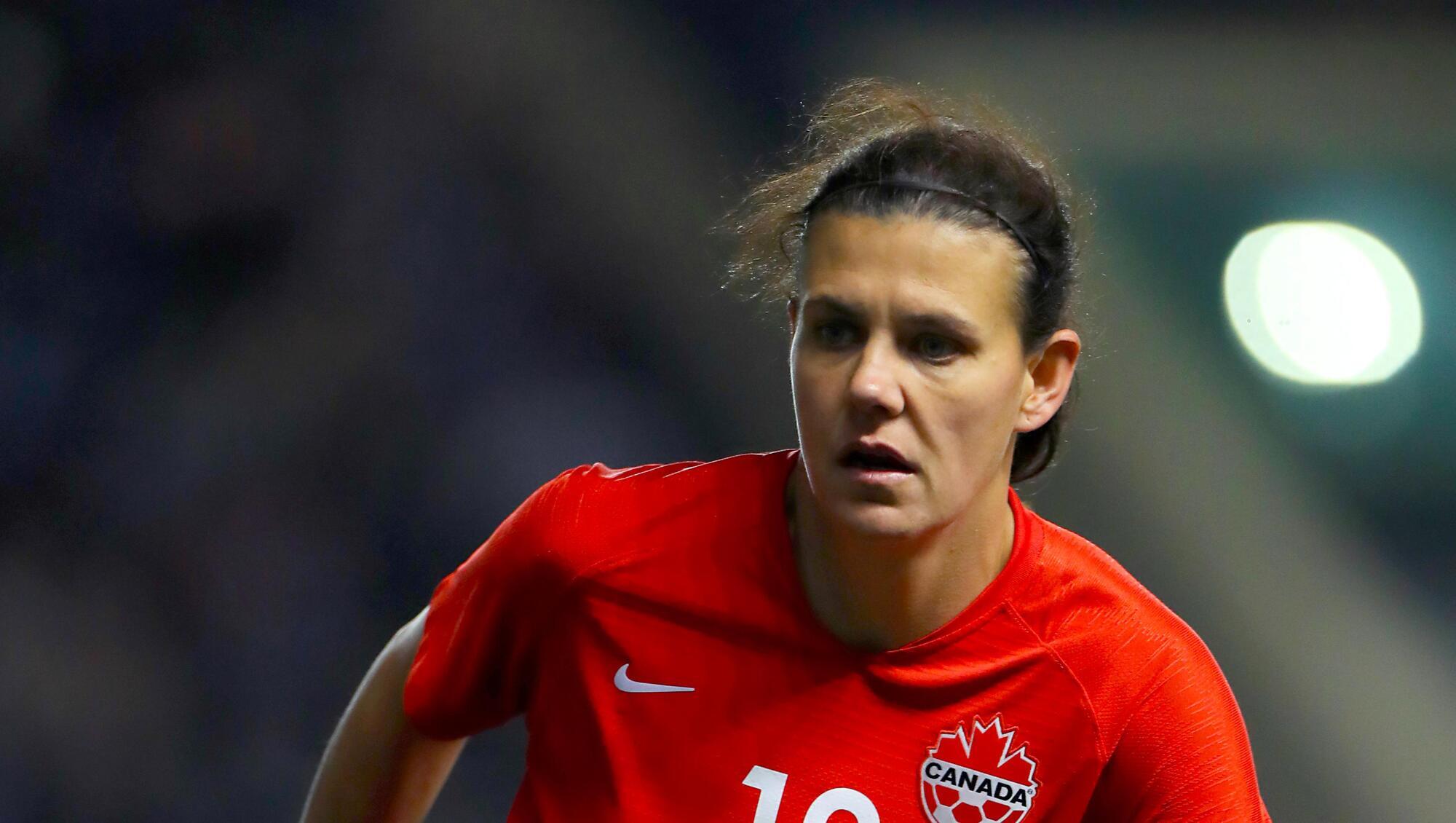
GOAT: Canada's Christine Sinclair. Pic: PA
Christine Sinclair has done plenty of speaking over the past 12 months, far more than she’d have liked. So when the captain departed Canada’s World Cup opener without talking to the media she could have been forgiven. Yet the questions remain.
The mixed zone Sinclair stared straight ahead through after Friday’s wholly underwhelming 0-0 draw with Nigeria was in Melbourne’s Rectangular Stadium. The venue’s name felt particularly ironic once the final whistle sounded, given that Canada had looked completely devoid of anything resembling an identifiable shape.

The reigning Olympic champions, the highest-ranked team in Group B, a side with so many of its key players arriving Down Under in their prime, Bev Priestman’s Canada had been vocal about their aims for this World Cup — winning the whole damn thing. Yet the result, and especially the performance, against Nigeria were in keeping with recent trends for a team that is ranked the seventh best in the world but is stuttering.
It could have been so different had Sinclair, the greatest goalscorer in women’s and men’s international football history, converted a second-half penalty. But the captain’s miss, having never looked confident and had neither the power nor placement required, was also in keeping with more personalised trends for one of the most beloved athletes in these parts.
The fact of the matter is Canada flew into Perth on Monday afternoon with plenty of quandaries swirling overhead, some issues more long-standing, some fresh. But one of the most vexing questions centres on the skipper.
Sinclair’s place in the highest peaks of the Canadian sporting landscape is already assured. Her goalscoring exploits and particularly her performances on the Olympic stage, where she has led Canada to three straight podiums including the top spot in Tokyo, have assured her of as much.
In the April window when Vera Pauw and Ireland travelled Stateside, Canada went to France and trained at a countryside chateau with a working farm. When a curious bearded goat sidled up alongside Sinclair, the photo captions wrote themselves. So many of the greatest-of-all-time debates that permeate the sporting discourse are flawed and tiresome. But in Canadian football there is no such debate: .
But the World Cup has been a much less welcoming tournament for both captain and country and as her sixth tournament approached at the age of 40, some of Sinclair’s teammates who have retired and forged media careers have debated whether she should still be a starter in Priestman’s side. The loss of dynamic attacking midfielder Janine Beckie, ruled out of the tournament with an ACL injury, quietened the chatter somewhat, as did Sinclair’s recent form for the Portland Thorns in the NWSL.
But the Nigerian stalemate when Sinclair, with her video game numbers of 190 goals in 324 caps, operated as a deeper 10 behind striker Jordyn Huitema has brought the start-sub question roaring back. Sinclair is of course not as mobile as she once was but her calmness, vision and innate intellect have helped her morph through many variations as she has aged and doubters have been silenced. Yet in Melbourne almost nothing looked sharp, the captain coughing up possession on a number of occasions and struggling to get on the ball in a meaningful way.
She was far from alone. Priestman’s side were one of the first to land in Australia working through an extended camp in Queensland in lieu of friendlies, yet their rustiness and lack of cohesion was all too clear. Unfortunately some of that is by circumstance rather than design.
Sinclair and her teammates have made more appearances this year in front of Canadian parliament than in front of their own fans. As Canada Soccer, the national association, rumbles through constant chaos and financial mismanagement, Priestman’s side have suffered with budgets cut and plans curtailed. Since April they have played just two friendlies, with Canada Soccer failing to arrange a send-off match, to Ireland’s four, which would have been five if not for the aborted test against Colombia.
Sinclair, shy and deeply private, has taken on the campaigning and protest as a figurehead. “Our sport is at a critical moment,” she said in front of MPs in March. “The future should be brighter than ever but our most painstaking battle has been with our own federation.”
That battle was put on pause for this tournament, yet it’s fair to wonder whether its wearying effects have played a part in Canada’s recent form. After Nigeria, Priestman pointed to the fact that her team also drew its opening game in Tokyo before winning it all but winning was a more familiar habit to fall back into then. Not so now. Her side have won just once in seven games and failed to score in four of their last six. An approach that is built on defensive solidity has frayed a little too with 10 conceded in their last eight.
The expected return of Chelsea’s Jessie Fleming for Wednesday’s clash in Perth would provide a badly needed boost. Yet there too Sinclair’s status looms large. Ironically, midfield creator Fleming was labelled as ‘the next Sinclair’ in 2015 when Canada hosted the World Cup. Yet here eight years later she finds herself still playing alongside the captain. There’s a school of thought now that the Sinclair of 2023 in fact inhibits some of Fleming’s playmaking instincts.
Were she to score against Ireland Sinclair would become the first player ever to do so at six different World Cups. Brazil icon Marta is chasing that same piece of history Down Under. Notably though, she does so now as a super sub.
With the pressure rising, Priestman may finally be contemplating a similar role for Canada’s icon. But you sense sacrificing the GOAT won’t be an easy thing to do.