Dion Fanning: History is out of the way, Ireland can now return to days of miracle and wonder
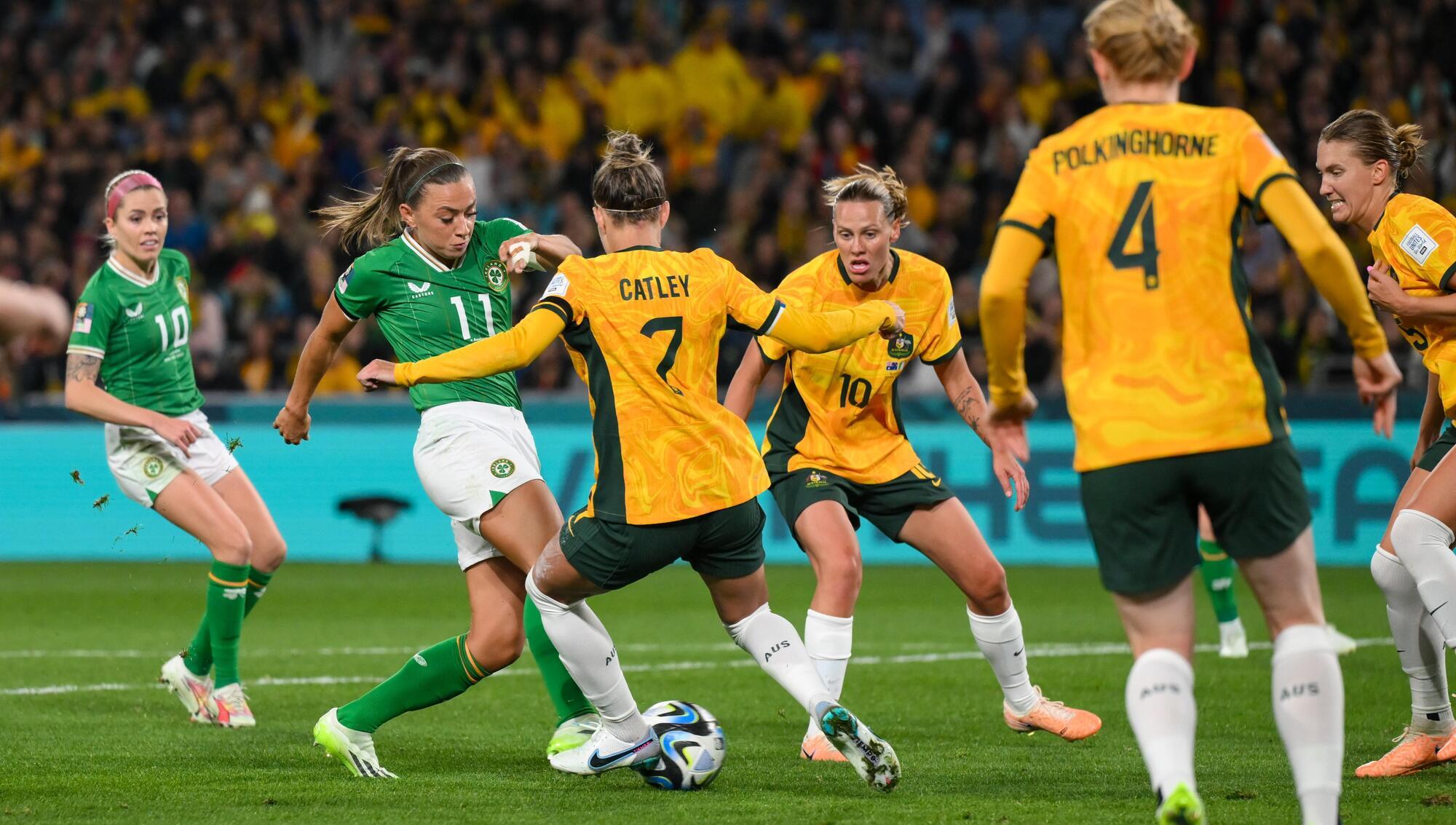
BIG CHANCE: Katie McCabe of Republic of Ireland in action against Steph Catley of Australia during the FIFA Women's World Cup 2023 Group B match between Australia and Republic of Ireland at Stadium Australia in Sydney, Australia. Photo by Stephen McCarthy/Sportsfile
“Come on Courtney.” As Australia prepared to take the penalty the cameras caught Marissa Sheva mouthing these words before closing her eyes as if in prayer.
Sheva had given away a penalty with a careless foul, turned to look anxiously at the referee, then asked if VAR could overturn the decision. With all lines of enquiry shut down, she had only one appeal court left: Courtney Brosnan.
Ireland, once again on a crucial occasion, were looking to their goalkeeper from the penalty spot.
There was no injustice about this decision but the penalty, so brilliantly converted by Australia’s Steph Catley, transported Ireland into a familiar arena.
At half-time, Vera Pauw had told her players that “this is a game that will be decided by one mistake”.

Pauw wanted her players to consider which team would be making this mistake. Perhaps this thought lingered too long in their heads because within four minutes, Sheva had given away the penalty that would decide the match and Ireland were chasing when their gameplan was based on not chasing.
Ireland had gone into the game stressing their underdog status with a determination that made it border on the corny. But the underdog position had also been assisted by events the squad could have done without, going back to the fuss about the celebrations in Hampden Park to The Athletic’s eve of tournament coverage of the allegations made — and strenuously denied — against Vera Pauw, as well as the chaotic abandoned friendly against Colombia.
Ireland’s preparation seemed to be doing the opposite of what preparations are supposed to do by putting them at a disadvantage. Then, just over an hour before kick-off, events appeared finally to turn in their favour. When it was revealed that Sam Kerr was out with a calf injury, Australia’s preparations at the last minute matched Ireland’s for chaos. That this had been kept secret until the team was revealed showed what a loss Kerr was, but the jubilation among Ireland’s supporters and commentators couldn’t help but highlight some insecurity.
It was understandable. Kerr was a loss but Australia were still a daunting prospect without her.
Ireland took on that challenge with an approach that was aggressive and played on the margins. Katie McCabe was the leader in every sense of the word, driving Ireland away from their own goal with her aggression and walking a fine line with that aggression as well, with one tackle on Kyra Cooney-Cross fortunate to avoid a greater penalty from the referee.
McCabe had an ongoing tussle with Hayley Raso which again emphasised her importance to Ireland as she set a standard of determination and vigour. If Ireland was to be an underdog, it was important to be known as one with fight.
This was also an occasion when RTÉ could show their value to their nation, especially after all they’ve been through. The voice of the historic days for Irish football was in the commentary box but George Hamilton, as well as narrating the present, now appeared to be able to predict the future. Everything he said on commentary would manifest itself on our screen several seconds later. George was ahead of our pictures and it wasn’t a good feeling. Those of us who had the option reluctantly headed to ITV. RTÉ is where we feel we should be on these days of miracle and wonder but instead it was another bleak 45 minutes for that public service broadcaster before things were repaired.
Ireland had just over 40 minutes to repair the damage the penalty had done to their World Cup hopes. All they tried could offer some encouragement for the games to come, while simultaneously leaving them with regrets that they had come away from this match with nothing.
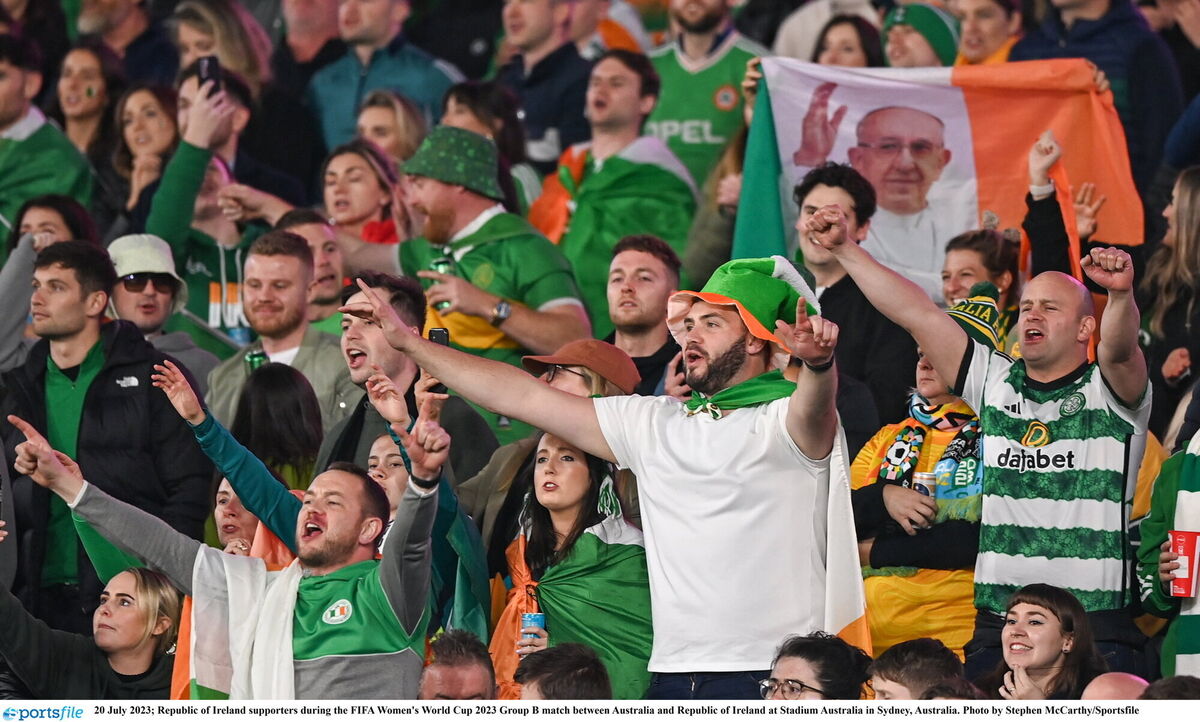
Sheva and Sinead Farrelly came off after 63 minutes for Lucy Quinn and Abbie Larkin. The introduction of Larkin, in particular, made a huge difference and she took on Australia in a way that suggested that maybe Ireland had made a mistake in playing so conservatively. Without Kerr, Australia weren’t as impressive and while much had been made of their home advantage, this wasn’t Naples on a Champions League night. The Irish supporters made more noise and the stadium itself wasn’t built to draw hostility from supporters.
With a little more composure (which may have been present if Ireland hadn’t been chasing the game), there could have been an equaliser which would have been in keeping with Irish tradition on a World Cup stage. Ireland could also argue they deserved it for their aggression in the first half and their heart as they chased the game in the second.
Megan Connolly’s free kick went close in the last minute of normal time, while the historic chance seemed to arrive in the seventh minute of the six minutes of injury time, when Larkin ran down the right, found the person you knew would be composed — McCabe — but she couldn’t get the ball out onto her left foot and was unable to shoot as powerfully with her right.
These were the opportunities that Ireland will regret and the final whistle was accompanied by the comforting phrases that often are part of an Irish defeat in these circumstances.
Ireland had been “brave” and it was a “defeat with honour”, but those final minutes were a demonstration that so much more is possible with this Ireland team.
Sheva had been in tears in the dugout as she looked tortured by the penalty she gave away, but that may simply have been the end of the beginning for this side at this World Cup.
Maybe after all the chaos, the unpredictability and unwelcome intrusion that was their preparation, the final 30 minutes of this game reminded this side that being an underdog also requires a close acquaintance with audacity. That takes a degree of bravery which was evident in different ways throughout but most obvious in an attacking sense in the final minutes.
Canada will be a tougher test than Australia but history is now out of the way, for better and for worse. Ireland will never again walk out for that historic moment: their first ever game in the Women’s World Cup. That scene, electrifying as it was, now belongs to the past.
The future is now all that concerns Ireland, a future where this team can get on with business, even if in this team’s case that business is often extraordinary, a place where the improbable becomes probable. They have taken care of the history, now they must look for more days of miracle and wonder.




CONNECT WITH US TODAY



Be the first to know the latest news and updates