Pauw enlists periodisation expert Verheijen to ease fears on player burnout
Club versus country rows are brewing after the European Club Association recommended invoking the Fifa calendar criteria and not releasing players until July 10
Pauw enlists periodisation expert Verheijen to ease fears on player burnout

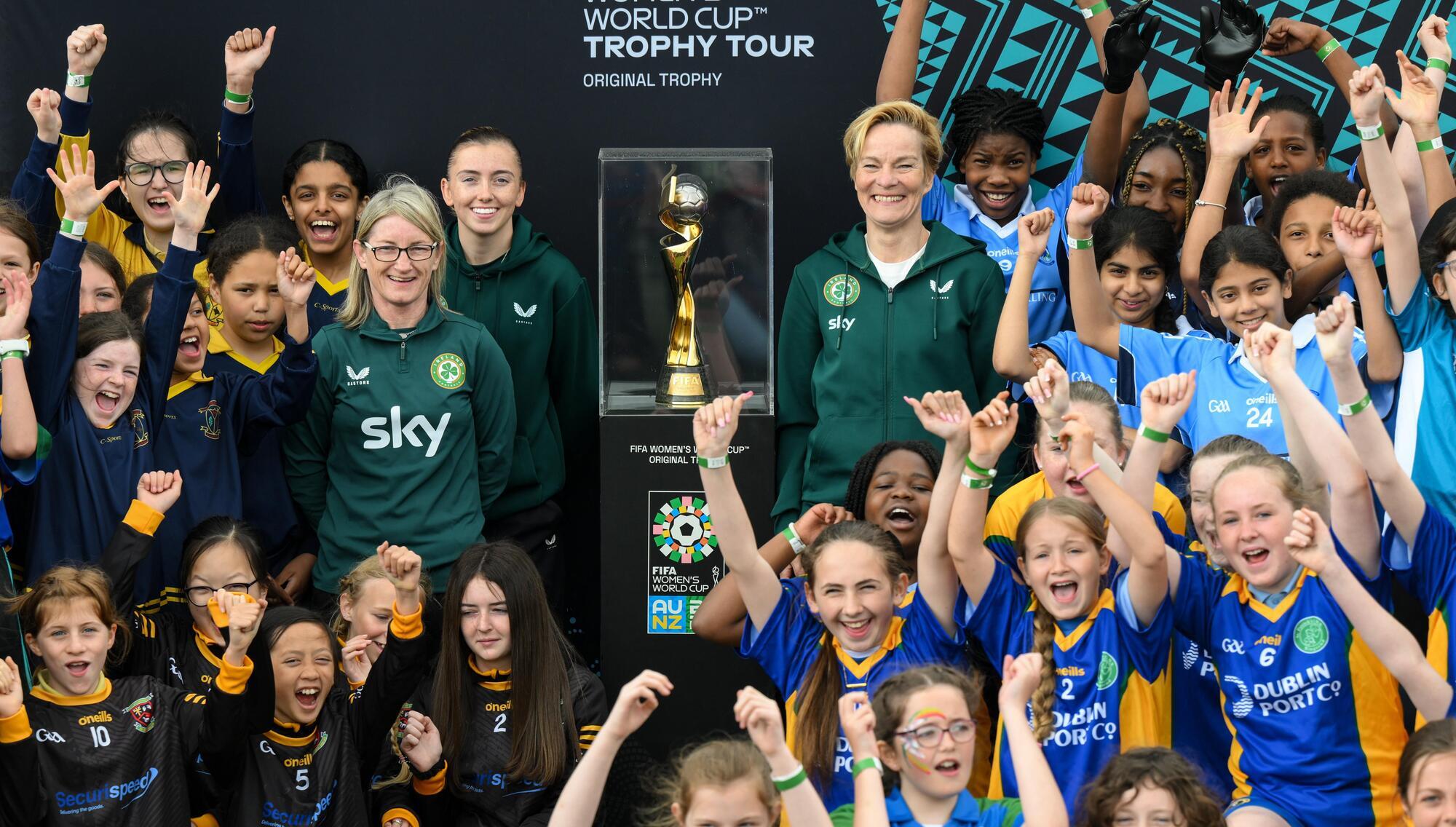
Republic of Ireland manager Vera Pauw, right, former Republic of Ireland international Olivia O'Toole and Republic of Ireland international Abbie Larkin with participants and the FIFA Women’s World Cup trophy during a grassroots girls schools blitz, part of the FIFA Women’s World Cup Trophy Tour in Dublin, at Irishtown Stadium in Dublin. Pic: Stephen McCarthy/Sportsfile

Vera Pauw has enlisted the services of her controversial Dutch compatriot Raymond Verheijen for Ireland’s Women’s World Cup campaign as she eases fears of player burnout.

Club versus country rows are brewing after the European Club Association recommended invoking the Fifa calendar criteria and not releasing players until July 10 - just 10 days before the tournament starts in Australia and New Zealand.


Player welfare, amid a startling spike in ACL ruptures across the women’s game, is behind their pleas but Pauw insists she and the FAI will ensure protection of squad members called up for the training camps beginning in June.

Dutch fitness guru Verheijen is a renowned specialist in periodisation, the clinical term referred to for balancing rest with workload.

His biggest fan is Guus Hiddink, who has brought him to major tournaments while managing the Dutch, South Korea and Russia, while he worked as Wales assistant coach under the late Gary Speed.

Pauw has leant on his expertise for the past 25 years too but his outspoken views – such as branding David Moyes a ‘dinosaur’ for ‘overtraining’ Robin van Persie at Manchester United – have courted controversy.

“I’m bringing someone in from the outside but he is the best in the world,” explained Pauw, talking in Dublin at the roadshow of the World Cup trophy.

“I always go for the best and he is the absolute expert in this area. We have worked together since 1998 and I have added to his programme but when you go to the specific details, you need someone to focus just on that.

“He’s a football physiologist and knows exactly how and when (to rest). I’m putting together a proposal based on our periodisation and myself and our sports scientist Niamh McDaid are flying to the Netherlands next week to have a meeting about it all.” 

Ireland have two friendlies remaining before the travel Down Under, at home to Zambia and France on June 22 and July 6 respectively, but they assemble on June 12.

With the English Championship season complete and the Super League due to finish on May 27, Pauw has guaranteed players a rest period but not the drought advised by the ECA.

“Of course, it is a worry,” she said about the ECA edict.

“I have sent letters to all the clubs to explain our plan but the ECA does not realise there are players who have 11 weeks of no football before the World Cup. Then they are dumped into Australia jetlagged from a long flight just 10 days ahead of the tournament.

“If we were to do this, you can put an ambulance next to the pitch for all the ACLs that will happen.

“Our Championship players will have four weeks of complete rest. They can do some movement if they feel like it, but there is no strict training.

“They will then get an individual programme leading up to camp, so they are ready for camp.

“Camp begins with building up football fitness. The players who finish later will have at least two weeks of rest.

“The Championship club coaches that I’ve spoken to are extremely happy with what we’re doing.

“Only one club said they’re waiting on the European Club Association. I’m thinking: ‘Sorry, you’re responsible for the health of your players’. The ECA have no experts on periodisation so on what basis do they think they can order a programme for players?” 

Ireland begin their group against co-hosts Australia on July 20 before what’s certain to be an 83,000-sold out crowd inside the Sydney Olympic Stadium. They then meet Olympic gold medalists Canada on July 26 in Perth before concluding the pool in Brisbane five days later against Nigeria, with the top two progressing to the knockout stages.

More in this section

Sport

Newsletter

Latest news from the world of sport, along with the best in opinion from our outstanding team of sports writers. and reporters

Cookie Policy Privacy Policy Brand Safety FAQ Help Contact Us Terms and Conditions

© Examiner Echo Group Limited