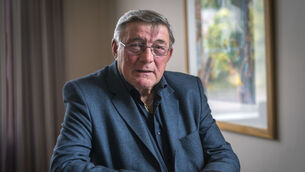
Mike Ryan: The story of the founding Irish father of the US women's national team
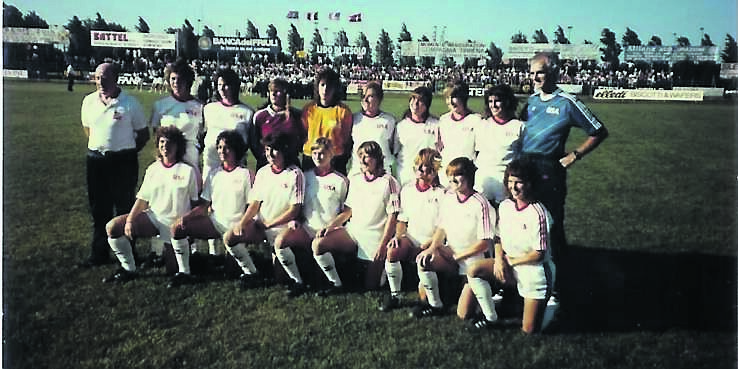
BACK IN THE DAY: Mike Ryan, far left, before the 1985 debut of the USWNT in Jesolo, Italy. Pic: Ryan family
Thirty eight years later, Michelle Akers still vividly remembers the fire and the ferocity — and the frothing too.
The US Women’s National Team of 2023 who Vera Pauw’s Ireland line up against here in Austin on Saturday are a behemoth, reigning and back-to-back World Cup winners, six years undisturbed atop FIFA’s rankings. They’re a beacon too, of hope and inspiration, of progress and pride. A marketing dream.
But late in the summer of 1985, when the team’s first inauspicious steps were made in a quiet corner of Italy, they were none of the above. They were a rabble. Mike Ryan, a 50-year-old Dubliner and the first coach in the history of the US women, was their rouser.
“We arrived in Italy where Mike promptly told us we didn’t have enough national spirit,” Akers, the US WNT icon, two-time World Cup winner and FIFA’s Female Player of the Century, told the this week.
“He said we’d no understanding of what a privilege it was to play for your country. It was completely true. So at practice, he made us all stand in a line and yell out the national anthem. It was crazy. Mike’s spit was flying because that’s what happened when he yelled a lot! But he was right.
“That experience, with Mike knowing what it meant to represent your country because of his Irish pride, it was really life and career-changing. It set the stage for a lot…”
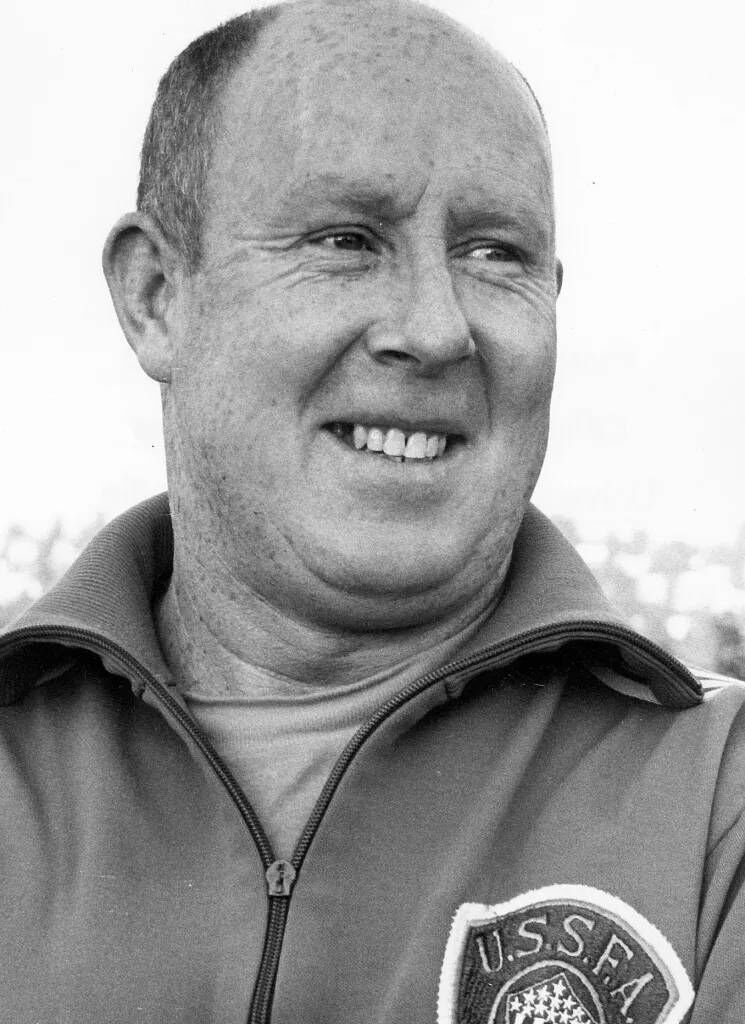
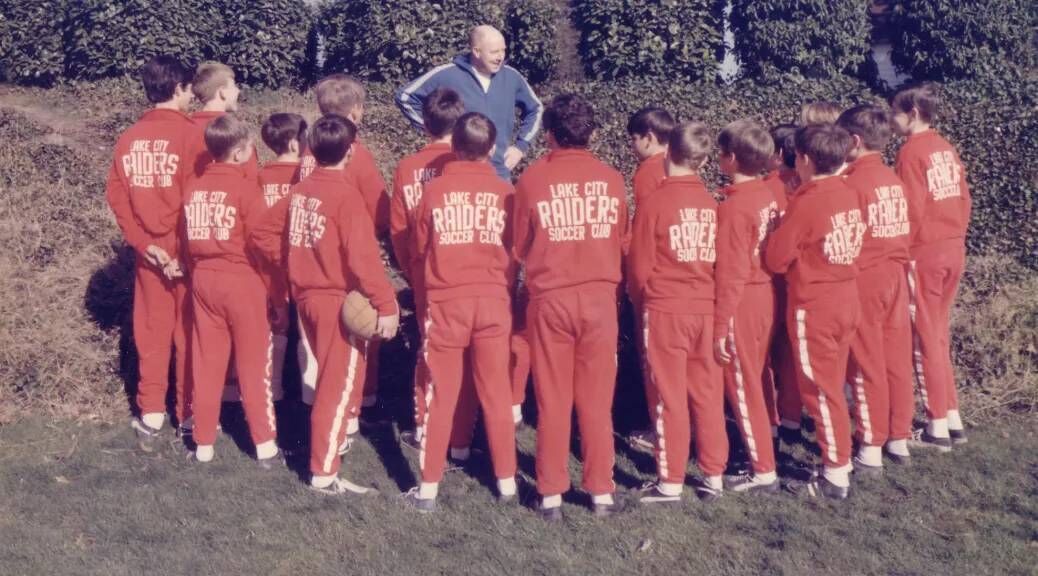
From East Wall to the Pacific Northwest, Ryan’s own life and career is worthy of a stage. Or a screen. A footballing Forrest Gump who began coaching in his teens in Dublin while emerging as a prolific national cycling champion, who emigrated to New York and joined the US Army, serving in Germany alongside Elvis Presley, who settled in Seattle and turned the place into America’s fertile football heartland, who made a seminal impact with the national team but hundreds of smaller impacts and imprints with university, high school and club teams for nearly half a century. A man who loved where he was and never forgot where he came from.
Ryan passed away in 2012 at the age of 77 after a long illness. The second line of an obituary that ran in the Seattle Times belonged to the man himself: “I love teaching rather than coaching. With coaching you have a goal, like a championship. I just want people to love the game.” In all the stops on Ryan’s road, it was a mantra he never wavered from.
“Our dad was always humble. He coached because of his love of the game,” Ryan’s daughter Siobhan, one of four children, tells the
“He was not concerned about recognition or clout. I am not sure he had a grasp on the impact he made in the Pacific Northwest, let alone nationally.”
Yet his first impact came on the road, literally. With the Dublin Wheelers, Ryan crissed and crossed Ireland and beyond. "He was a very good cyclist,” son Kevin says from Seattle.
“The story from the family is he kept bringing home cups and they didn't have room, so they told him to win something useful like silverware!”
In the next race, Ryan duly claimed a cutlery set.
In 1957, he followed another route and emigrated to the States. Soon after arriving, with national service a fast track to citizenship, he enlisted in the army.
“He was first stationed in Fort Hood, Texas,” says Kevin. “He told a story about a sergeant thinking he was trying to get a medical discharge as he kept getting sunburnt!”
He shipped out to more hospitable climes in Germany serving alongside the King during Presley’s military service, photos of the two rubbing shoulders on base treasured by the family.
Upon his return to the US, Ryan was sent to Fort Lewis, south of Seattle. The melting pot port city, rich in natural beauty (and rainfall) felt like home and would be for the next 50-odd years.
It’s where Akers first heard the Ryan roar. Having built the soccer programme at the University of Washington, he coached myriad other sides, plenty of them to glory. His FC Lowenbrau team were prolific US women’s champions.
In June 1985, history and the US Soccer Federation came calling. He was named the country’s first women’s coach and Ryan’s initial reaction to Soccer America magazine captures how ground-up the job would be. “I’m a little vague about all the details,” he said.
Some clarity arrived in August with an invite to the Women’s Mundialito tournament in Italy. Ryan’s first squad included a teenage Akers. It was far from seamless. The team inherited men’s kits and sewed on US WNT patches. They lost their first ever game 1-0 against the hosts. But Akers wrote her name into history against Denmark with the country’s first goal in a 2-2 draw. Defeats to England and Denmark followed.
“The results are immaterial,” Ryan typically said afterwards. “Given proper training and support, I’m convinced the US can play competitively with any country in the world.” Akers concurred then — and now.
“In a matter of two or three games, we learned what it meant to play for your country but also what it meant to play in an international setting, away from home,” she said. “Mike made that mark. It’s crazy to think those four games started everything for us.”
But it would be the end for Ryan, whose fire and demanding nature may have had something to do with it. He was replaced by Anson Dorrance who led Akers and many of Ryan’s group to a first World Cup win in 1991. “The future was bright,” says Kevin.
"He was disappointed to not be brought back.” Undeterred, Ryan went back to his mission: cultivating the culture and future of the game in the Pacific Northwest.
He brought youth teams on trips home to Ireland and in later years the Emerald City honoured his impact. Tributes flowed more freely when he passed from an auto-immune disorder in 2012.
“Mike Ryan was there at the very beginning of what has become the most successful women’s international soccer program in the world,” then US Soccer president Sunil Gulati said. “His contribution will never be forgotten.”
This week Ryan’s adopted and original home come together on a more competitive footing than ever before, something that Akers is sure would please the man himself.
“I actually got to talk to Vera recently,” Akers revealed.
“Just sharing some of her stories and how excited she is to play here against the US. I’ll be watching closely after talking to her. To hear Vera talk about the support and enthusiasm they have for the women’s game now was, gosh, very exciting.”
The US women, however, remain the bar. Thanks in no small part to their founding Irish father.


CONNECT WITH US TODAY



Be the first to know the latest news and updates