Faraway green hills: Where football's Irish Rovers find home
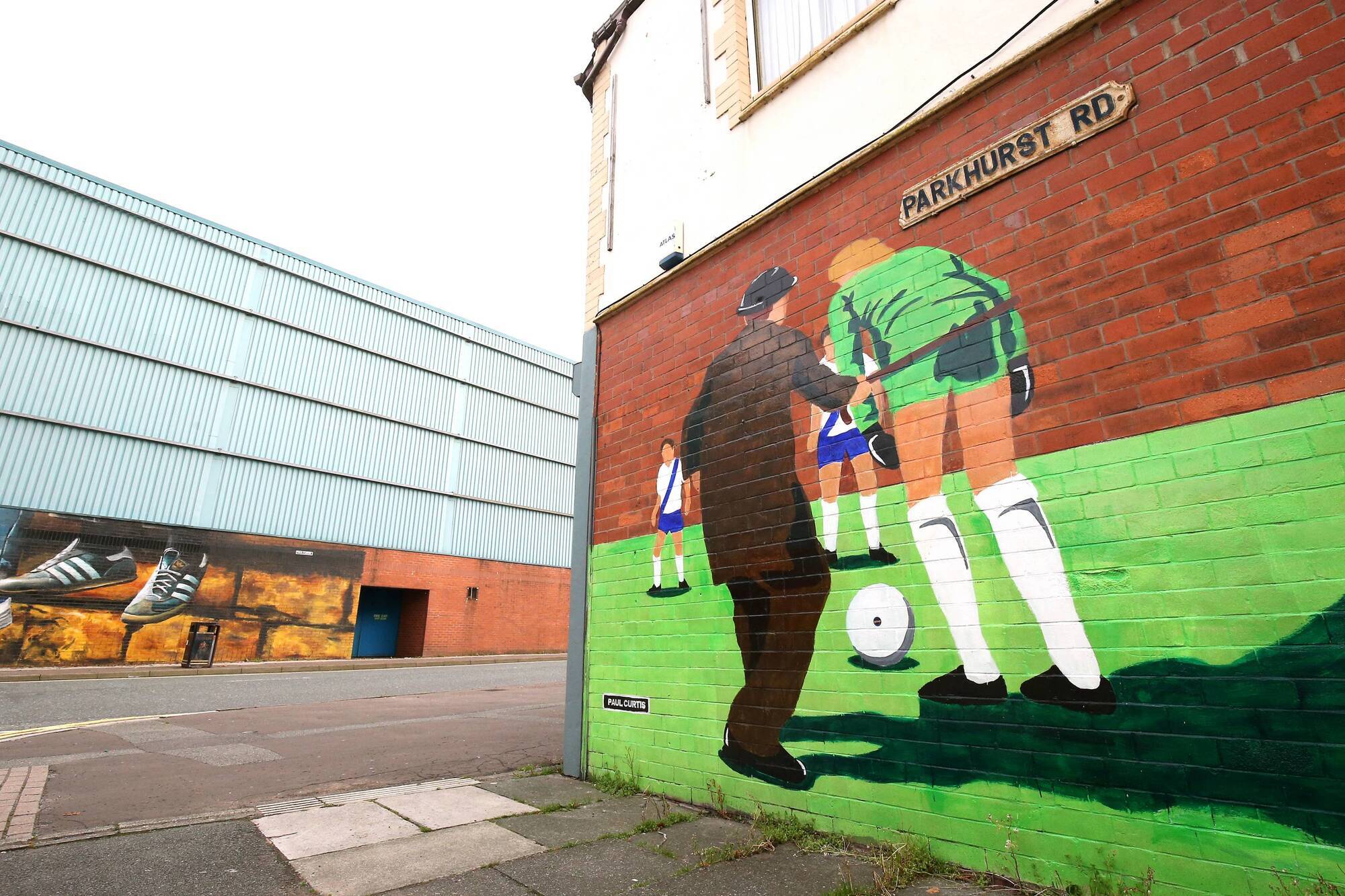
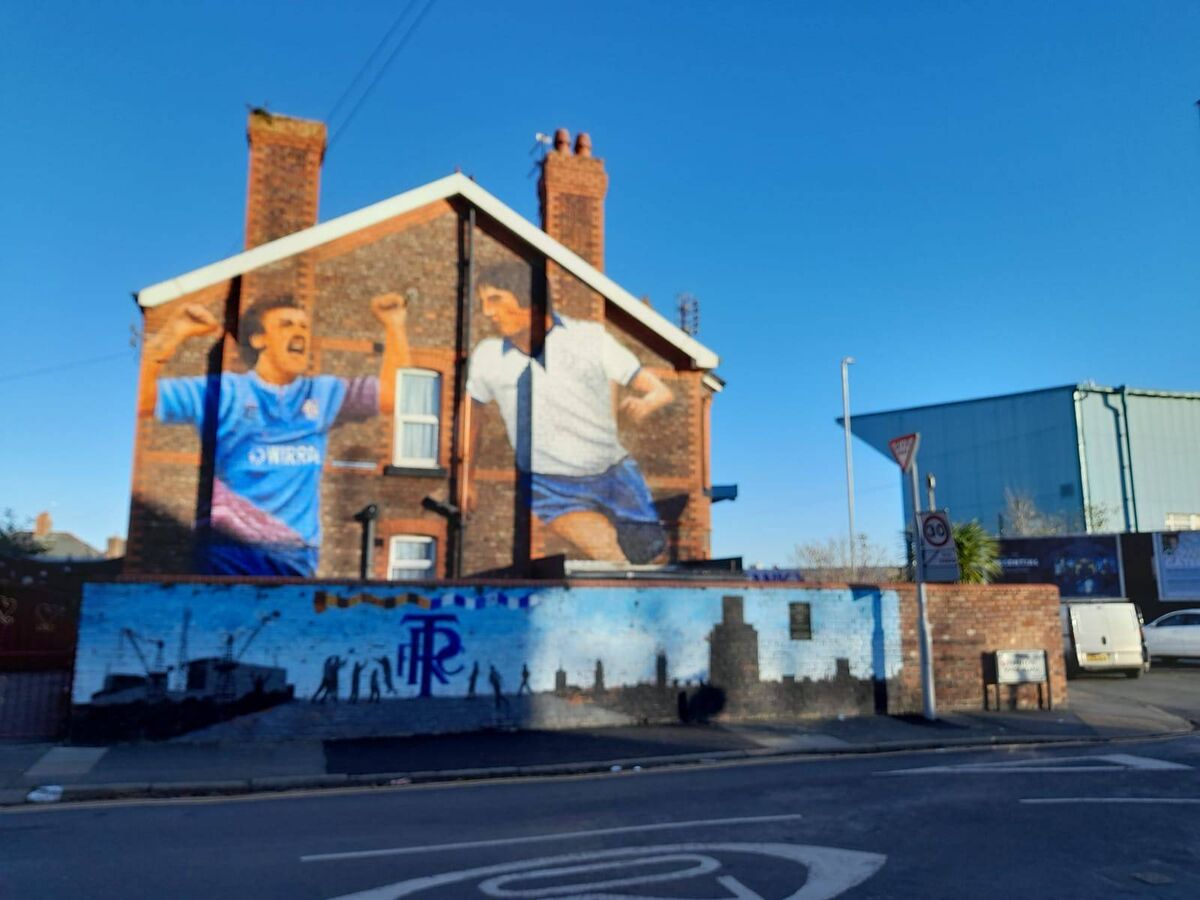
MERSEY PARADISE: A detailed view of a mural, created by Artist Paul Curtis, is seen outside Prenton Park
LISTEN to this. During the Covid lockdown, two Irish men were out storming the beaches on the Wirral Peninsula. The programme was hill sprints and there they were, carving out parallel trenches and wondering how much of their working lives consisted of a desperate struggle to avoid being washed away.
Eventually they removed headphones, turned to each other and made introductions.
‘Howya horse?’
‘You Irish too?’
The conversation would change the trajectory of Neill Byrne’s career.
At the time he played for Hartlepool. His new friend was Irish international goalkeeper Joe Murphy, then at Shrewsbury Town. Murphy found the big stage at Tranmere Rovers before moving to the Premier League with West Brom.
Over two decades later, the Dubliner brought the curtain down where he started, rejoining the Merseyside outfit as a player/coach. It was the same area that Byrne’s partner hailed from and where they purchased a house before he joined Hartlepool.
After a career that straddled nine clubs across the UK, to play professionally back in the Football League was a welcomed payoff. The price was an each way three-and-a-half-hour commute.
Murphy stayed in touch. They’d catch up. One thing led to another and when an opening emerged at Tranmere, Byrne would make clear he was interested. It was the ideal fit. Last summer, Byrne became the latest member of the club’s long list of Irish recruits. At the time there was four of them: Byrne, Murphy, Lee O’Connor and Mateusz Hewelt.
When you look across the water, what do you see? Is it a united front of Irish comrades coming together at all levels of the UK’s pitiless football pyramid? If only. The reality is more complex. If they get on, they come together. If not, no harm. The goal at this point of the game isn’t making friends; it’s merely making it.
******
BYRNE reclines now at the club’s training ground and casts his mind back. The day started on the training ground with the unmistakable Scottish drawl of manager Micky Mellon booming across three pitches and one AstroTurf. Mellon once spent a two-month stint at Cork City, notching up a handful of goals in 1991.
“You know what, he never told us that,” Byrne chuckles. The session’s high point was a full pitch passing drill with repeated interruptions to stress ‘the attitude’ Mellon wants to see from his League Two team before moving into a small-sided game.
Tranmere Rovers own their own training ground. That’s a rare thing at this level. During Byrne’s stint with Hartlepool, they trained at the local university. It was a rented facility. It meant minor inconveniences with sessions limited to certain slots. Players had to pay for every meal in the campus canteen.
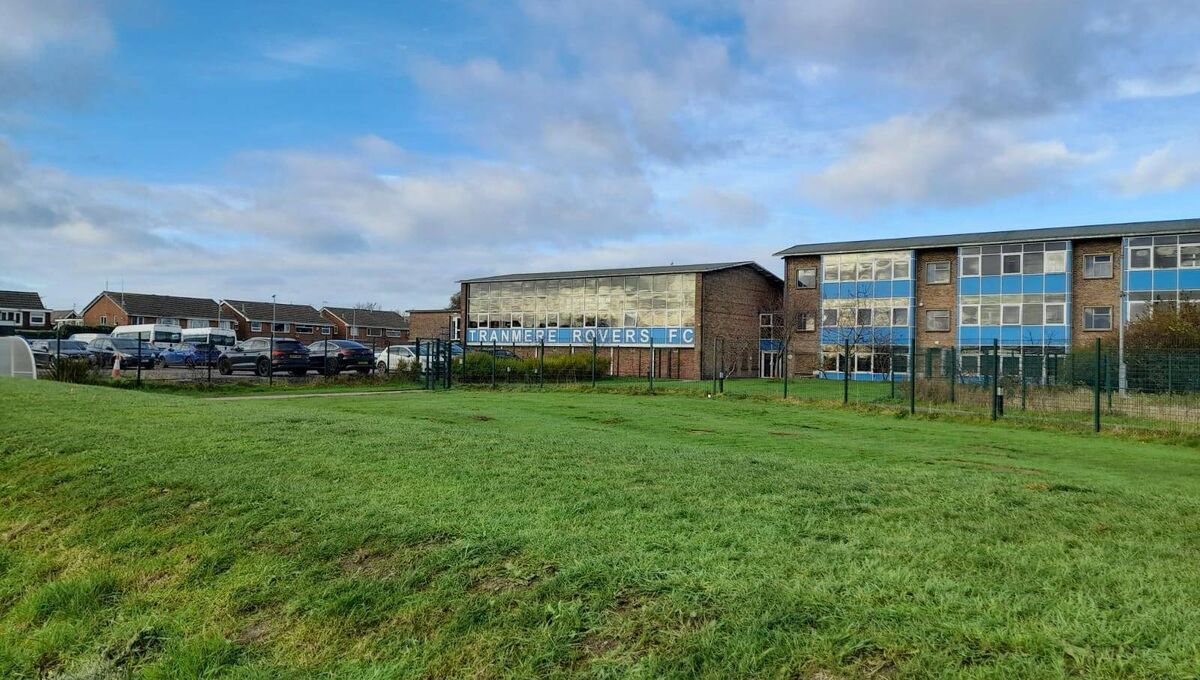
Since 2016, Tranmere have been based at The Campus. It was once a shared facility with an alternative provision school next door, behind a prison-like fence. The roof was previously littered with the dangling legs of onlooking teens and misdirected balls.
Now that building is decrepit. Tranmere’s is anything but. Pass through the door, up a steel stairway and you are immediately welcomed by a fully functional, equipped gym and cafeteria. At the entrance is a mural of past heroes and a series of booklets, and the FA’s anti-doping advice card for this season: ‘Remember, it’s your body, your responsibility and your career.’ A cryotherapy recovery room and analysis space sit one level up. Byrne enters, holding a protein shake.
The Portmarnock native is now a seasoned pro. In a sphere with its fair share of knocks and bruises, he is sure to avoid a self-inflicted one.
“I’ve three older brothers and my dad was our manager growing up. We’d Stephen Dawson, Stephen Ward and my brother. He is eight years older. Wardy was in the Irish teams; my brother was getting trials. I was going with them, just tagging along really and enjoying football.
“I moved club as a kid. That was a big deal. My dad was manager and for his own son to leave, it was frowned upon. I used to say I wanted to be a pro footballer but at that age I was playing for the fun of it. I was 10 or 11 when I went to Belvedere and at the same time, my brother made the move.
“Every time he spoke about it or I visited him I remember thinking, God, I’d love to do this. My brother would come back and we’d go watch my dad’s team play. Afterwards we’d do a little bit of training and he kept saying, 'you are getting better'.”
As a teenager, Carlisle United came calling for his older brother, Robbie. The goalkeeper linked up with Roddy Collins at the northern English side. From the off his head was all over the place. His heart never left home.
“My brother hated it. A completely different place… He just didn’t settle. I remember one summer we were away, and my dad got a phone call, they found him in the changing rooms crying. Get up, go to training, go home. I understand that now. When I was at Rochdale it was the same. A rut. The same over and over. I wasn’t playing, just a young lad and you start thinking, is this for me?
"My brother came home and Roddy was brilliant for him. He gave him Christmas off and said, ‘try get your head right and come back.’
“When Robbie was home he said to my dad, ‘I don’t want to let you down, but I hate it over there.’ Dad said right let’s get you home. He rang Roddy and I think they paid him up to leave. He really looked after him. Roddy went above and beyond."
ROBBIE'S plight left a lasting impression on their parents. From that moment on, they were adamant. As Belvedere managers he kept encouraging Byrne and telling him he had a great chance, but they landed on a firm ultimatum - chase the football fantasy, but carry education along with him.
Trials kept coming. Enquiries too. Middlesborough, Newcastle. Then an outing with Nottingham Forest that went swimmingly. Within an hour, he was walking across water.
“We were sitting in a room like this, all of us and you get called in one by one. The Academy manager was Nick Marshall who is at Liverpool currently. I was expecting him to say, ‘you’ve done well, we’ll get you back out again for another look.’ He said I want to offer you a contract. We’ll go to Ireland and get your dad over here. Let’s get this signed.
“I was buzzing. They even gave me loads of Forest gear. My parents were happy because Forest was the only team who would allow me to do both. I’d go to school Monday to Thursday. Fly over on a Thursday, train Friday and play a game Saturday. I’d fly back Saturday night and did that for a year straight.”
First the flame flickers. Then it blazes. That fire can last a second before extinguishing or it can roar for an age. Byrne joined on a three-year contract, two as a scholar and one pro. His talent burnt bright in the Youth Cup and the cycle started to churn. Agents get in touch, the club start talking of a new deal, manager Steven McClaren dishes out praise.
Southend enquired about a loan. McClaren told his agent they weren’t interested and might consider it in January. Byrne was due to join up with Paul Doolin’s Ireland U19s and the send-off was positive: keep improving, you are playing well, enjoy international duty and a new deal can be ironed out afterwards.
“I landed at East Midlands to go to their training camp. McClaren said I heard you went well, keep it up. I played a game on the Saturday and then he resigned. Steve Cotterill came in. I didn’t train with the first team. Not once. Then we had an in-house game and I thought right, I’ll play there; show him I am capable.
“I didn’t start, came on left-back for ten minutes. As I was walking off, they came over and said Steve wants a word with myself and one of the lads. I’d no idea why. He pulls us into his office and tells us we’re released.
“The shock.... Two weeks ago, I was talking about going on loan! The other lad, Carlton, was in the room as well. He is a bit older; we still speak and he pipes up: 'Here, you do know he was away with Ireland? He captained the 19s'. Steve looked at me and goes, ‘did ya?’
“That’s football. I rang my agent and said, I’ve some news. They are letting me go. He says, ‘lovely. We’ll get this loan sorted so.’
“No, I told him. Not on loan. I’m fucking released. And he was like, shut up. That was the first time I realised football can turn you on your head in a second. I had a few trials and ended up with Rochdale. Steve Eyre was the U18 Man City manager for the Youth Cup so spotted me there.
“I trained with them and they offered me a spot. Signed on a Friday, Steve was saying go back to Nottingham, get your stuff and hit the ground running Monday. This is January and he'd the season planned out, six months to bed in. Play some games, train hard. I turn up Monday morning and we are training just like this on the field,” he says gesturing out the window.
“He just turns around and walks off the training pitch. Afterwards he comes into the dressing room and says, ‘lads I’ve been sacked.’ He actually came over to me and said I’m so sorry. I went from going away with Ireland, to being released, to getting a new club, to that manager being sacked. Knock back after knock back.”
Seven years across eight clubs followed. Every day different. International and underage football are formulaic. Sit in, play it around, preoccupied with the technical. His first game at Rochdale stressed the significance of being physical. He lasted an hour before his calves caved in, overcome with cramp.
His head is still spinning when he comes up against a red-hot Sheffield. They were run ragged, blurry vision just able to make out the familiar face of Stephen Quinn.
At Telford it was part-time, training restricted to Tuesday and Thursday, some days joyous, others brutal. The same is true for most clubs.
This world whirls. There is always another turn. A few days later, fellow League Two club Stockport County get in touch. Their starting centre back is out for two months. The offer is more first-team football less than an hour away. He can’t turn it down.
“I enjoyed every minute playing for Tranmere. Game time and the allure of working with a manager I know meant I couldn’t say no to this opportunity,” he explains later. “I know the lads and Lee especially will go on to do great things.”
On the day of our visit, training is delayed due to an accident near the Kingsway tunnel. The cafeteria is offered as a refuge to work and wait. The room is moderately sized and empty, meaning nearby conversations are audible.
Southampton loanee Dynel Simeu walks in and addresses the media manager. "Can you talk?" He has an idea. A desire. For Christmas, he wants to buy gifts for the local community. Could the club help distribute them? Provisional plans are made; the Premier League defender thanks him for his time and walks off.
The media manager looks across with a mix of amusement and admiration: "He’s 20."
***
TRANMERE Rovers is in the shadow of Liverpool’s two Premier League giants and on the opposite side of the Mersey, a mile of water separating them. They are one of the great survivors in English football. Fans still yearn for a return of the golden 1990s. Then they occupied the second tier. Under the stewardship of legendary manager Johnny King, they signed stars like Ireland international John Aldridge from Real Sociedad.
In Spain some supporters had protested Aldridge’s arrival as it defied the Basque-only policy. In Tranmere he was welcomed with open arms. For that the club has always held a special place in his heart. He repaid their faith with an astonishing 148 goals from 243 appearances and went on to become manager, delivering a series of treasured cup runs.
Despite brief days in the sun, it always felt like they were punching above their weight. Local rivalry is embedded. When former Liverpool player John Barnes was appointed manager in 2009, with Jason McAteer as his assistant, supporters were enraged.
That fury turned to frenzy as results spiralled. The nadir was a JP Trophy clash at Bury. ‘Sack him’ chants were relentless before kick-off. Bury won 2-1. For both of their goals, the away fans cheered. Players were later scathing about his preparation and self-promotion.
While there was understandable anger as the club went into decline, the community stuck with them. It has always been the way. The last decade has been traumatic and dramatic. Back-to-back relegations from 2014 cost them their Football League status, a membership held since 1921.
Football doesn’t develop on a curve. Beyond the select few, there is no linear graph. Usually, if a consistent trajectory emerges, it is because you are travelling south. For 27 years, Tranmere was owned and funded by Peter Jackson, a businessman from the neighbourhood. It wasn’t sustainable or safe. Even under new ownership their bounce back was curtailed by Covid. Having reached League One, the pandemic saw clubs vote to end the season early. The Super Whites were relegated as a result.
Former FA chief executive Mark Palios, who once played for Tranmere, took over in 2014 and dreamt of a viable future. He knew the club and the community. In a place like this, that’s crucial.
Wirral is one of the 20% most deprived boroughs in England. In certain parts, one in two children live in poverty. The club runs its own food bank and routinely advertises for required items: this week tinned goods and toothbrushes are at the top of the list. Donation drop-off points are scattered around the stadium. Every little helps when everyone is just trying to get by.
Outside our hotel, waste collection workers have just begun a week-long strike and the siren of support is ceaseless.
This community is close-knit and the club claims to value that. Doesn’t every professional team? True, but Tranmere put its money where its mouth is. They are totally opposed to gambling advertising in football and consistently turn down opportunities to link up with bookmakers. In 2020 they set up a department to assist anyone affected by the issue.
Earlier this season they were drawn against Newcastle in the Carabao Cup and a betting company reached out. “One person a day commits suicide as a result of problem gambling in the UK - that’s not something we wanted on our conscience,” said Palios when asked why they turned down the offer.
This despite a financial hardship that stretches back decades. In the 1980s a loan from Wirral Borough Council staved off insolvency. After Barnes blew through the transfer budget, former physio Les Parry took over as interim manager. With no funds, the Supporters Trust launched ‘Les Aid’, raising £12,000 for a new player. Maintaining that bond with the supporters is a priority. After Palios took over he turned the director’s car park into a fanzone.
In 1979 Tranmere hit a low ebb, losing 5-0 against Bournemouth. When their goalkeeper started timewasting, 72-year-old pensioner Charlie Lindsay had enough. He marched down from the stand, top hat on his head and walking stick in his hand, before hitting Kenny Allen on the backside. For that act he was affectionately labelled one of Britain’s oldest hooligans and honoured with a mural. A lasting image of the fanbase’s resilient soul.
Throughout its eventful history, they've maintained a remarkable relationship with Ireland. Several players, from Liam O’Brien to David Kelly and Alan Mahon, enjoyed lengthy spells. Marketing administrator and lifelong fan Tony Croombes reckons the club visited Ireland over 20 times for friendlies and training camps during the Aldridge era. Annually hundreds of Tranmere fans made the trip and met the same familiar faces. That bond led to an Irish branch of the supporters’ club and a special association that lingers to this day.
“It is nice to just always have a link back,” explains Mateusz Hewelt. Born in Poland, the goalkeeper moved to Dublin with his mother when he was eight. There he played with Shelbourne and Stella Maris.
“It is someone to talk to about sessions in the park or playing GAA in school, just weird things,” he jokes. “They know what you are at when you’re soloing up and down the pitch in training.”
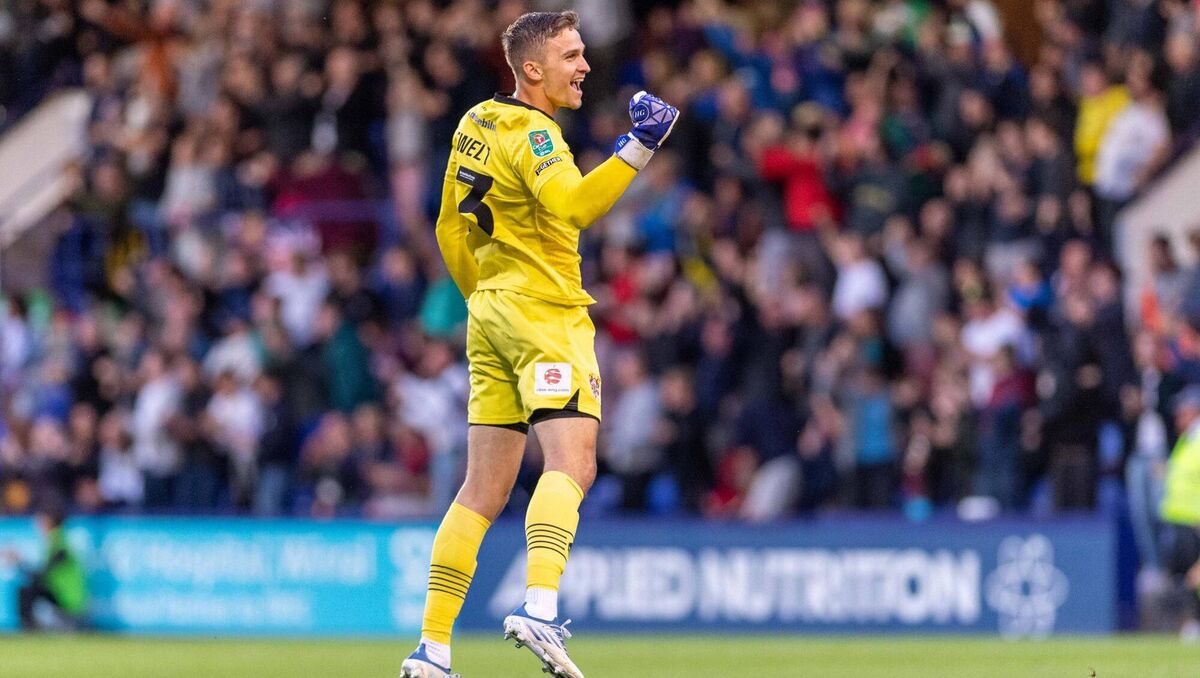
After relocating, Hewelt dived around the Holy Trinity playground trying to imitate childhood heroes Artur Boruc and Wojciech Szczęsny. As he charts his rise through the paid ranks an unmistakable Dublin twang grows stronger.
His career started at Everton in the Premier League and the realities of the profession weren’t long in dawning.
“We had digs, 13 of us living in one house. The keeper was there as well, a second-year scholar. We were best mates and at the same time you are also thinking, ‘this twat.’ You want to play ahead of him. There is always that competition. You learn that from day one.”
Three years later he was let go. Excitement for a new opportunity quickly turned to concern that it would never emerge. In the end he joined Miedź Legnica in the Polish second division.
“I was expecting it to be fair,” he says matter-of-factly. “My agent had mentioned it and knew what I wanted anyway. But I was 22 and had never been out loan. I think I played 60 U23 games and then when I was looking for a club and they paid no heed to them. What are they?
“If I could go back now, I’d change that. I wouldn’t want to just play U23s and should’ve pushed for a loan. When managers are looking for a keeper, the first thing they look at is how many games you’ve played.”
Minutes are priceless. He points to team-mate, former Ireland U21 captain Lee O’Connor, as an example of what can happen by dropping divisions and gaining experience.
“He is the same. He was at Man U, then Celtic. It was similar but since he came here, he has been getting actual games in and he has been just class. Lee has a real cool head.”
His mother lives in Wexford and he visits when he can. During his time with Everton he met his current girlfriend and they live together now in the city along with his dog. Once his life was football; now it consists of two separate yet intertwined strands.
“We all just want to live a life at the end of the day. First it is all football. Then girlfriends, families, come into it. You have to try balance both. It becomes about where do I want to live? Where is my girlfriend working? There is more to take into account.”
That realism can make grown men weary. For many it leads to surrender. Now Neil Byrne doesn’t run from the fear, he embraces it. “It’s a driving factor,” he admits. “You do think, ‘I’m not going to go back and fail. What would everyone think if it didn’t work out.’”
That is why small gestures along the way still carry enormous weight. During his time at Rochdale, Brian Barry-Murphy went out of his way to help. Literally. How are you going to training? Byrne was using the bus or train and the Cork man assured him anymore he’d pick him on ‘on the way’. Years later he realised that geographically it made no sense. The detour was enormous.
That relationship almost led to his return to Ireland.
“A few years ago, he invited me to a Rochdale game one day and John Caulfield was over. Murph said we are going for food, come on. John probably hadn’t even seen me play. He was asking do you fancy coming back. Karl Shepperd was from my area and down in Cork at the time.
“I was considering it but I was under the impression, wrongly as it turns out, that once you go back that’s me. I’ll never get back across the water.”
Friendships aren’t formed merely on the basis of nationality. But when Irish players do click, the connection is strong. In the short window while Byrne was at Nottingham Forrest under Cotterill, they signed Greg Cunningham.
After his move to Rochdale was confirmed, one of the first calls was Cunningham. “Listen, I have an apartment two minutes from the training ground. Take it. I’m down here, you’re up there.”
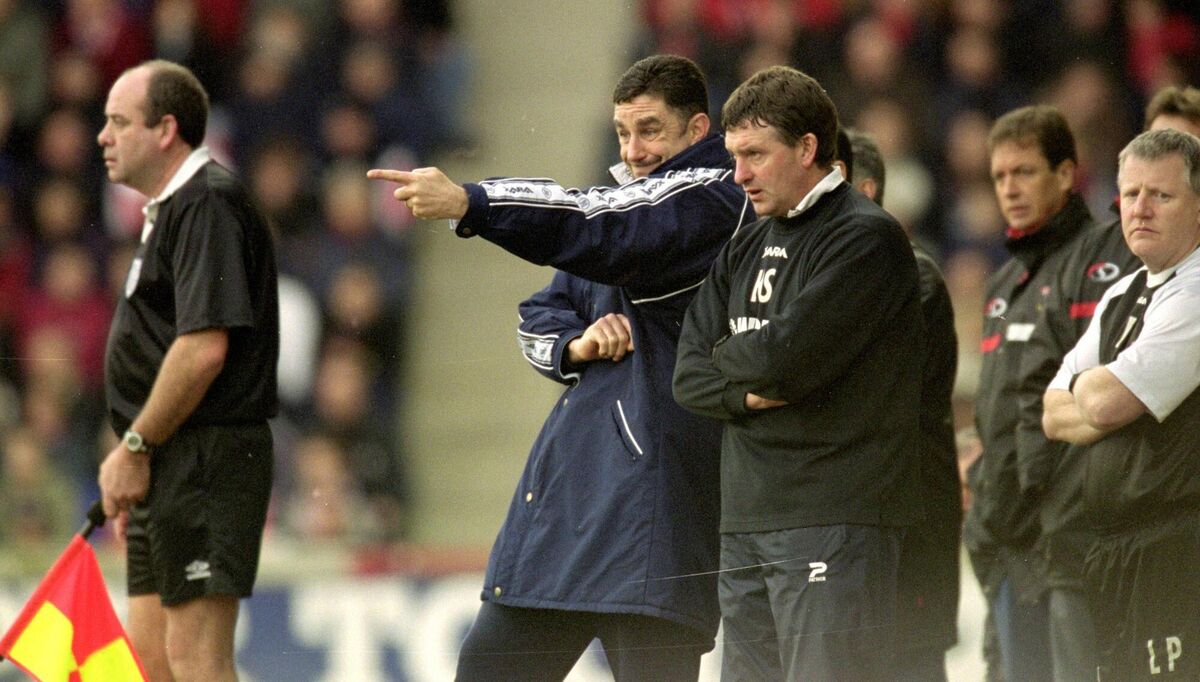
Byrne lived there for six months. He was recently groomsman at Cunningham’s wedding.
Lee O’Connor walks into the room. He has played for Ireland at every single level from 14 on, representing his country 76 times so far. The 22-year-old is not quite nervous, all the same certainly alert. Conscious of doing everything correctly. Content to finally be playing senior football.
O’Connor first joined the side he grew up supporting, Manchester United, at 15. Underage he was a generational talent, the focal point of several Villa FC teams in Waterford. After he was named player of the tournament at the Galway Cup, the phone calls were relentless. Post-Junior Cert, several avenues were offered. He headed for Manchester without a moment’s hesitation.
“I knew if they wanted to take me, it didn’t matter who else was interested,” he recalls. “I was out of school quite a bit and they were the only club who sent someone over to talk to my teachers. Dave Purcell organised it all, even taking schoolwork with me and going to sixth form in the city. My parents were delighted.”
There Kieran McKenna was an immense aid as well as an outstanding coach. During his rookie year every off-day saw him scramble for a flight to Ireland. McKenna’s companionship helped alleviate that homesickness. He had no doubt the manager’s move to Ipswich would be a successful one.
After settling at Carrington, O’Connor ticked every box. He captained their U19s as well as playing for the U23s. In green, he was a bedrock of consistency. When he turned 18, he was included in the club’s Champions League squad.
A year later, Celtic made an approach.
“I wasn’t looking to leave at all during that window, initially it was all about a loan. Then Celtic came out of the blue. It got to deadline day and I thought it would be good for me. Obviously, it didn’t go to plan but I thought it was right at the time.”
The Glasgow outfit would become a dead end for some promising Irish talent. Luca Connell, Jonathan Afolabi, Barry Coffey, Armstrong Oko-Flex and O’Connor were all in the reserve programme and none broke through. After a spell with Partick Thistle, Tranmere Rovers made a loan offer. Within months they were desperate to make it a permanent move and the deal was done last January.
“It gets labelled unfairly as a physical league. It is definitely not. You’ve boys playing in the World Cup from this league. There is more to it.
“The difference here is no two games are the same. You’ve a game one week and it is all about winning battles, get stuck in. But then another week you have to be good on the ball and take them on. You have to answer so many different questions.
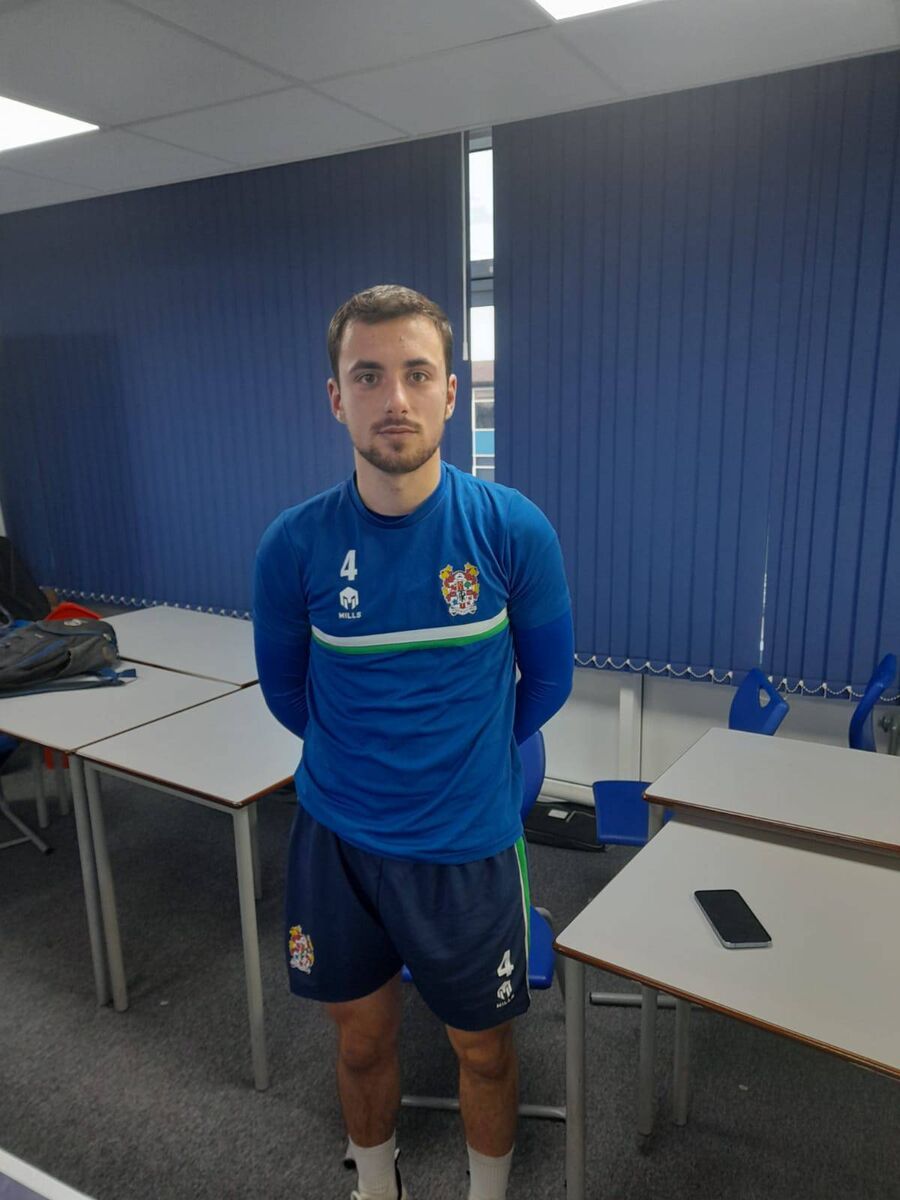
“That is one of the things I had to get used to. In reserve football, every game is actually almost a carbon copy.”
O’Connor considers every query thoroughly and is practical in how he plays it. This has always been a trusted tactic. Before Ireland’s U21 Euros play-off defeat against Israel, he declared at a press conference that this could be the last time he represents his country.
It was a markedly forthright remark but even now, when repeated back to him, he nods convincingly. Life in football is complicated. Life and football are painfully simple.
“I love playing for Ireland and I’m lucky I got to play so many times. You hear people talk after their careers; you never know when it will stop. I’m not silly enough to think I’ll walk into the senior side and have 100 caps. I might never play for Ireland again. That’s how it is. I’ll do the best I can, I’ll give it my all to do it because I love it.
“But you can’t take things for granted. You can’t think you will get everything. Things don’t just happen in life. This game will teach you that and you have to make peace with it.”
At one point O’Connor revisits the night before he moved to Manchester. He is still not sure what happened. It is hard to articulate it. ‘A freak-out,’ is what he ultimately settles on. Up all night. Couldn’t sleep. His older brother Aaron, 25 and still playing with Villa, eventually calmed him down.
Before leaving the facility, Byrne’s voice booms from a level down after a contentious darts game and O’Connor laughs heartedly. He looks hopeful, he sounds hopeful. Here things are starting to come together. We ask how the addition of another Irish defender has been received and once again, he considers the question from all angles, like a midfielder assessing all options, before delivering an answer.
“Getting to know Neill has been great. He has really been like a big brother for me. On and off the pitch.”


CONNECT WITH US TODAY



Be the first to know the latest news and updates