World Cup kits: The good, the bad, and the downright ugly...
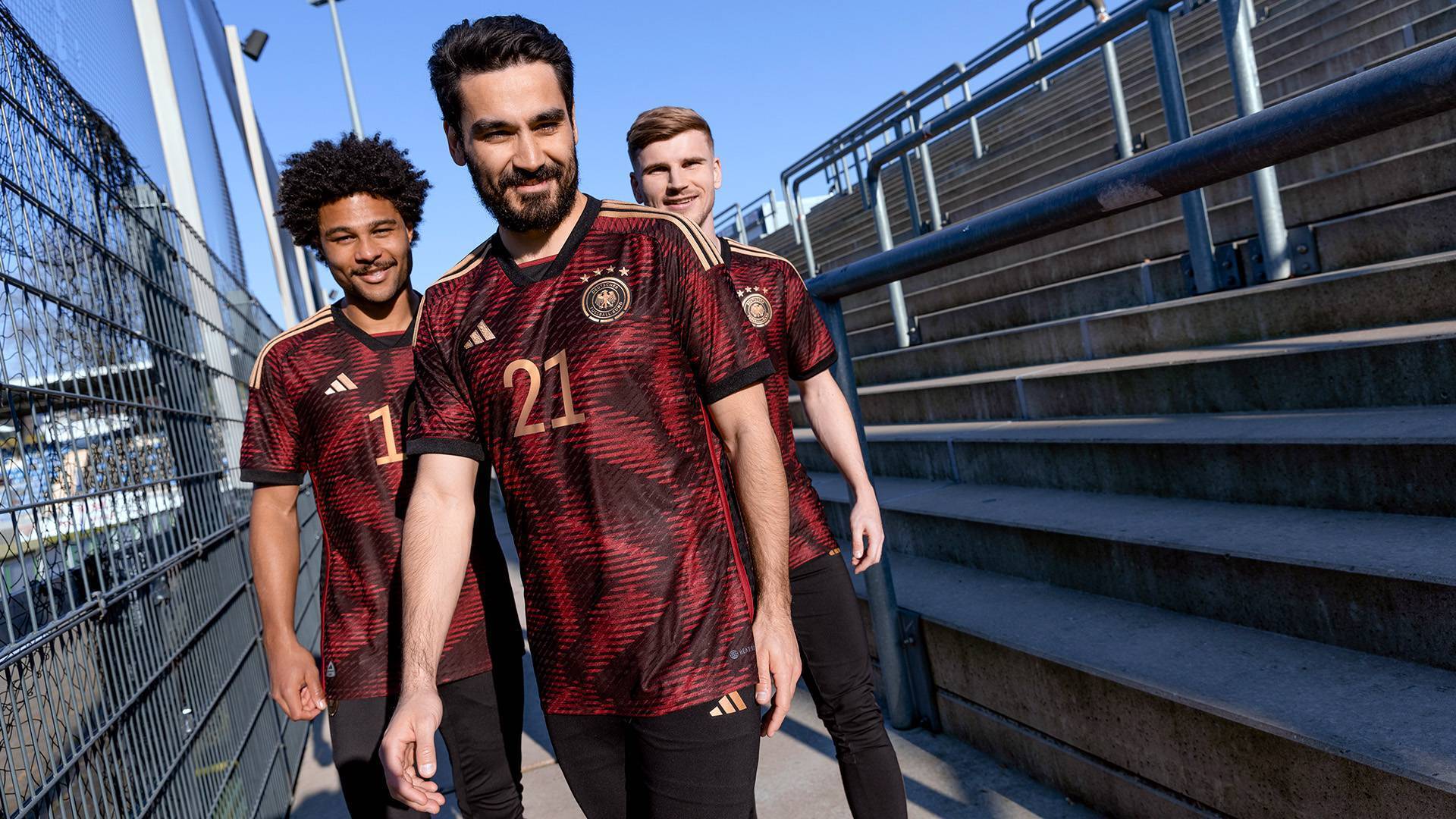
DER MANNSCHAFT: Germany's away shirt for the Qatar tournament.
Often, it is the case that a football strip will be judged by the results achieved in it rather than the colours and design alone.
The traditionalists tend to favour green and white Germany change kits – the colours taken from the DFB (German FA) logo, representing a football pitch, and not because of any post-war tribute to Ireland). Their back-up option at the 2018 World Cup was green and white it was a superb offering, based on the 1990 away but still completely new. However it will forever be associated with the defeat to South Korea that saw Germany eliminated in the group stage.
By contrast, the red and black hooped 2014 away was nice if unspectacular, but the fact that it was worn in the 7–1 semi-final thrashing of Brazil ensured its immortality.
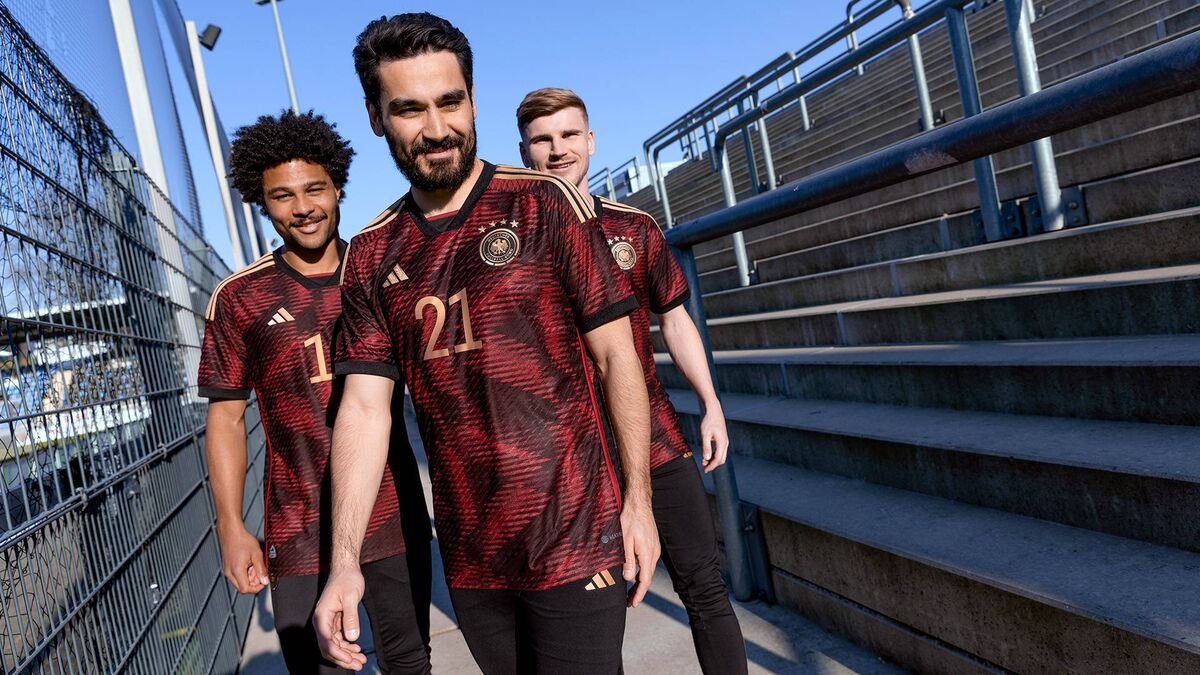
Germany have returned to that colour scheme this time with a black strip that features a red graphic, derived from the DFB marking.
The Portugal home kit is one of the best Nike has delivered (see ‘Bad’ section for prosecutorial alternatives). It features a Monaco-lake diagonal split, intended to replicate the effect of the national flag being wrapped around the wearer’s body and it is well complemented by the change kit.
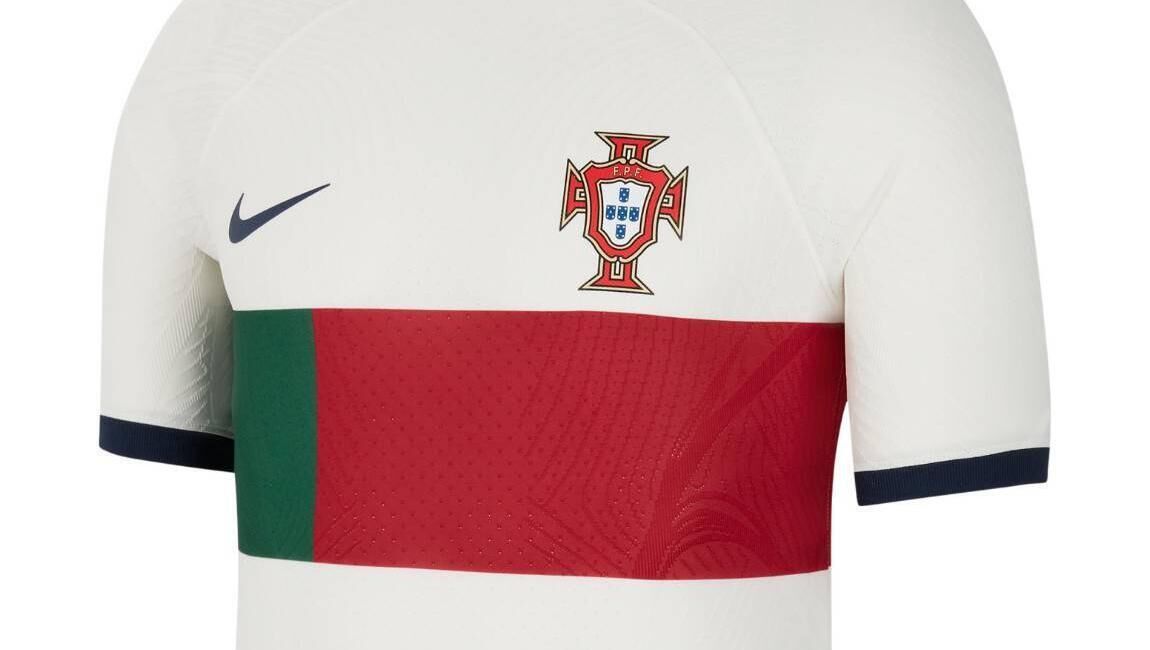
To quote Nike, “The away kit uses Sail White, an off-white tone, to ensure the Portuguese club stands out in a sea of bright white,” – we can forgive the guff about 'club', as the cream colour is aesthetically pleasing.
Having the red and green chest band divided in similar ratio to that of the flag is a nice touch and works well with the navy trim which has long been a part of the country’s second kits.
Back in the 1990s, the Japanese FA used to commission its own kit designs, which would then appear on the shirts whether they were made by adidas, Asics or Puma, the companies used on a rotating basis.
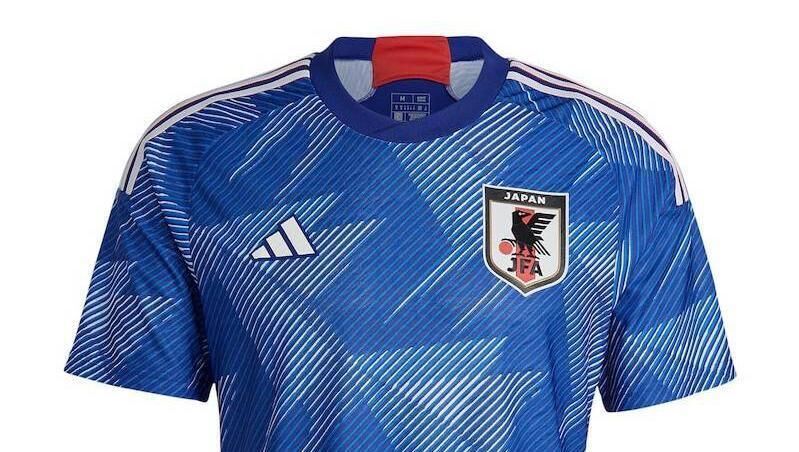
They have been in partnership with adidas now for more than two decades though and the kits are generally worthy of positive comment. This time around, a series of lines of varying thickness represent origami cranes, the wings of which are said to carry souls to paradise.
The tiniest bit of red trim completes what is a very strong look and the first-choice kit is complemented by a beautiful white second strip which confines the origami pattern to the sleeves.
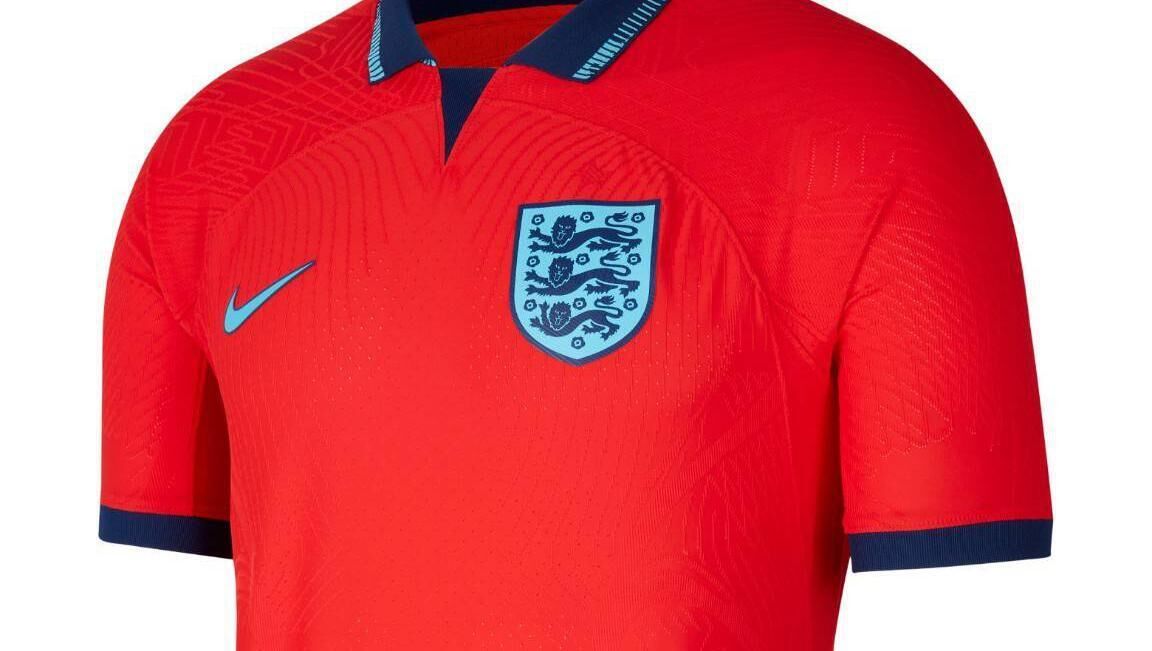
There is a design phenomenon known as the 30-year rule, whereby designers hark back to what was in vogue when they were growing up.
That is something regularly seen with club kits – think last season’s Manchester United away kit, for instance – and it forms the basis for the England away strip, which is heavily based on what they brought to, but did not wear at, the 1990 World Cup and 1992 European Championship.
However, a slavish thread-for-thread regurgitation would invite accusations of plagiarism and so a fresh twist is needed – unfortunately for England, Nike felt their fresh twist should be the inclusion of turquoise in the crest.
The use of the colour is intended to tie in with the home strip, where it’s a reference to the Euro 96 jersey. However, on an otherwise all-red kit apart from the navy collar, it leaves things looking a bit unbalanced.
Nike have tried to bring something different to the majority of the home kits in their stable. As mentioned, that works well with Portugal, the jury is still out on the brighter blue injected into the England kit. Other experiments are jaguar-print on the Brazil kits (Jaguar being the only big cat native to South America) and various shades of orange for the Netherlands that are supposed to represent the lion on their crest and also “the fluidity of Total Football” but end up resembling a 1970s velour settee.
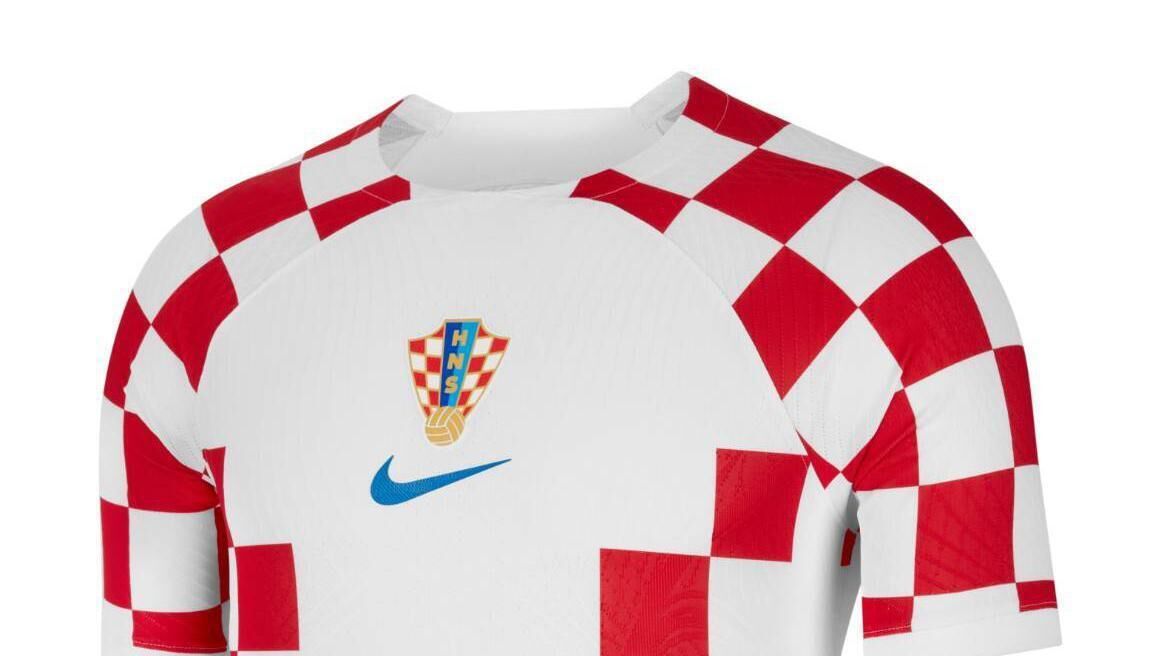
Yet those teams still look broadly recognisable whereas the reduction in the presence of red on the Croatia primary strip makes it look white from a distance. It’s not always a bad thing to away from a 50:50 checkerboard representation – their 1998 Lotto kit with the flag effect was a great example of how to do this – but here it just looks like they’ve randomly deleted some red squares.
It can be difficult for kit designers to strike a balance between effecting enough change on a new kit to avoid an “It’s the same as the old one,” reaction and standing accused of trampling all over a club or country’s tradition.
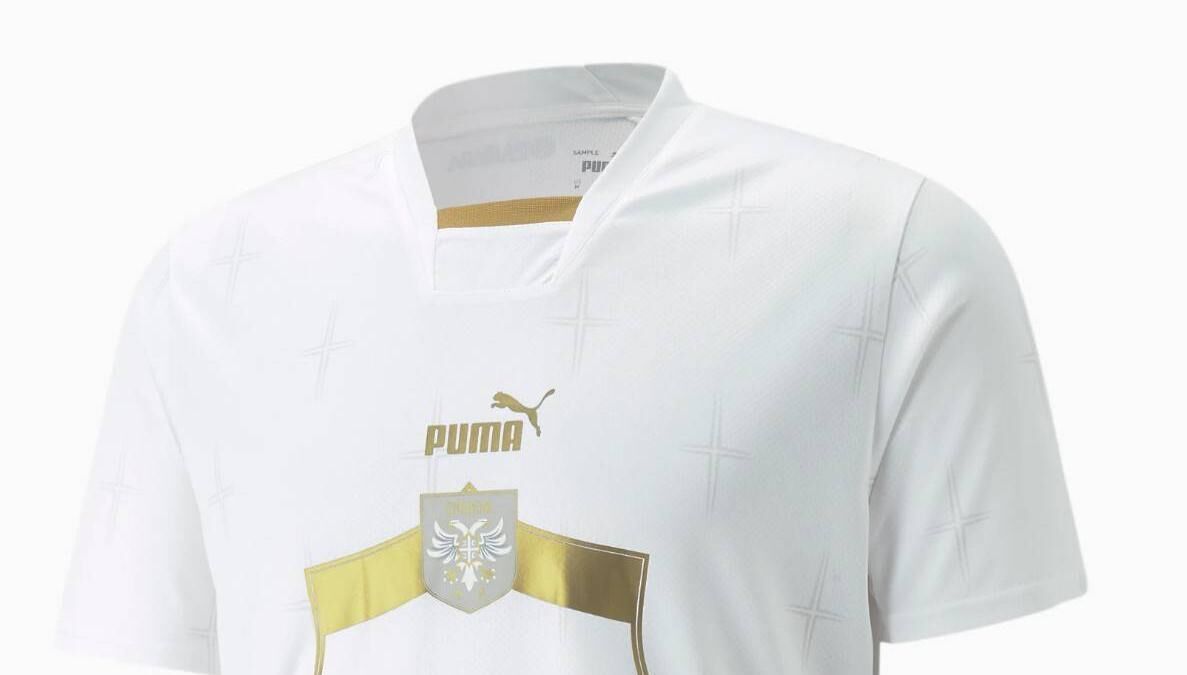
In recent times, Puma have certainly pushed the envelope in bravely experimenting and testing the supporters’ sensibilities. Such a method will never encounter universal approval but neither should it be dismissed as attention-seeking.
For Euro 2020, they had countries’ names emblazoned across the upper chest – but, due to Uefa’s kit regulations, that was at the expense of a reduction in crest size. Then, for the 2021-22 season, the third kits of their top-tier clubs had the team names writ even larger, but this time with the crests absent apart from the fabric pattern; Borussia Dortmund’s fans protested so much that the badge was added to their shirts.
The sense of endeavour continues with Puma’s change strips for the World Cup and the motif this time is a nationally-unique housing for the front number. The results vary, but Serbia have drawn the shortest straw, with the eight-pointed star making the players look as if they’re pretending to be sheriffs.
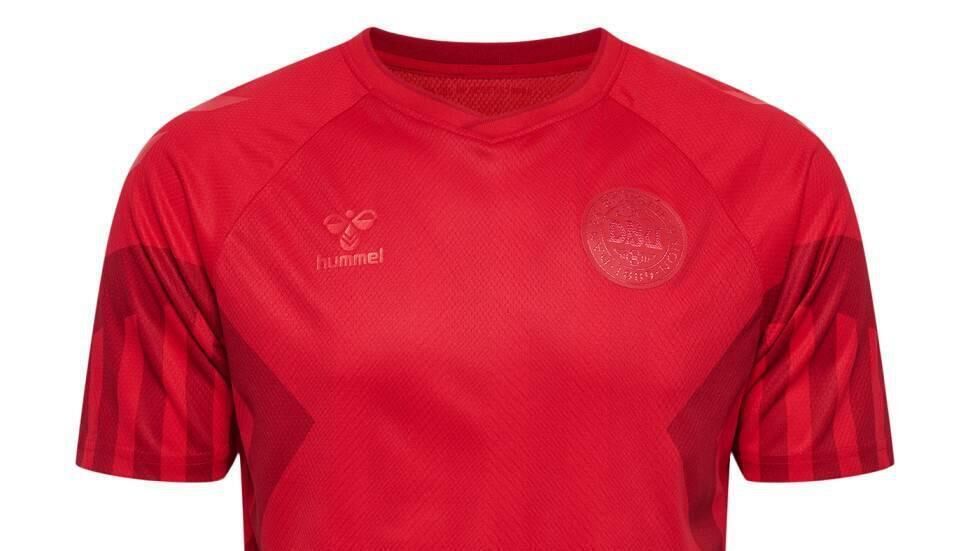
On Sept 19, Denmark and their kit manufacturers Hummel revealed the kits that the country would wear in Qatar. There was a common theme of minimalism among the red primary, white change and black third strips, with all logos rendered tonally. Notable certainly, but then Denmark’s third kit at Euro 2020 (when the home outfit had white sleeves and shorts) had also gone ‘red-out’ and so this wasn’t exactly ground-breaking. Indeed, when the DBU (Danish FA) rejoined forces with Hummel in 2016 after a stint with adidas, they wore an all-white kit devoid of any contrasting features, representing the ‘blank canvas’ on which new tales would be written.
When the kits were first seen, the only mention of anything inspiring the shirts was Denmark’s 1992 European Championship kit but then, on September 28, Hummel made the claim that its logos and that of the DBU were not visible because “we don't wish to be visible during a tournament that has cost thousands of people their lives. We support the Danish national team all the way, but that isn't the same as supporting Qatar as a host nation.” Is it cynical to wonder why that sentiment wasn’t out there from the off?
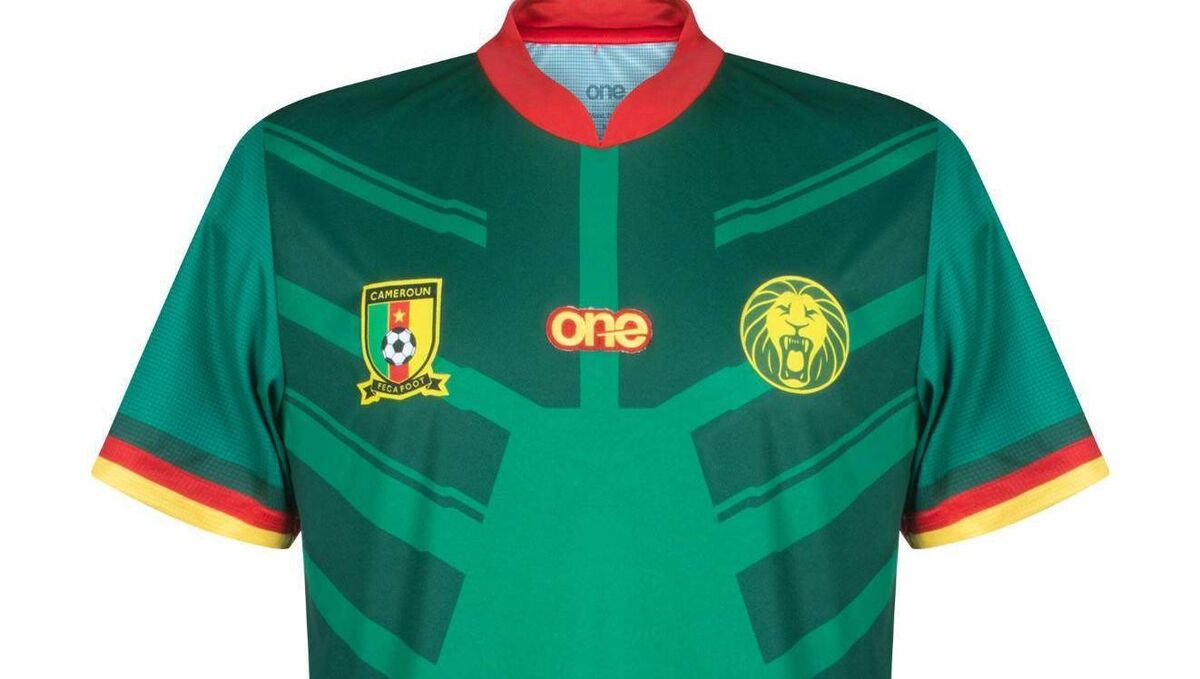
The Indomitable Lions recently launched this set of kits by One All (no jokes about them being a suitable replacement for Umbro with the Ireland strips, please) after Samuel Eto’o – now the president of Fécafoot, the Cameroon FA – abruptly cancelled the deal that had been in place with Le Coq Sportif.
One All’s offerings are questionable at surface level in that the same, seemingly meaningless, graphic pervades the green home, white away and red third shirt, meaning that the quantities of green on each are not ideal in terms of avoiding colour clashes. The mix of red and green on the third is especially jarring.
However, they are also questionable in the sense that there is some doubt as to whether they will be worn – earlier this month, a Paris court ruled that the Le Coq Sportif had to be allowed to run to its conclusion of December 31, 2023.
Having reached the World Cup finals for the first time since 1986, Canada will be the only country without new strips – instead, they will be in the same outfit that they wore during their successful qualifying campaign.
This has led to disappointment among the Canadian football fraternity. Nike acknowledges the unusual situation, albeit with a fairly lame explanation: “The 2022 Canada kit will be the same the team has worn throughout the past year, as Canada Soccer is on a different kit development cycle.”
It can't be a coincidence to see members of the Canadian squad engage in a photo shoot for Adidas gear carrying a Canada script in the same Star Trekesque font that appeared on the chests of their 1986 shirts.
and co-presents The Football Kit Podcast
CONNECT WITH US TODAY



Be the first to know the latest news and updates