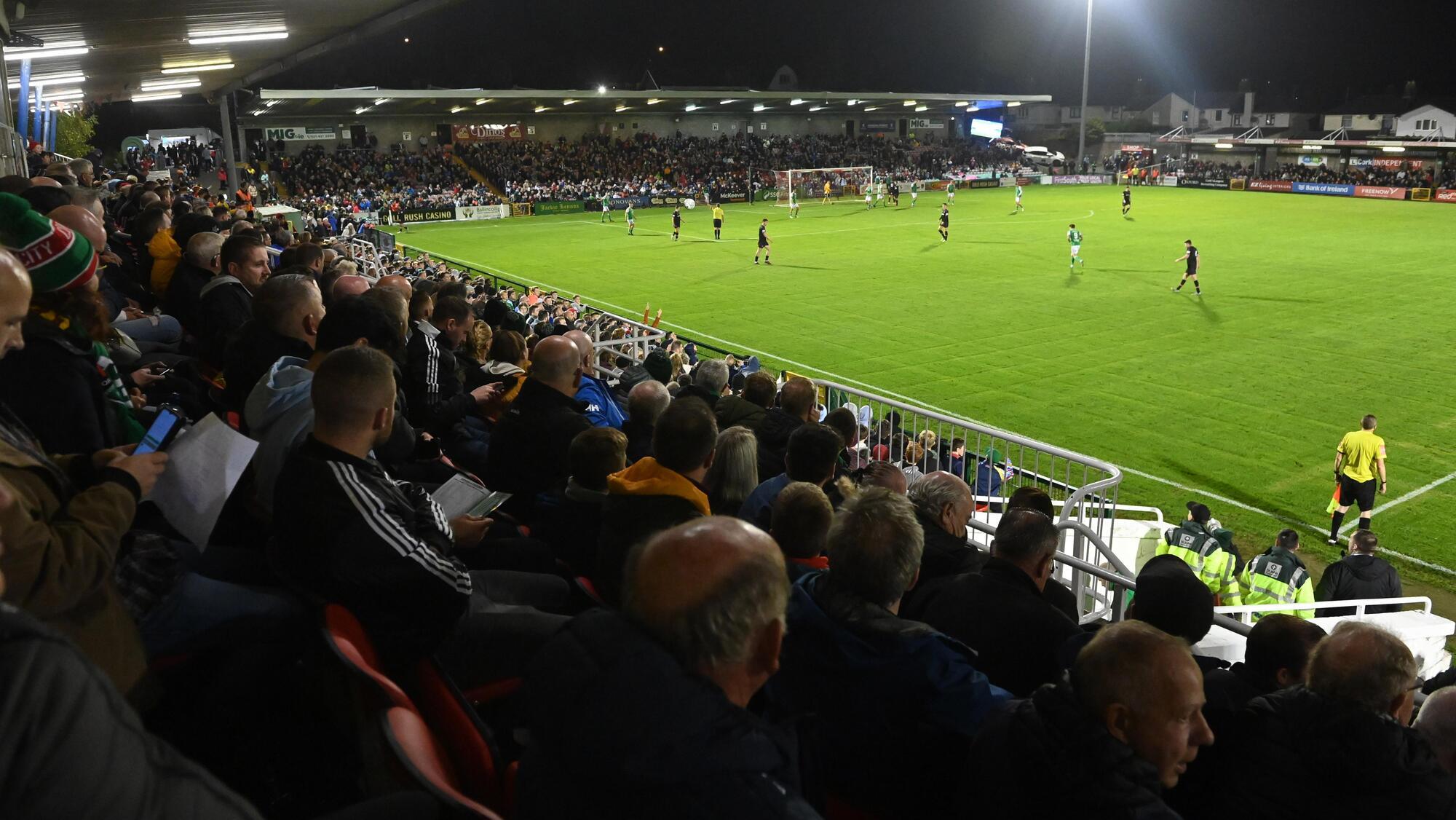
ROMANTIC League of Ireland isn’t quite dead and gone but those clubs still averse to external investment might eventually find themselves buried in mediocrity.
Cork City’s admission last week that exploring the marketplace for backing was the sole viable route to silverware in the domestic game spoke loudly of the realities around ownership.
“Based on a review of the economic conditions and investment into other clubs within the LOI, the board believes that if Cork City FC is to compete regularly for trophies at the top end of Irish football and reach its full potential, that we have little choice but to explore the possibility of securing outside investment from the right person(s),” they said.
That declaration was announced in the context of UK conglomerate Grovemoor aborting a €1 takeover they had been cleared two years ago to complete through a vote of Friends of the Rebel Army Society (FORAS) members.
Consequently, City’s return to the Premier Division after a two-year absence will remain in the format of a 100% fans-owned club. For how much longer though, based on the board’s bout of honesty, is the pertinent question.
John Caulfield will feel vindicated. Friction and fractures soured the end of his tenure at City, yet he was adamant walking out the Bishopstown door in 2019 that his pleadings to source money elsewhere would endure.
As it turns out, the club Caulfield currently manages have cut the cord earlier than City. In March, the Galway United supporters trust voted 82% in favour of ceding 85 percent shareholding to local billionaire brothers, the Comers.
“It was the correct vote because there’s only so much volunteers can contribute,” said Caulfield of a deal that guarantees an initial €500,000 annual investment.
“The clubs at the top of the tree in the Premier Division — Shamrock Rovers, Derry City, Dundalk, and St Patrick’s Athletic — all have private investors. Football is a business.
“Supporter-run clubs are great but it can only get you so far. If you want to get to the top and stay there, private money is required. If you’re serious about professionalising the league, giving players contracts to not just survive on, clubs just cannot rely on gate receipts.”
It’s difficult to argue when the League of Ireland generates scant revenue from prize-money, broadcast deals, or streaming — shifting the dependence of clubs to European competition qualification and the rare jackpot of a lucrative transfer abroad.
Whether its palatable to the diehards or not, the ‘Sugar Daddy’ era is gathering pace.
Aside from the quartet Caulfield denotes, other clubs like Shelbourne — and even Waterford and Bray Wanderers in the First Division — have attracted businessmen with deep pockets prepared to gamble on a return.
Twelve months ago, the argument for reverting back-to-basics was stronger. Bohemians, sticking to their principles over a century from inception, reached the FAI Cup final and a Conference League playoff without ceding shares to the corporate hawkers.
The farce that was the attempted Super League breakaway by European heavyweights in April 2021 also strengthened the imperative for retaining interests of fans at the centrepiece of decision-making.
Left from the cinders of the bushfire was a pining in England for the 50+1 model that has served Bundesliga so well, moderating ticket prices and offering a voice to the masses.
An agreement among German clubs to restrict commercial interest to a minority stake was broadly lauded. “If the fan gets the feeling that he or she is no longer regarded as a fan but instead as a customer, we’ll have a problem,” outlined Borussia Dortmund chief executive Hans-Joachim Watzke.
That all sounds good and well until an examination discovers a plethora of exceptions.
Bayer Leverkusen and Wolfsburg, borne out of the pharmaceutical and motor industries respectively, were allowed to continue in their guise while software billionaire Dietmar Hopp assumed majority ownership of Hoffenheim.
They were before RB Leipzig’s ascension from the fifth tier to Champions League finalists, subsidised by energy drink sponsorship and a cohort of just 21 members. No wonder they’re considered the most despised club in Germany.
Back at home, the traditional model is shrinking. Those wedded to the concept cite the boom and bust cycle League of Ireland has been besieged by over decades to validate their stance.
Bohs are unflinching, as are another top-flight club regularly challenging for those coveted European places. “We’re a club with the community at its heart,” says Sligo Rovers chair Tommy Higgins, an accomplished businessman from the entertainment and ticketing sectors.
“This is what works for Sligo Rovers and we’re determined to feed the demand that exists for professional football in Ireland.
“After 40 years of the League being neglected, we can see a bright future. Countries with comparable populations like Norway are much further advanced than us, especially with facilities.
“There’s no point moaning about it, which is why we have our masterplan (costing €17.3m) including a 6,000-seater Showgrounds.”
This can be achieved, Sligo contend, without selling their souls. Balancing core values with a desire to prosper is the challenge clubs have to perfect and maybe the path taken by the other Rovers identifies the ideal compromise.
Shamrock Rovers is equally split; 50% for members who contribute €600 annually that includes AGM voting rights and a season ticket, alongside two major shareholders.
Two years ago, Dermot Desmond forked out €2m for a 25% share, identical to the stake held by lifelong fan, Australian-based businessman Ray Wilson.
FORAS, who charge €120 annually (without the season ticket), were prepared at one point to offload the family silver to Grovemoor but this diversion might be opportune to embrace the modern best-in-class trend.
Circle K may go the distance with FAI sponsorship
After flexing their muscles to terminate one sponsor last week, the FAI is about to start unveiling some new ones — including a familiar brand name.
The association’s commercial team have long been in discussions with petrol supplier Circle K about getting involved and it appears inevitable they’ll be providing a fuel-injection to the FAI’s bare coffers.
On offer among the portfolio of packages is the marque men’s team sponsorship — previously held by Three. The absence of a successor since mid-2020 has badly cost the FAI — chief executive Jonathan Hill citing shaky results as a contributor— and the value Sky have accrued by paying a fraction of the €1.6m cost for the women’s team deal has made contenders wary of being left short-changed.
Circle K, should they complete a deal, may not be at the apex of the sponsors’ lists, contingent on conversations with others upgrading into done deals, but a company with their profile and profitability will be projecting beyond the short-term.
As for the bloodbath surrounding Umbro being stood down last week over late payments, the team will don their kit for the final occasions in this month’s friendlies against Norway and Malta.
Hill has history with Nike from his time at the English FA brokering their 2013 deal but Castore, backed by tennis player Andy Murray and Asda-owning Issa Brothers, are the conglomerate splashing the cash, seeking to expand their international operation.
In-demand Ryan's availability a boon for FAI Cup finalists Athlone
Circumstance hasn’t been kind to Laurie Ryan ahead of the Clare woman’s sporting bonanza this Sunday.
While she leads out Athlone Town as captain at Tallaght Stadium, her local GAA club The Banner face Waterford’s Ballymacarbry in the Munster final.
Both games start at 3pm and unsurprisingly Ballymacarbry were not for moving on the request to postpone.
All-rounder Ryan has represented Clare at Croke Park on All-Ireland finals day. The fixtures clash breaks Ryan’s stellar service to the local cause. Banner have won 13 of the last 15 county championships and the 29-year-old has featured in them all. “This is literally the only match I’ve ever missed for the club,” she sighed.
Should they prevail, there’s the All-Ireland series for Ryan to return for, given Athlone’s season ends on Sunday.
Beating Shelbourne, whom they just missed out on for the league on Saturday, would crown a fairytale two years for the skipper. She only joined the Midlanders when a job lecturing science at Athlone IT arose. “It was such a late call that I had no gear with me,” she explained. “When the postman delivered the new boots I’d ordered online, he said ‘I’ll see you for your first training session tonight’.
"That was how I got introduced to my manager Tommy Hewitt.”
john.fallon@examiner.ie
CONNECT WITH US TODAY
Be the first to know the latest news and updates