Ireland manager Vera Pauw's long quest for justice
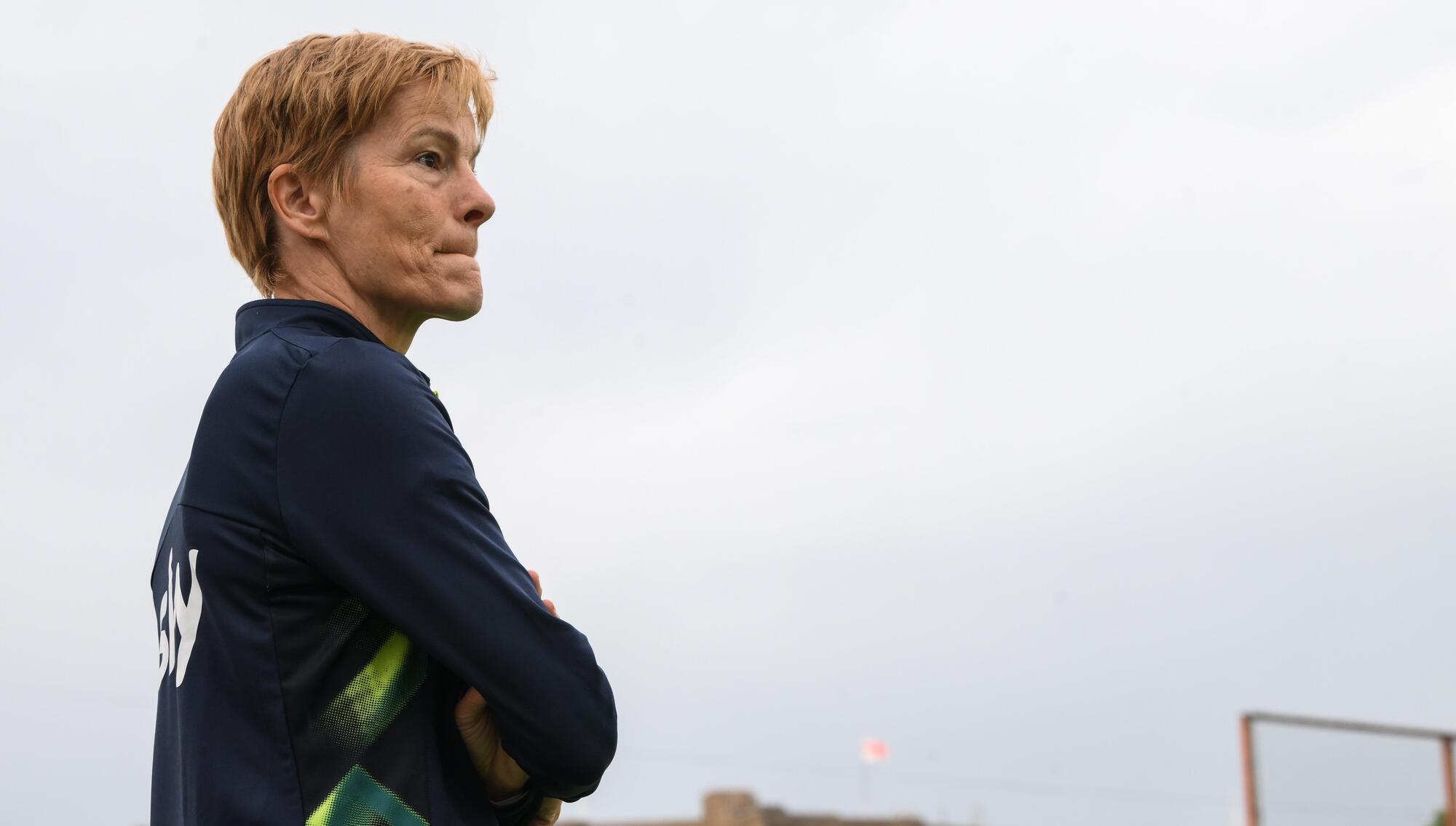
JUSTICE: Republic of Ireland manager Vera Pauw before the FIFA Women's World Cup 2023 Qualifier match between Georgia and Republic of Ireland at Tengiz Burjanadze Stadium in Gori, Georgia. Pic: Stephen McCarthy/Sportsfile
Last October, it was evident from her words and actions that Vera Pauw was still grappling with horrors of the past.
The Ireland manager was at FAI headquarters to announce her squad for the opening World Cup qualifiers but matches against the two top teams, Sweden and Finland, were peripheral to the story that rocked the sport.
The US National Women’s Soccer League (NWSL) was plunged into crisis after whistleblowers exposed misogyny and instances of harassment towards female players.
That two of her squad, Denise O’Sullivan and Diane Caldwell, were at North Carolina Courage, the club who fired coach Paul Riley following allegations of “sexual coercion” by former players, made the bombshell even more topical.
America was just one of the countries Pauw’s decorated playing and coaching career has taken in.
She retired from the Netherlands team in 1998 as the most capped player, male or female, with 89 appearances, and a decade later led them to a first-ever major tournament. Their third place finish at the 2009 finals in Finland exceeded expectations. Other international teams, Russia, Scotland, South Africa, and now Ireland, have had Pauw at the helm.
“I am happy I'm not the only one anymore,” she said 10 months ago, saluting the bravery of Sinead Farrelly and Mana Shim for speaking out, sparking a movement that snowballed.
“I have always chosen to do it (report) behind the scenes but, trust me, it has happened all over the world - everywhere I have coached.
“I think the whole #metoo movement will help us. There are a lot of people of course standing on the barricades.”
The specifics of Pauw’s personal ordeal only emerged over the weekend. As was the case in America, the media were involved in exposing the anguish; Pauw cooperating with inquiries and a deep probe by Dutch newspaper NRC.
They had been on the case for months but the case itself dates back decades to 1986 when Pauw alleges she was raped at her Utrecht home by an official of the Dutch federation KNVB. The man, 10 years her elder, has confirmed a relationship but flatly denies any suggestions of wrongdoing.
Two additional instances of “sexual assault” were suffered later, also by KNVB employees, which Pauw included in her formal 2017 complaint. It took until two months ago for an investigation to conclude but its findings, led by independent sports law specialist Marjan Olfers, couldn’t convince Pauw of impending action.
She instead escalated her concerns to the Dutch police when her deadline of June 12 for meaningful engagement lapsed.
The football federation, reeling from this exposé just days before their women’s team begin the defence of their Euro title, say they’ll discuss the recommendations internally and with Pauw “as soon as possible but with extreme care so we can take action and with a view to restorative mediation.”
Pauw isn’t waiting around any longer. She’s cited a litany of occasions where the actions, or mostly inactions, of the association she served with distinction caused humiliation. Pauw attributes the negative attitude to retribution for her crusade for justice and demanding overall respect for the women’s sector of the game.
Being at the forefront of an Ireland team within touching distance of a first-ever World Cup play-off will undoubtedly keep the case visible.
By now, she should be enjoying retirement with her husband, former Dutch manager Bert van Lingen, but at a Frankfurt Airport hotel in late 2019 she was enticed into one last challenge.
Originally, the FAI’s interim general manager Noel Mooney was leaning on Pauw’s network to fill the vacancy created by Colin Bell’s sudden exit before the Euro campaign but the guru sitting in front of him constituted the ideal candidate.
“I think we come out of an era in which abuse of women was put under the carpet,” was another prescient comment from her sermon on safety within the women’s games.
“The incidents were treated as: ‘Oh, I was only joking,’ and ‘Oh, I felt that she wanted it’.”
It’s been an eventful and emotional three-year term but, together, the FAI and Pauw can tackle their biggest battles yet.


CONNECT WITH US TODAY



Be the first to know the latest news and updates