Irish soccer's year in review: 2021 ends in optimism, but patience will only last so long
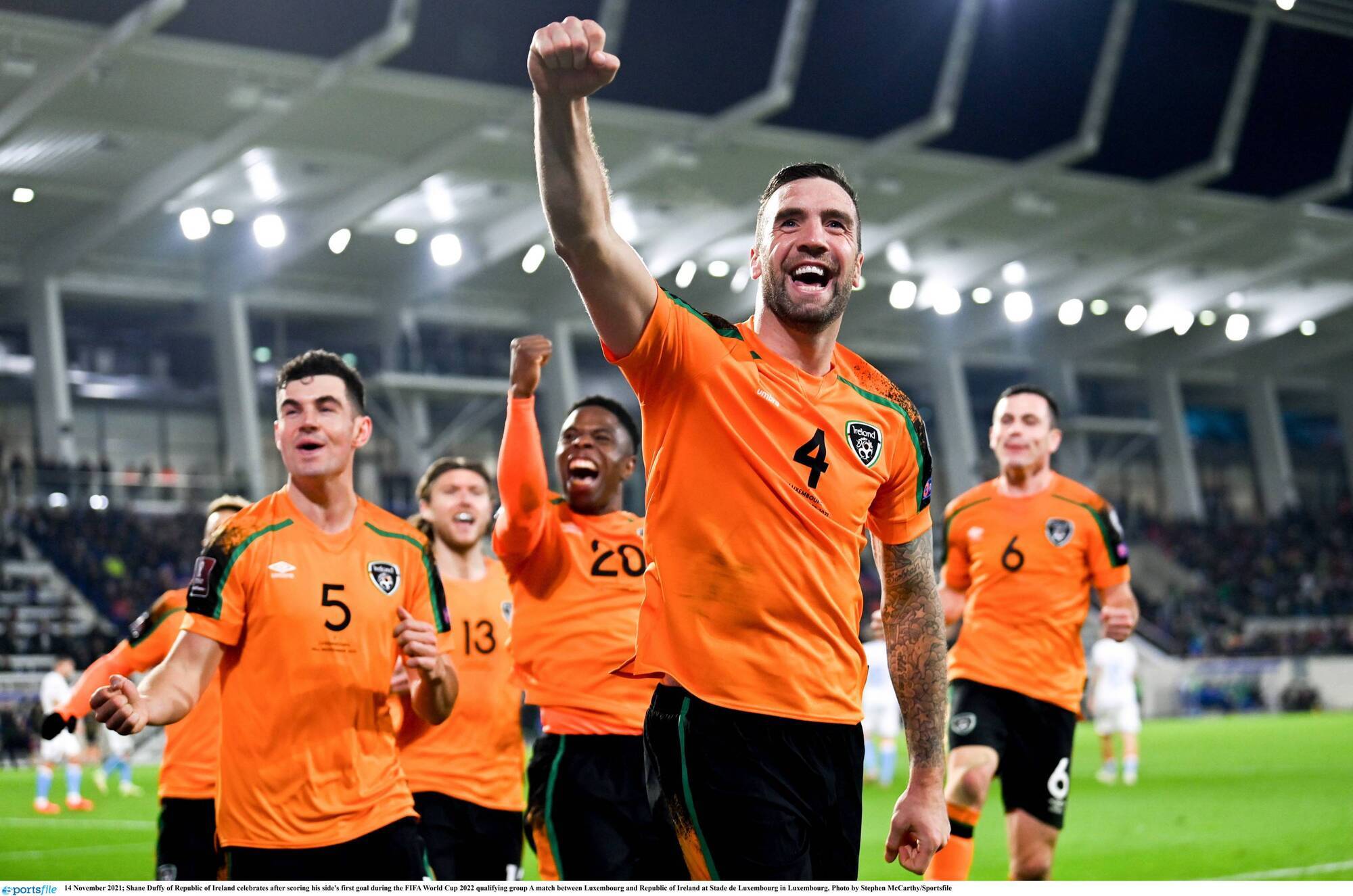
Irelandâs Shane Duffy celebrates after scoring his sideâs first goal during the World Cup quualifier against Luxembourg at Stade de Luxembourg in Luxembourg.Â
In an era that our lives have been flipped upside down, imagine for a moment Irelandâs World Cup campaign had worked in reverse.
A seven-point return from the opening three qualifiers, followed by two draws and a finish of three straight defeats.

The outcome â third place ahead of Luxembourg on goal difference â would be identical, yet the mood music might be different. Early momentum eroded in anti-climax, rather than the bout of optimism derived from salvaging pride.
Thatâs why the FAI were emphatic about assessing manager Stephen Kennyâs performance in box-set format.
As flagged by board member Packie Bonner in October and confirmed by his colleagues after the final window in November, âentiretyâ was the watchword.
2021 proved to be a slow burner, the year in which the concept of patience was attached to expectations surrounding the Irish football team.
Kenny had begun it by declaring his ambition to qualify for the World Cup, only to scoff at such fanciful notions midway through the campaign in September.
It wasnât the defeats by that stage against the top seeds Serbia and Portugal that had torpedoed any hope of a playoff, rather the five points dropped at home to Luxembourg and Azerbaijan.
Still, in reality, Ireland were always in catchup mode once a Serbian side under new management of Dragan StojkoviÄ won the March opener 3-2.
For context, it must be remembered that Kenny embarked on his trip to Belgrade winless from the opening eight matches and also without two of the three primary backroom team he had appointed less than a year earlier.
Damien Duff couldnât work any longer within the set-up while goalkeeping coach Alan Kelly also officially quit in January amid the gunfire following a decision by Kenny to show a motivational video and deliver a 20-minute sermon to his players touching on English oppression before they faced the Auld Enemy.
Anthony Barryâs arrival as Duffâs low-key replacement coincided with a switch in formation.
A disciple of Thomas Tuchelâs back-three bedrock at Chelsea, Kenny soon cloned it, persevering despite early wobbles.
There were no signs of shakiness during the opening 20 minutes against the Serbs, Callum Robinson and Alan Browne central to a flowing move culminating with the latter heading Ireland in front.
Although goalkeeper Mark Travers became the scapegoat for the capitulation that followed, culpability too must sit with the manager.
There was little point in citing DuĆĄan Tadicâs redeployment to the No 10 role as a game-changer when he was too slow in reacting tactically.
Axing Shane Duffy looked a questionable decision as well when Aleksandar MitroviÄ towered above his replacement Ciaran Clark to head what transpired to be the decisive third goal.
Having the visit of Portugal three days later in the forefront of his mind, StojkoviÄ had withdrawn Tadic and âŹ70m-valued striker DuĆĄan VlahoviÄ by the time substitute James Collins bundled in a late consolation.
That hiccup might have been tolerated had Ireland taken care of business at home to a nation ranked 98 in the world.
In the first of a pattern of struggles against teams of inferior standing, they toiled and teetered, allowing Luxembourg the space to grow in confidence and smash in the winner through Gerson Rodrigues.
In contrast to captain SĂ©amus Colemanâs blunt assessment â âdeserved nothing, an embarrassmentâ â Kenny, not for the last time in the campaign, saw it differently, through his own, uniquely-tinted glasses.
He was rounding on his critics, mainly ex-internationals, before and after the next outing, a 1-1 friendly draw against Qatar, and the selection of Andorra for the first of two opponents in the June friendlies at least delivered goals, albeit little else.
Troy Parrottâs inability to translate that brace into competitive action magnifies the folly of burdening a youngster with the pressure of a nation.
Duffy was restored to the side for the real deal of a meeting with Euros-bound Hungary, a scoreless draw ground out with traditional Irish traits to the fore.
It marked the end of a 10-day gathering designed to form the working template for the remainder of the campaign but the first test of lessons learnt in the resumption badly backfired.
Overplaying inside their box against the top seeds Portugal cost Ireland a penalty, yet unwittingly created a coming-of-age moment for the Player of the Year.
Gavin Bazunu, still only 19, was starting his fifth game on the spin and atoned for his part in conceding the spot-kick by saving it. And from none other than Cristiano Ronaldo, one kick away from becoming the highest scorer in menâs international football.
Manchester Unitedâs comeback king would eventually get his record goal, followed by another even later, to burst Irelandâs balloon inflated by John Eganâs header on the stroke of half-time.
As occurred after the Serbia loss, however, Ireland couldnât convert the positives from an away defeat into a routine win at the Aviva, this time in front of fans.
âTheyâre not minnows,â claimed Kenny after Duffyâs late header pinched a point against the Azeris. It was the sole point from 24 the team ranked 112 in the Fifa standings took.
Slick Serbia were on course to apply pressure to Kennyâs future when deservedly leading until gifting a calamitous own-goal six minutes from full-time. If Ireland had been dealt bad luck in Faro, they were more than repaid fortune by that lifeline.
October brought the best window of the five in the year, even if the build-up to Callum Robinsonâs brace in the 3-0 win in Baku was overshadowed by his vaccine stance. He went one better in the 4-0 mauling of the Qataris, after which Kenny set himself a target of topping the 2022 Uefa Nations League game without being contracted to complete the campaign.
In the final week of the series in November, Luxembourgâs 3-1 win in Baku prior to Ireland welcoming Portugal meant avoiding defeat was required to keep third spot alive heading to the Grand Duchy.
Portugal kept five of their stars walking a suspension tightrope in reserve and Ronaldoâs heading abilities werenât as accurate from eight yards with the best chance of a scoreless draw.
Nothing less than victory in Luxembourg would suffice to usurp the underdogs and Ireland required the brilliance of Bazunu and survived a disallowed goal to remain on terms going into the final 25 minutes.
The hosts, gradually leggy from their exertions in Azerbaijan three days earlier, were stretched by Jason Knightâs energy following his introduction and the substitute created each of three goals.
On the personnel front, the revolution trumpeted wasnât borne out by that team.
Eight of the starting team in the last assignment were capped prior to Kennyâs elevation in 2020. Among the three others, Chiedozie Ogbene has found his form and consistency at 24.
Bazunu and Adam Idah represent the graduates from the FAIâs underage squad, with the faith shown by Kenny in the latter a frequent talking point of his tenure.
Knight is best placed to gain first-choice status in 2022, while the experience gained by centre-backs Nathan Collins and Andrew Omobamidele in the Premier League makes them live options in an area Ireland are best stocked in.
By the end, the return from 12 games was four wins, five draws, three defeats and another year looming of watching European teams compete in the World Cup play-offs and the tournament itself.
Regardless of sequence, the patience can only last so long and results have to improve for Ireland to regain its competitive edge.
Blending off-field victories with qualification success had eluded Ireland but theyâve got halfway to striking symmetry.

Put simply, should Ireland replicate their first four results of the World Cup campaign in the second half of next year, then in all likelihood a play-off for the 2023 finals will be clinched.
Thatâs based on the assumption that top seeds Sweden maintain their faultless record in five qualifiers by winning the final three. Next up for the yellow wave is hosting Ireland on April 12, realistically a free hit for Vera Pauwâs side.
Dueling with Finland for the runners-up berth, and play-off spot, was the aim once the draw was made in April and they made early headway by beating the second seeds 2-1 in October. That win in Helsinki, sealed by Denise OâSullivanâs second-half header, followed the narrow 1-0 loss against the Swedes at Tallaght.
Yet it was their 3-2 triumph over Australia in a friendly in September which acted as the turning point, halting a seven-game losing streak stretching back a year. Irelandâs only blemish since was dropping two points at home to Slovakia in November but the Finnish result presented room for that one slippage.
They crowned a year in which they clinched equal pay and attracted Sky as sponsor by registering a record 11-0 win over Georgia which has them bouncing into 2022 with optimism.
Sometimes they donât help themselves in the popularity stakes but thereâs no doubt that Shamrock Rovers were worthy champions of the Premier Division.

Their title success will always be diluted by the sight of an asterisk to denote the Covid-19 enforced half campaign, yet they brushed off the exits of Jack Byrne and Aaron McEneff to sweep clear from the outset and wrapped up the trophy with three games to spare.
That they were unable to recover from first-leg slumps in the Champions League against Slovan Bratislava and Flora Tallinn when they dropped into the new Conference League, results which demonstrated Rovers are well off reaching the levels Dundalk set in Europe.
Bohemians produced the best European summer nights for the Irish quartet, memorably beating the three teams they welcomed to their temporary digs of the Aviva Stadium. Bohs couldnât complete the quartet of Dublin 4 victories in the FAI Cup final, as St Patrickâs Athletic emerged victorious from the shootout before a crowd of 37,000.
First Division winners Shelbourne gained promotion alongside play-off winners UCD but Waterfordâs relegation leaves the top-flight without a Munster representative for the first time since 1923.
In the womenâs league, Peamountâs faltering in the final two games allowed Shelbourne nip in to deny them a three-in-a-row of titles but Wexford also ripped up the script in the FAI Cup final. Veteran Kylie Murphy spearheaded a 3-2 win over Shels.
In the passing of time, 2021 may well be recalled as a watershed, the juncture when an air of calm finally descended on the FAI boardroom.

The upheaval in 2019 triggered by media revelations around governance preceded jockeying for power within the vacuum during 2020, with the Government-led push for oversight from outside the football gene pool creating rancour. This time it was the turn of football folk to squabble internally, for the reduction of their presence on the board from eight to six prompted elections in May that reignited traditional turf wars.
President Gerry McAnaney and his deputy Paul Cooke survived the coup to remain on a 12-person board that finally has space to breathe and function. Packie Bonnerâs return to the association as one of the six independent directors did much to allay fears among the diehards of losing sovereignty.
As supremo of the new high performance/international committee, Bonner will be integral to recruiting a new football director. That person is to assume much of the responsibility held by Ruud Dokter, whose exit as high-performance director after eight and a half years wasnât universally decried. Financially, the FAI remain at least âŹ62m in debt, hampered by the cost of legacy contracts and are still scrambling to source a main sponsor.
A mixed year, all told.