Roy O'Donovan: 'He was calling me ‘Irish this’ and ‘Irish that’. I lost my temper and I dropped him'
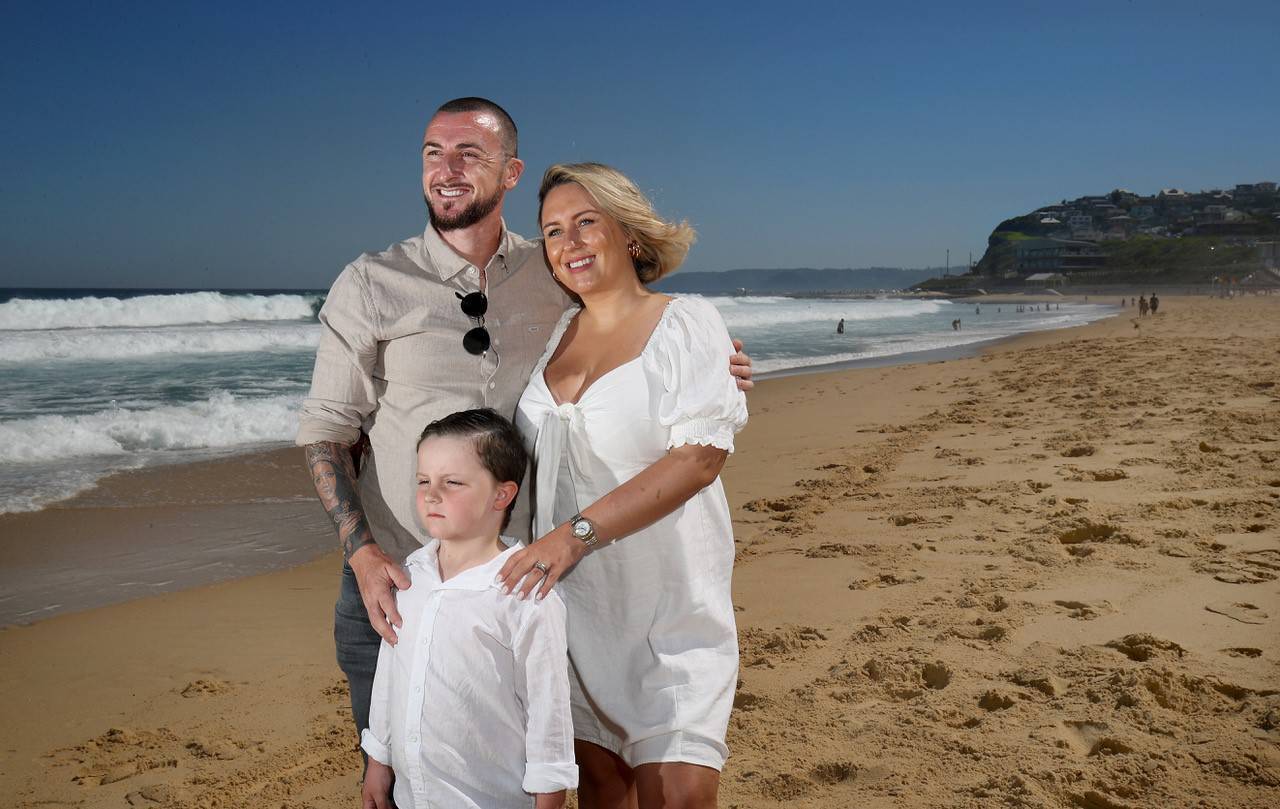
Roy O’Donovan with his wife Ellen and son Alfie. The former Cork City striker is now gearing up for his debut with Sydney Olympic — one of the biggest semi-professional teams in Australia. Picture: Grant Sproule
When the new A-League season gets underway in three weeks’ time, Roy O’Donovan’s name will be a notable absentee from the player roster.
After six seasons in Australia’s professional league playing for Central Coast Mariners, Brisbane Roar, and most notably Newcastle Jets, the Cork-born striker is now gearing up for his debut with Sydney Olympic — one of the biggest semi-professional teams in the country.
His signing is certainly a coup for Olympic, who play in the New South Wales division of the National Premier League. Since arriving Down Under six years ago, O’Donovan established himself as one of the most feared strikers around. Only three foreign players have scored more than his 56 goals in the A-League’s 16-year history.
Even that claim to fame isn’t black-and-white now. In January this year, O’Donovan celebrated receiving Australian citizenship with his wife Ellen and son Alfie. Another new arrival, a girl, is imminent too for a family who are settled in their home from home.
Things haven’t always been straightforward there. Twice, O’Donovan has had to confront his own identity — his Irishness — and the sense that his accent and his nationality marks him out as trouble. He believes an anti-Irish sentiment remains live in society. A career as a professional footballer has not left him immune.
In 2013, at the age of 28, O’Donovan decided to opt for a fresh start away from the UK where spells at eight clubs were remembered more for injury interruptions than goal celebrations. A mixed time in South Asia followed. A successful season with Brunei DPMM was followed by a short but disastrous few months with Indonesia’s Mitra Kukar.
The former Cork City favourite admits that while still in the UK, ambitions to receive a senior international call-up remained a priority. Understandably, his transcontinental move ended those lingering hopes.
“As much as it felt like I was probably demolishing any ambitions I had to play for Ireland by moving away, it also opened up my eyes and gave me a whole new dimension to my career. I’ve been able to enjoy my life and my football, but it’s added years to my career.
“I probably would’ve suited playing somewhere in Europe maybe: Belgium, Holland, or France. I would’ve liked to give that a try. In the back of my mind, I would have been leaving the UK in my 30s to go and play in America or Australia. They would’ve been the two countries I would’ve liked to play in.”
Unlike his time in Asia where he went in blind to both the football and lifestyle, Australia had its obvious attractions. He was joining a league where Alessandro Del Piero, David Villa, Robbie Fowler, Emile Heskey, and Damien Duff had been and gone. It had pedigree and a sprinkling of stardust too.
Fowler would go on to manage the Irishman at Brisbane Roar, in what was the Liverpool legend’s first proper managerial role. “As a coach and manager, he wanted a passing game but really structured defensively as well. He was a lot more structured than I thought he would be. I thought he’d be a lot more flowing, attacking football because he was such a great, instinctive striker.”
Just as O’Donovan arrived at Central Coast Mariners in 2015, Andy Keogh briefly left Perth Glory only to return months later. Their A-League goalscoring records are almost identical but the Dubliner remains at Glory and will hope to break the 60-goal barrier in the coming season.
Before moving to Australia, O’Donovan was training with John Caulfield’s Cork City in the off-season to stay fit. It was there that the late Liam Miller encouraged him to take any opportunity that fell his way.
“I was saying to him ‘I’ve an opportunity to go to play in Australia, what do you think?’ He said, ‘go, get out there, you’ll love it. Your family will love it, and the football is better than you think it is.’ I’m glad he gave me the gee up to go because it’s the best decision I’ve made. He was a really genuine, nice human being and a quality footballer in his day.”
His time in Australia has been marred by two incidents and subsequent suspensions, which amounted to a combined 18 matches on the sidelines. In his first campaign, O’Donovan retaliated to an elbow from Wellington Phoenix defender Manny Muscat with a headbutt. It was a clash that led to an in-game yellow card but a retrospective eight-game ban.
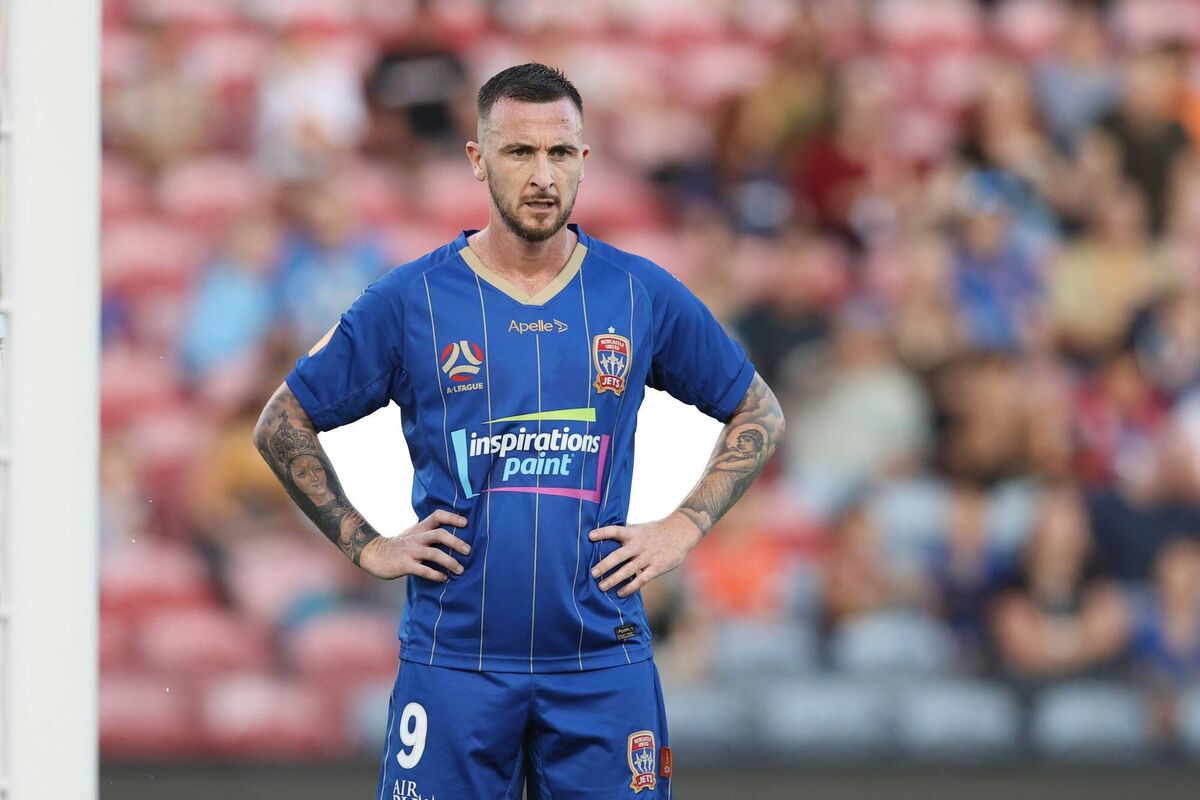
The 36-year-old takes responsibility for his role in the skirmish. “I lost my temper in the game and I deserved a red card, I deserved a suspension. I’ve no qualms there. It was one of the very few times in my career where I lost my cool.
“Don’t get me wrong: I lose my temper, but you’re in control. I’d been elbowed off the ball and then he burst my eye and the referee didn’t react to that situation. He was barracking me really, calling me ‘Irish this’ and ‘Irish that’ and I lost my temper for a second and I dropped him.”
O’Donovan believes the fact he was a foreign player didn’t help his cause either. Had he been dismissed by the match referee; a three or four-game ban would likely have sufficed.
“We have a reputation as the fighting Irish and there’s a lot of Irish that come over here. They get into bar fights, they get into this and that. A lot of them are living in Sydney and I had my hearing in Sydney. It’s a case of, ‘Ah he’s like that Irish bloke who had a fight in the Cock and Bull in 2013.’ It’s the same, they’re all the same — that’s the kind of feel I got from the whole thing.

“It’s easy to tar everyone with the same brush: good, bad, indifferent. But when they start using where you’re from, you know you’re in trouble. When they start using ‘Irish striker’, ‘Irish forward’, ‘Irish hothead’ — when they start putting all these things before they mention your name they’re setting you up for a fall. It has everything to do with where you’re from sometimes.”
Three years later, he was sent off in injury time during the A-League Grand Final, which Newcastle Jets lost 0-1 to Melbourne Victory. Attempting to reach a free kick hoist into the area, the studs of O’Donovan’s high, outstretched right leg connected with goalkeeper Lawrence Thomas’s face.
There is no dispute it was dangerous play. He deserved to go. But the player has no regrets on making an ambitious play for the ball.
“Had I got a touch of that ball we had a chance in the 92nd minute to win the league. Had I scored a goal, had something went in we’d go on [and] win the league. That’s it.
“It was a red card because I got it wrong. It was dangerous play, no doubt about it,” O’Donovan conceded. “But 10 games, 10 games is them saying that I’m going out and trying to kill someone. It was a case of, ‘Oh he’s had a eight-game before so we have to beat that now.’ For me that was as simple as the thought process went with it.”
A goal-getter in the purest sense, O’Donovan bemoans missing 18 games and the opportunities that would have presented. “My goal-scoring rate would have been a lot higher had I played those 18 games. The eight-game ban I got originally set the tone for the second one.”
The Jets were struggling in the following season, as he served his ban. The incident itself, the suspension, and his team’s troubles were the trifecta. O’Donovan was left on the sidelines to fight his own demons. He wasn’t as a good a husband nor a father as he could or should have been at that time.
Nevertheless, he did bounce back to score 11 goals upon his return — finishing top of the Jets’ standings. Ony five players, including Keogh, scored more in the A-League that term.
“I didn’t play for seven months in total. It was a difficult, difficult period for me- mentally hard because I felt guilty. Not only did I — even though I was trying to do the right thing in my mind at that moment. I was trying to win the game, made a mess of it, made a balls of it.
“I was feeling guilty, feeling sorry for myself, every kind of negative emotion I was in a dark place about it, to be quite honest. I probably live and breathe football, my wife would probably tell you as well, probably too much at times. It shouldn’t be the be all and end all, it’s just the way I’ve lived my life and football has been front and centre of that.”

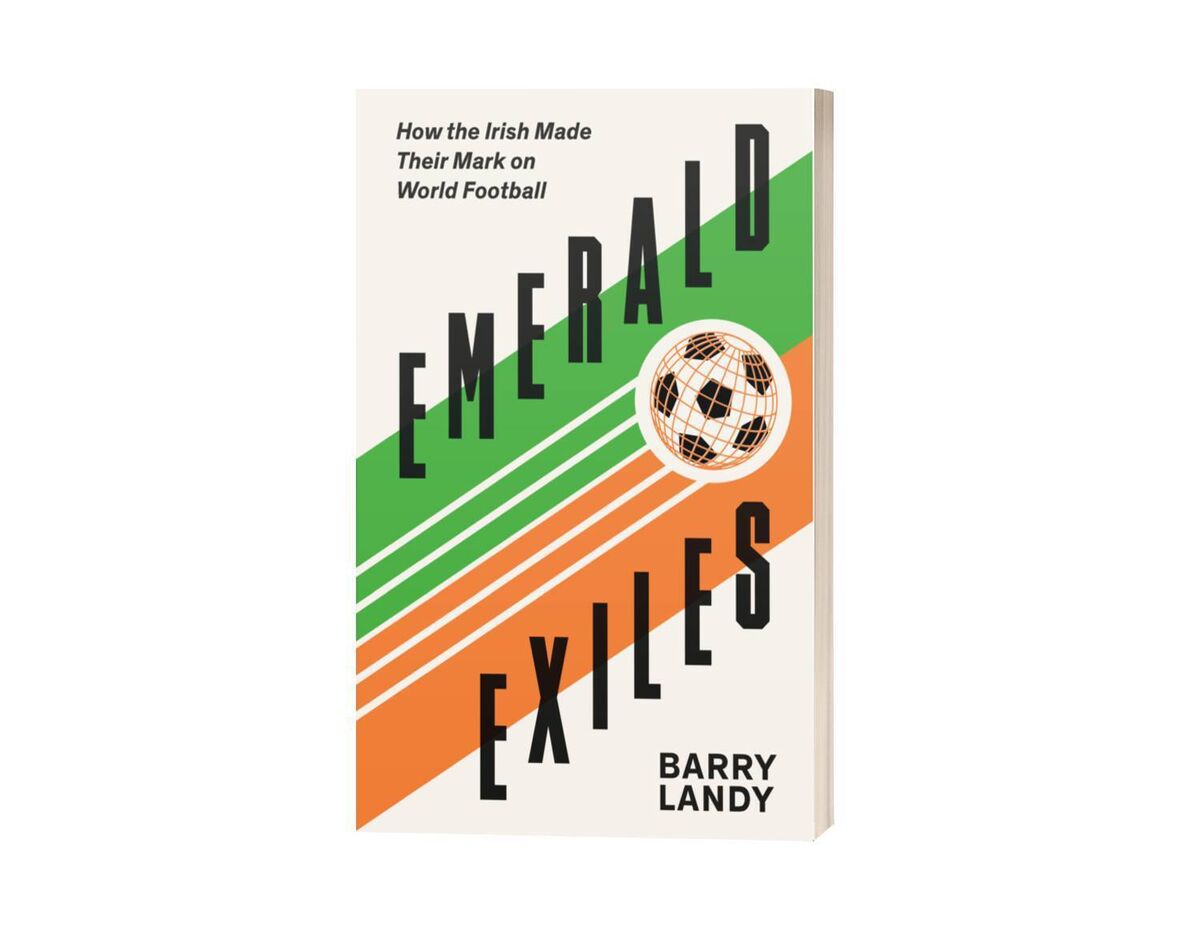
- Barry Landy is the author of Emerald Exiles: How the Irish Made Their Mark on World Football (New Island Books), now available nationwide.
CONNECT WITH US TODAY
Be the first to know the latest news and updates