As Guardiola showed in Champions League final, responsibility to be a grandmaster can backfire horribly
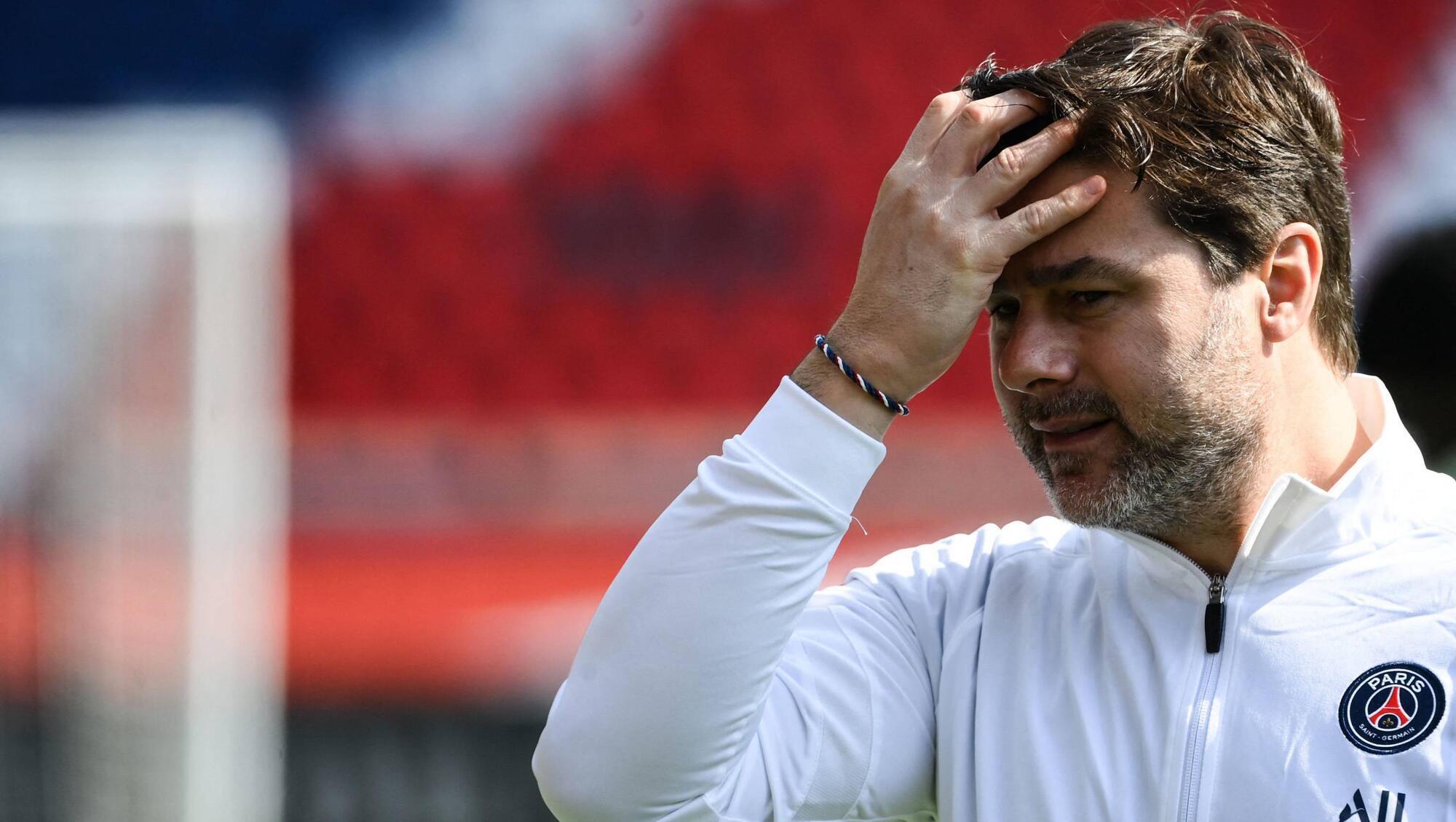
Paris Saint-Germain's Argentinian head coach Mauricio Pochettino
All eyes this week will inevitably be on the megastars and how the summer spending splurge might affect the fortunes of their new clubs but in reality, the Champions League is as much about managers, and the pressure on them is greater than ever.
Leo Messi, Cristiano Ronaldo, Jack Grealish and Romelu Lukaku are the biggest names under the European spotlight, but there are others you can add to the list, such as Manuel Locatelli at Juventus, André Silva at Leipzig and Antoine Griezmann, back with Atletico de Madrid.
There are also names who cost nothing, notably Memphis Depay at Barcelona, those who seem destined to break the bank - Erling Haaland and Kylian Mbappé - and one or two big beasts still lurking in the background, such as Zlatan Ibrahimovic, back with a bang and a ponytail for Milan against Lazio on Sunday.
Attention tonight and tomorrow will naturally focus on these players and how they are shaping up, especially those who have moved and left a big gap to fill at their former clubs. How Juventus perform without Ronaldo is as big a question as how well Manchester Utd adapt to his return. Likewise Barcelona and Inter without Messi and Lukaku.
That, in turn, puts managers centre stage, a position most of them would rather not be in, certainly this early in the season, with international breaks disrupting their preparation. And it is managers who almost always make the difference in the Champions League, even more now that they are allowed to change half their team during the course of 90 minutes.
Managers, or head coaches, call them what you will, are increasingly cast in the role of chess grandmasters - plotting their strategy ahead and then seeking to work the slightest advantage or exploit the slightest opposition weakness during the match itself. As Pep Guardiola showed in last season's final it is a responsibility that can backfire horribly.
Even serial winners such as Max Allegri are under examination and he is in the awkward position of being a serial winner who was unable to lift the prize that his bosses truly craved. Juventus were the unchallengeable champions of Italy under his direction, but they have still only been European Champions on two occasions, one of which was Heysel, which most of their real supporters would rather forget. They also hold the unfortunate record for the number of defeats in European finals, seven in all, two with Allegri.
Ronaldo was brought in at huge expense in the hope of breaking that pattern, so there was then a reaction that suggested that the team was too dependent on their star player and might even be better off without him.
It was arguable, but Juve’s problem was more that they acquired too many quality players in decline, neglecting their own young men and relying on a brilliant but ageing defence while failing to rebuild their midfield.
Is it just a coincidence that Man Utd, and Solskjaer, are being questioned for failing to address their midfield issues even though they have signed top talent in Raphael Varane and Jadon Sancho, and brought back their Portuguese talisman?
It is asking a lot of Solskjaer to manage that over a season and compete on all fronts, especially as he has to marry the talents of Ronaldo with Bruno Fernandes who have yet to gell properly for their national team, even in a weak World Cup qualifying group.
Mauricio Pochettino has an even bigger ask. Paris Saint-German achieved the almost unthinkable last season, finishing second in a one-horse race a year after winning a domestic treble.
He only lost the race by a neck of course, and PSG are already four points clear in Ligue 1 after five games, but the Champions League is a must-win for the owners even more than it is for Manchester City. Pochettino was rightly praised for his achievements at Tottenham but his record when it comes to the crunch is not convincing.
He has a genuinely galactic squad at his disposal now, which ought to mean he can rest players during the run-in, but taking on City is probably not what he would have wanted at this stage and Leipzig are not the easiest opposition, even if Julian Nagelsmann has left for Bayern Munich. Managing Neymar is tricky enough, the expectations about Messi are sky-high - and he also has an unsettled Mbappé to handle. Having Gigi Donnarumma in goal may help.
Nagelsmann is also in the spotlight, if for different reasons. The costliest football manager in history, with a transfer fee of €25 million, he is expected to win the Bundesliga at a canter, and also restore Bayern to the top of the European tree. The difficulty is that German football is currently some way short of its best, as we saw during the European championships, and too many Bundesliga fixtures are a pushover. It can lull a manager into a false sense of security.
The luck of the draw also pits the youthful Nagelsmann (two years younger than Ronaldo) against wily managerial adversaries, Jorge Jesus at Benfica and Mircea Lucescu, still battling away aged 76, at Dynamo Kyiv. And his other Group E opponents are Barcelona.
Given Barca’s financial crisis you might think Ronald Koeman is under less pressure than most of his peers. But not necessarily. The new generation comes with high expectations and in Pedri and Frenkie de Jong he has two of the best young midfielders in the competition.
But perhaps the most spicey managerial challenge is in Group D, where three clubs face each other for the second consecutive season - but with new men in charge. And all three of them are Italians.
CONNECT WITH US TODAY



Be the first to know the latest news and updates