‘Priceless’ Super Cup in Belfast a boost to create ‘compelling’ 2030 World Cup bid
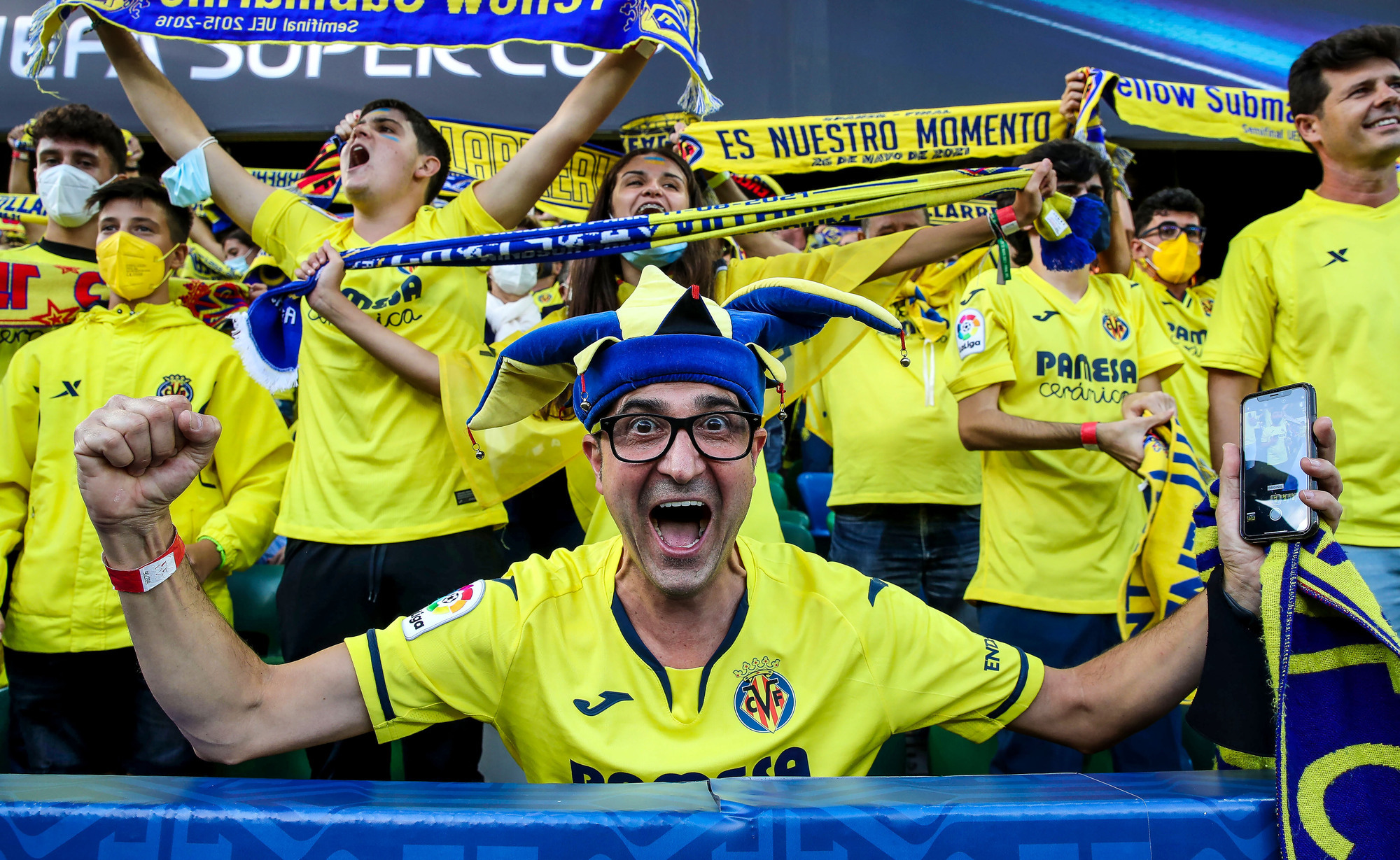
Villarreal fans at Windsor Park. Picture: INPHO/Presseye/William Cherry
It’s a long way off and an even longer shot, but Ireland and Northern Ireland’s bid to co-host the 2030 Fifa World Cup has been “elevated” following Windsor Park’s staging of the Uefa Super Cup.
That’s the analysis of the Irish Football Association CEO Patrick Nelson who believes that Belfast’s “priceless” hosting of Wednesday night’s European showpiece, has put the small football nation at the centre of world attention and perfectly positioned for a World Cup bid with its fellow UK and Irish associations.
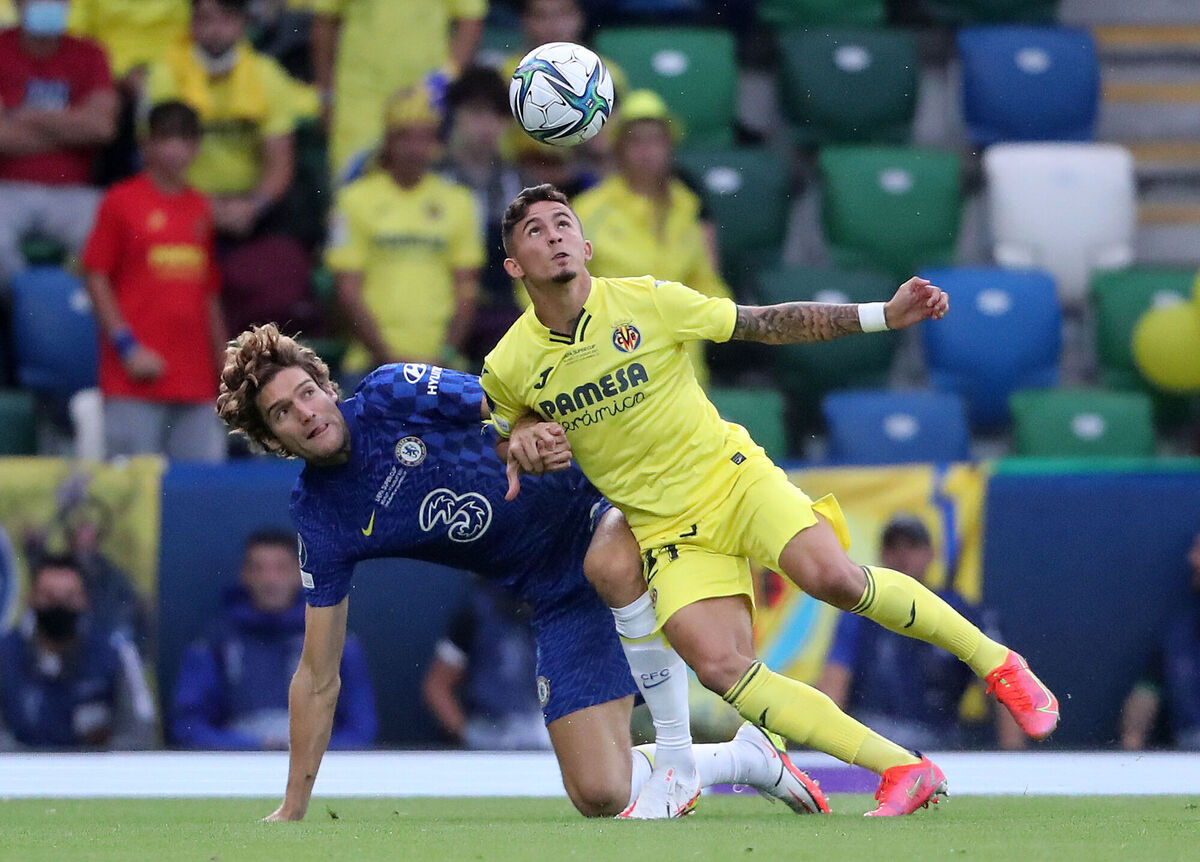
The match, the biggest club game in the world since last season’s Champions League final, was the second most important match between two clubs to take place on the island of Ireland, after the 2011 Europa League final at Dublin’s Aviva Stadium, between Braga and Porto.
The extraordinary achievement by the IFA of winning the bid to co-host the Super Cup was secured in 2019 after Northern Ireland was repeatedly turned down by Uefa.
Ireland and Northern Ireland, along with England, Scotland, and Wales are expected to launch a formal bid for the World Cup in nine years' time, with Patrick Nelson declaring to the his association has demonstrated valuable credentials and capabilities to host important matches.
“Hosting a significant Uefa match like this can elevate our standing for a World Cup bid, for sure,” explained Nelson.
“Yes, we are still in feasibility mode at this stage (in the first phase of a World Cup bidding cycle), but this incredible experience will help us to play our part in pulling a compelling bid together once that process begins.
“It has also given us the benefit of working with Uefa as a business partner and if everyone involved is really happy after this game, that will certainly put us in a better place for future bids.”
Nelson is hoping that the IFA can land a Women’s Champions League final “soon”, and he will have learned from a long and patient effort to bring the Super Cup to Belfast’s National Football Stadium.
The IFA and Nelson’s strategy to land the Super Cup, as one of Uefa’s smaller associations, was a feat of accomplishment which was built on 10 years of lobbying, and failing to be put off by repeated rejection. The Association twice bid for the Super Cup before, and were twice turned down, but third time lucky came in September 2019, when Uefa awarded Belfast and the IFA the match.
It was an extraordinary feat for such a small football nation, but an event which along with Northern Ireland’s deserved hosting of the Open in 2019, puts the province as a big puncher on the world stage.
With Ireland taking the unfortunate decision not to host any games in Euro 2020, handing back four matches to Uefa in April, Dublin will have to wait until 2024 for a prestige event, when it hosts the Europa League final.
From a financial perspective Wednesday night’s match was nowhere close to the extraordinary €118m economic benefit that The Open in Royal Portrush brought, due to the nature of the sport (The Open took part over four days with a far greater audience).
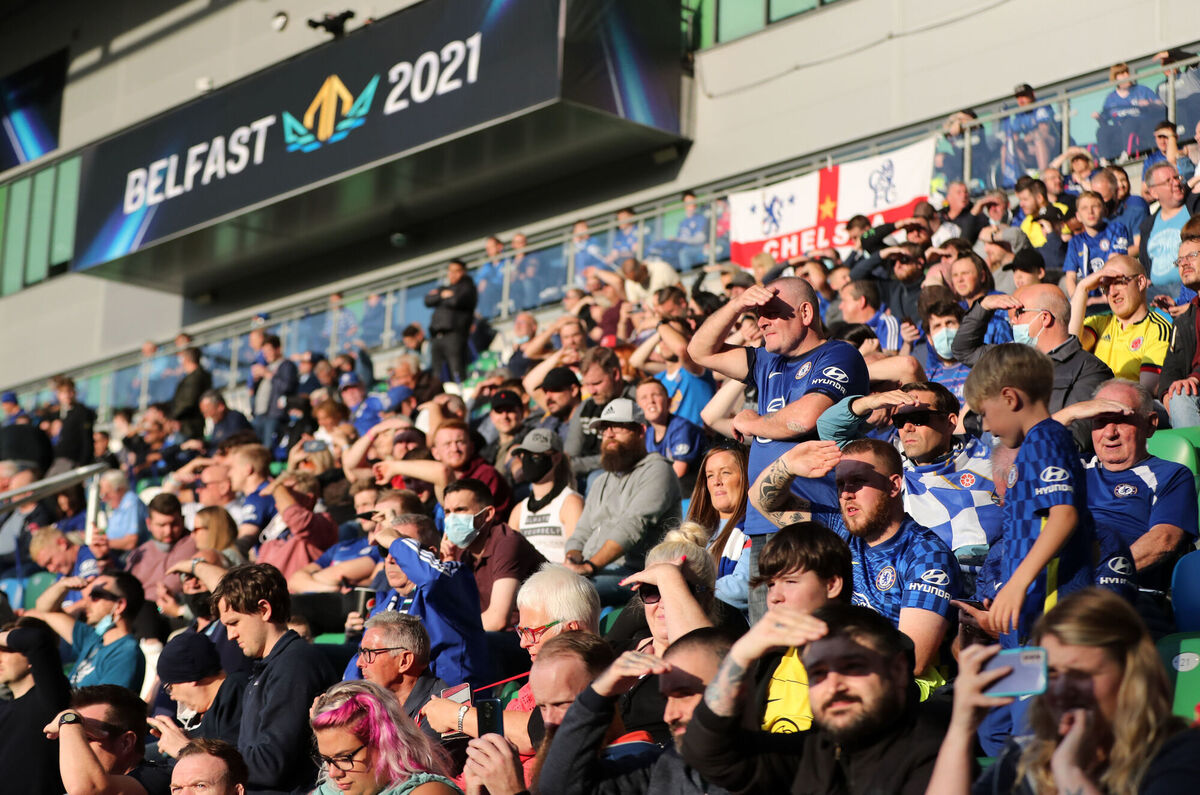
The capacity of the stadium was a reduced attendance of 13,000 – 70% capacity, with a small but limited number of fans making their way into Belfast from overseas.
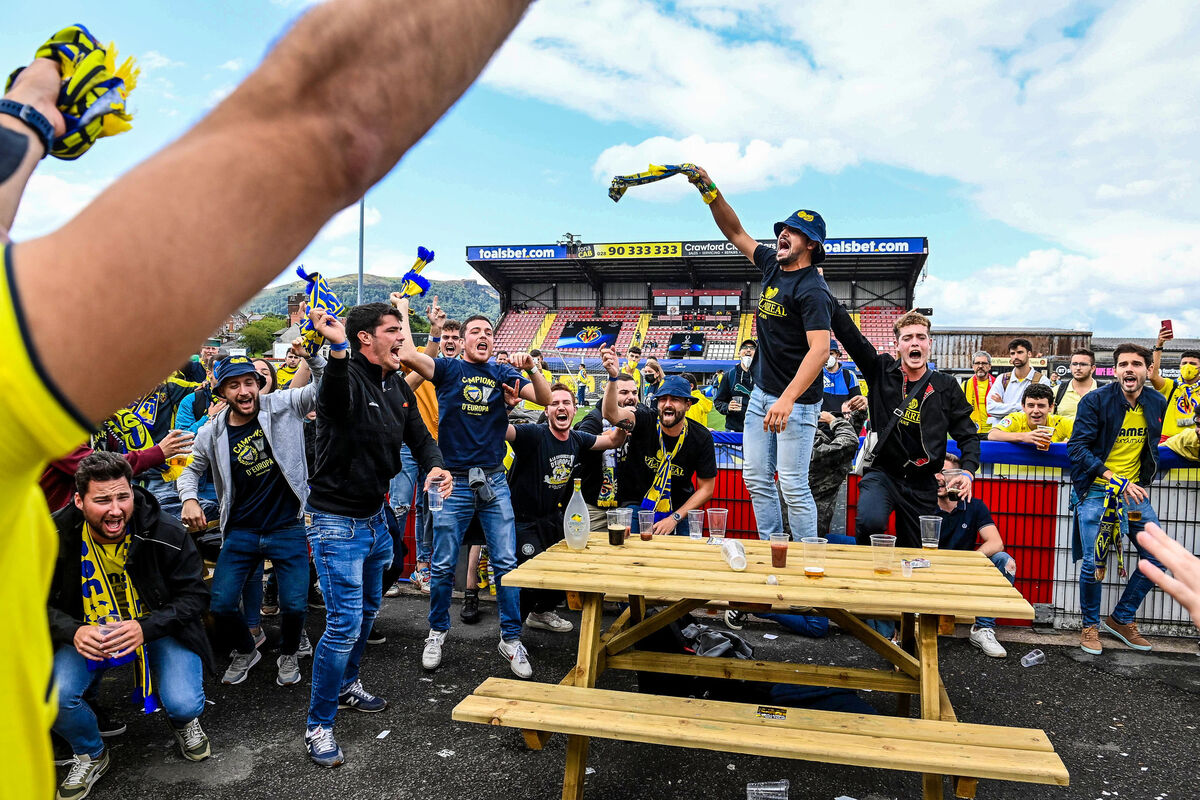
NI Tourism has no data or current estimates on the value of the Super Cup to the sector or the wider economy, nor on its future impacts, particularly through the visibility the match gave Northern Ireland Inc. on the international stage.
More than 200 countries received live television coverage of the game, and its impact for Patrick Nelson are clear.
“I’m no tourism economist but the value of bringing an event like this to Belfast and Northern Ireland is priceless,” he explained.
The 2015 redevelopment of Windsor Park cost taxpayers €36.5m and the IFA €4.75m, with an additional cost of €3.5m due to an insurance matter relating to a stand collapse during reconstruction.
The €45m football arena will be the smallest stadium on the proposed Fifa World Cup bidding roster for an Ireland-UK bid, and it will join the Aviva Stadium and Croke Park on an all-island bid sheet.
The IFA earned no money from the Super Cup, all Uefa events are exclusively owned by the European governing body, so all ticketing and media rights revenues go straight to the organisation’s Nyon HQ.
However, the marketing and standard setting by the IFA who didn’t have to invest a single penny on staging the match, was effectively wrapped up in gold packaging for the Association.
Should a feasibility study recommend the launch of a World Cup bidding process by the Irish and UK associations, Northern Ireland will demonstrate as part of its bid story how the province has evolved since the Troubles of the past.
Certainly fans and players of previous generations will remember the dark days of Windsor Park when baying fans gave Rep of Ireland teams their most hostile footballing experiences, memorably softened by Alan McLoughlin’s goal which qualified Ireland for the 1994 World Cup.
That game in November 1993 followed a month in which 26 people were murdered in violent exchanges between Catholics and Protestants, including the UFF’s ‘Trick or Treat’ massacre of eight people at the Rising Sun bar in Greysteel and the slaughter of shoppers at a fish shop on the Shankill Road.
With tensions running at such toxic levels in Windsor Park in ‘93, and with millions looking on horrified south of the border as Irish players were subjected to appalling abuse, those dark days when football and sectarianism were intrinsically linked, are mercifully long gone.
That old Windsor Park couldn’t have been further from Wednesday night’s shining example as Northern Ireland’s beautiful redeveloped National Football Stadium formally introduced itself to the world in glorious summer sunshine and with it, introduced the Irish Football Association as a significant player on the world stage.
This is the “compelling bid” story that Patrick Nelson was talking about.
CONNECT WITH US TODAY



Be the first to know the latest news and updates