Áine O'Gorman not giving up equal pay campaign yet
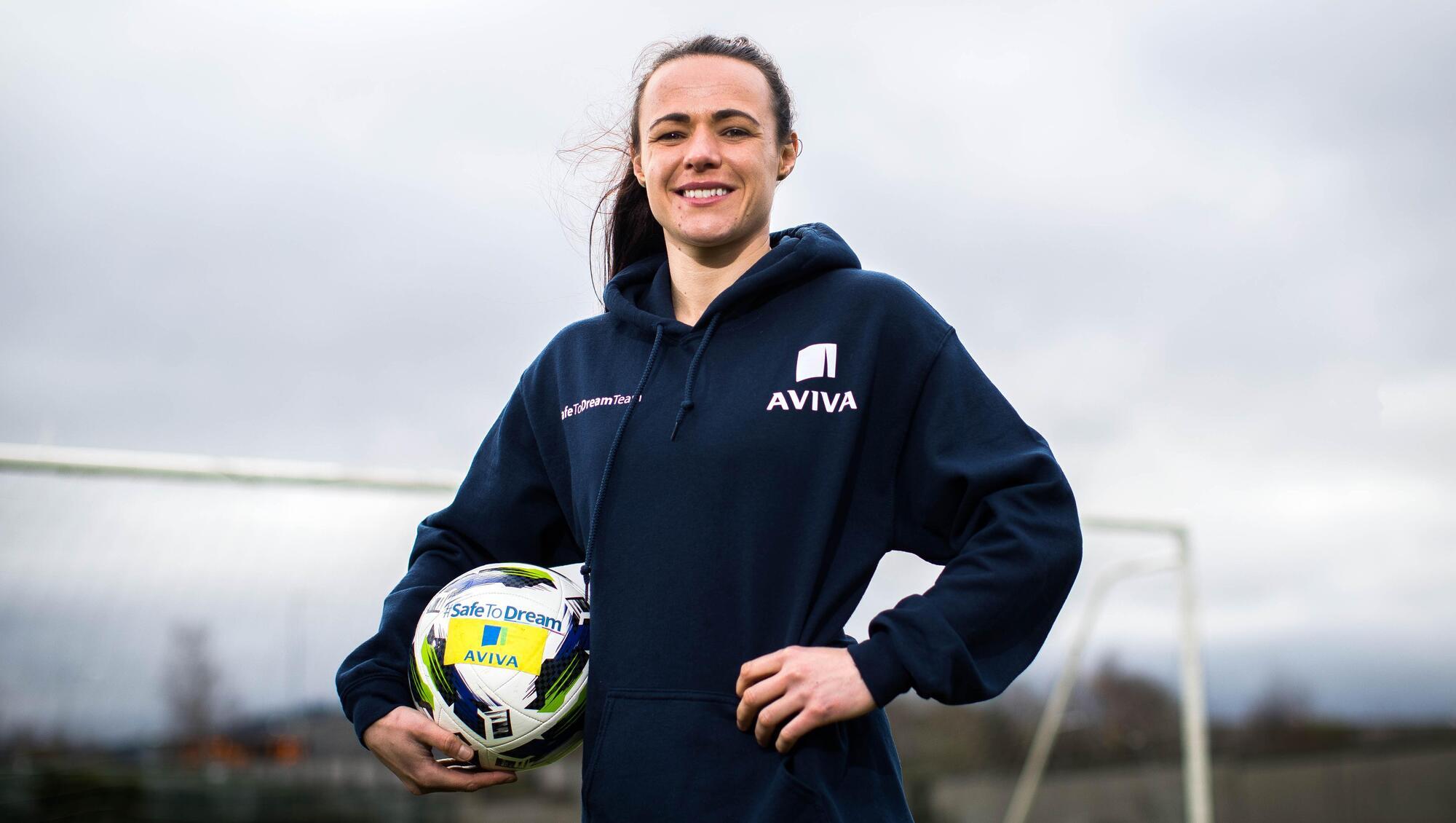
Pictured is Republic of Ireland Women’s National Team footballer Áine O'Gorman at the launch of the 2021 Aviva Soccer Sisters Virtual Skills Hub at Knocklyon United FC in Dublin. Picture: Ryan Byrne/Inpho
Áine O'Gorman has waited long enough for standards across Irish women’s football to rise that another bit of patience to achieve equal pay is tolerable.
The issue of treating male and female players the same when it comes to international football has been in the spotlight in recent years, with Brazil, Norway, England and New Zealand agreeing to pay equal appearance fees to both genders.
While the world champions, USA, last year saw their claim for €66m in damages dismissed in court, they are confident that an appeal in June will recognise their entitlement to parity.
Back in Ireland, a major chasm still exists between the FAI’s senior teams.
Whereas Stephen Kenny’s players are due a €2,500 basic fee per game this week, Vera Pauw’s squad will receive €500 for each match during next month’s window.
O'Gorman is well qualified to speak on the topic. A holder of 105 caps, the captain of double winners Peamount United has spent her entire career, bar a two-year spell at English club Doncaster Belles, as a domestic-based player in the Ireland squad.
She and her teammates had to threaten strike action in 2017 to acquire basic rights such as their own official tracksuits and reimbursement for out-of-pocket expenses while representing their country.
The crusade for equal rights remains ongoing. Another triumph was clinched last October when, for the first time, the FAI chartered a plane for their vital Euro qualifier in Ukraine.
O’Gorman welcomes the gradual, continuous improvement around facilities but hasn’t lost sight of the pay imperative.
Her boss Vera Pauw all but ruled out the matter reaching finality anytime soon on the basis that “we don’t bring in money” and FAI chief executive Jonathan Hill said he would be happy to discuss the thorny subject at the “right time”.
Given the FAI are burdened by debts of €80m and rising, that time appears to be well into the future.
“We make huge sacrifices to play for our country,” said O’Gorman, who works as a personal trainer outside of football.
“Someone asked me if it’s hard to put your life on hold with your job. That’s something that always comes into the back of your mind.
“The commitment levels to play for our country are the same as our male counterparts.
“But, for me, it is about creating equal opportunity. Then, that equal pay question will hopefully come up again and be rectified.”
O’Gorman is back on the international beat next month for a couple of friendlies.
On April 30, third seeds Ireland will discover their group opponents in the quest to reach the 2023 World Cup.
Most of Vera Pauw’s squad will be drawn from clubs abroad but for the few operating at home, and those vying for a maiden call-up, maintaining form is the priority.
The Women’s National League season kicking off this weekend will support that objective, yet O’Gorman yearns for a bigger focus.
One policy shift is Pauw encouraging her young prospects to integrate into the training sessions of boys’ squads. While she remains in her native Holland, her assistant Eileen Gleeson oversees the midweek gatherings of the locals. O’Gorman just wants their frequency increased.
“Personally, I’d like to see those elite home-based sessions stepped up,” she notes. “The ones we do have, where all the top players train together, are great but I’d like to see more of them to be sharp for the internationals.”

BLACK FRIDAY
Already a subscriber? Sign in

CONNECT WITH US TODAY



Be the first to know the latest news and updates