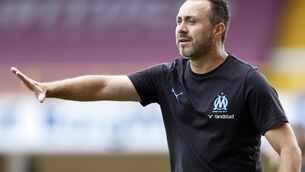
Andy Reid: Football isn't a fairytale. You don't have to love the game
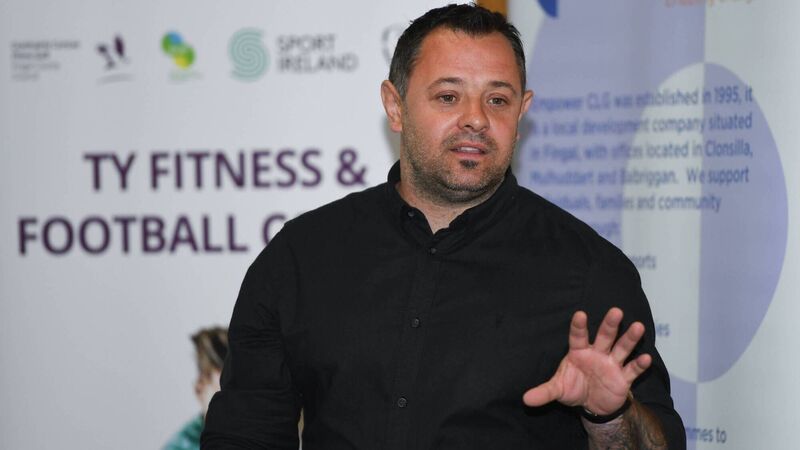
Former Republic of Ireland international Andy Reid speaks at the 2019 FAI / Fingal TY Course Graduation at Blanchardstown Civic Office in Dublin. Picture: Harry Murphy/Sportsfile
This was not about vacuous philosophies or banal principles. This was about reality.
The realities of being a modern-day coach, and manager, for modern-day players. Why the values have not changed over time, just the understanding.
For Andy Reid the player, he recalls how he “needed to be angry”, how a manager would “get inside my head” to drag that extra edge out of him.
“But I still needed someone who I felt was in my corner and doing that for my own good because we were in it together,” the former Republic of Ireland international explains.
“That’s what players always want. Someone they feel has their back. Not someone who talks about having their back but someone who shows they do by how they are every day with them.”
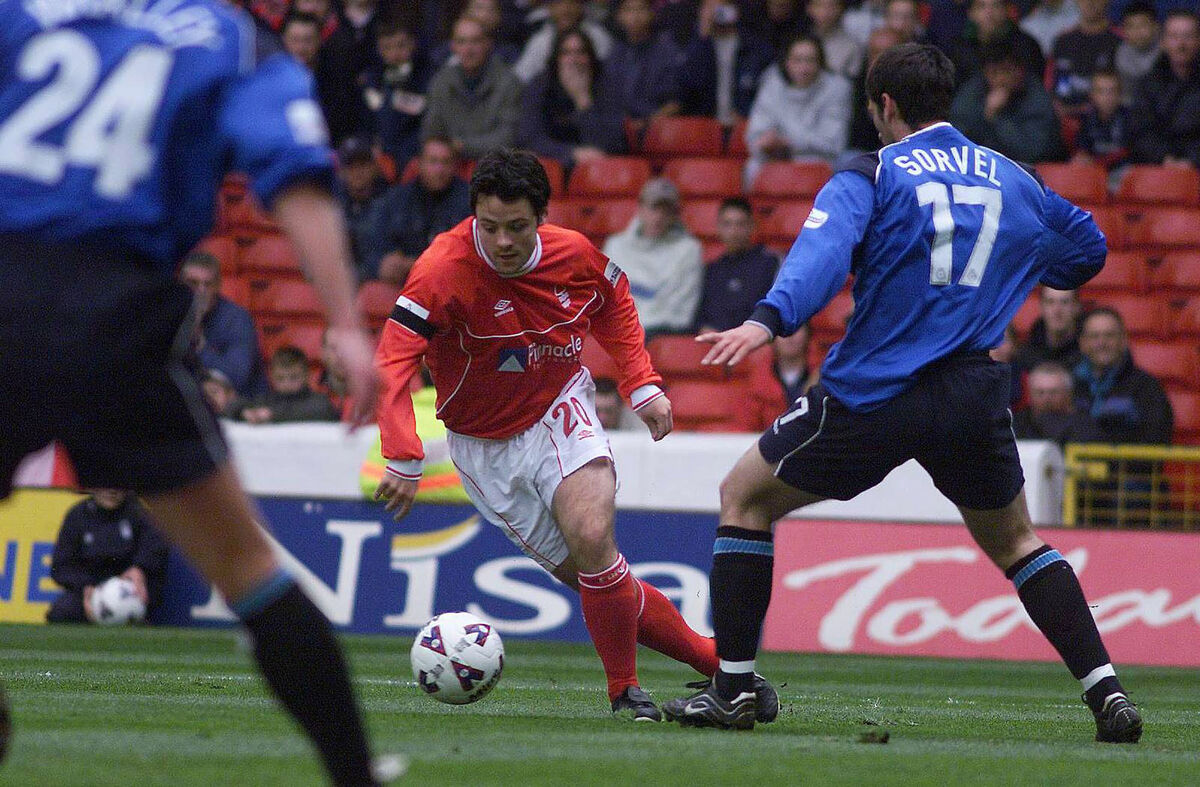
Talk of being fuelled by anger might not quite resonate with the image of Reid during his days as a midfield architect for Nottingham Forest, Tottenham Hotspur, Charlton Athletic and Sunderland.
With a left foot to die for — and drool over — he was a creator, not a fighter. Yet he had it burning within. Just another case of how perception can blind you to the reality.
“I’m not here to judge why people are in the game. I’m here to try and achieve outcomes with players and help them achieve something in the game,” the recently-appointed Nottingham Forest U23 manager begins.
“Performing on the pitch is what I mean when I say outcomes. It’s that simple. Are the players performing? You will put up with a hell of a lot with players who perform. You want to try and get them perfect off the pitch but that is not always going to be the case.
“Would I love everyone to do it for the absolute love of the game? Of course. But that’s a fairytale scenario. A lot do and some don’t, so because someone isn’t doing it for the love of the game do you turn around and say ‘no, I’m not working with that person because they’re not doing it for the love of the game?’ No, you don’t do that because we don’t live in a fairytale land. This is football.
"I’m there to improve them and get them ready for what they have to do. If they put in all the work and go that extra mile that’s fine by me, they don’t have to love the game but they will have to do the work.”
That thinking is helping him navigate his new role at Forest, where he now has full-time responsibility having stepped down from his role with Ireland’s U18s during a year decimated by Covid-19.
Reid’s path to this point began five years ago when his own playing days ended, somewhat prematurely due to a groin injury, at the age of 33.
That anniversary will be marked this summer, but it will not be mourned. Other events around that time in his life had a great emotional impact. The death of both of his parents within a year of each other took its toll and Reid doesn’t shy away from the dark times of using alcohol as a crutch, of speaking to a counsellor to help overcome those struggles and the strength his fiancée Candice provided.
Football also helped him rebuild and refocus. Niall O’Regan, the FAI’s head of coach education, helped to shape Reid’s thinking as he qualified from the Pro Licence course last June alongside Damien Duff, Keith Andrews and Robbie Keane.
The reality on the coalface rather than the classroom, is stark.
“You are building a relationship with the players every day you work with them,” Reid continues.
“How you treat them, how you help them, that is what will tell them if you really do care. I really want them to succeed. I was very, very fortunate to have a decent career and I know the feelings that football gives you can be so special.
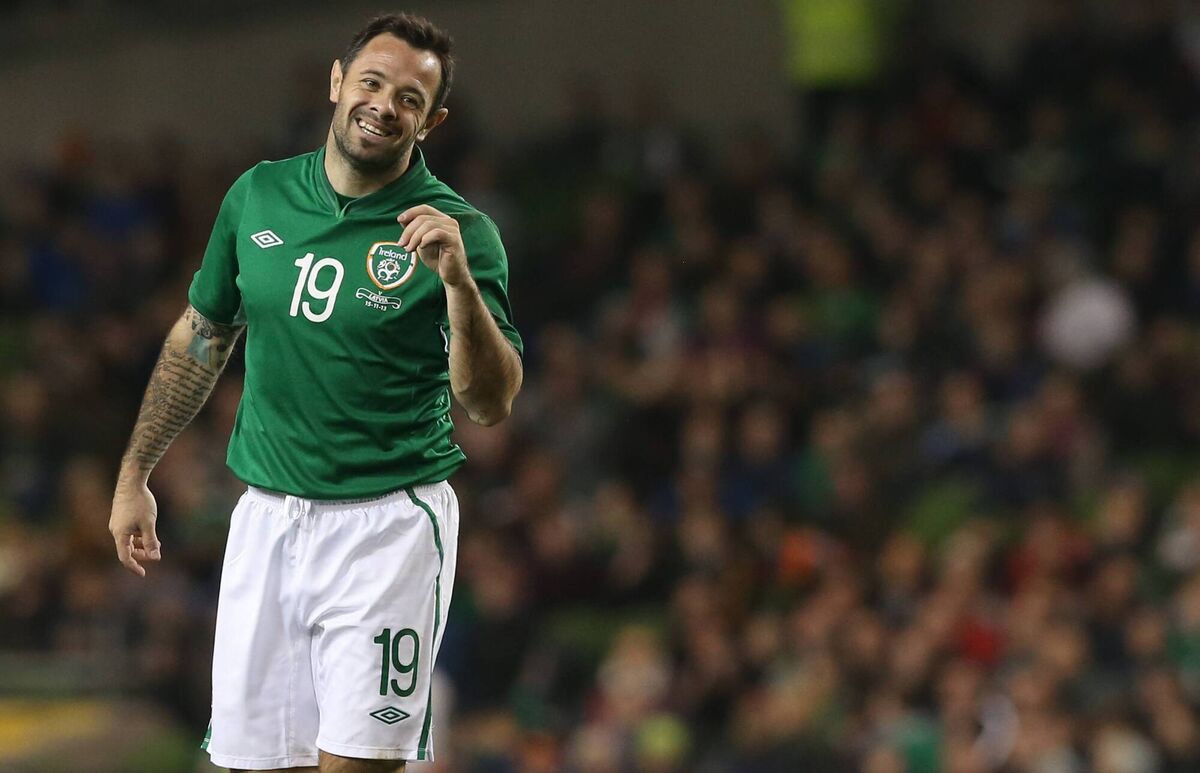
“I want them to have those experiences. Of playing in front of people and scoring a goal, making a block, winning a match. I’ll do whatever it takes for them.”
But he won’t fake it.
“This goes back to when we were at school,” Reid insists. “If somebody was trying to teach or help you, it is so obvious if someone doesn’t believe in what they are saying. If you don’t believe it or are just copying how someone else does it and what people think is supposed to be the way because it’s popular, players will see that.
“Others respond to visuals, so I’ll spend time with them in the analysis suite and show them animations. Others want typed out instructions, but others will want it face to face in a conversation.
“Players have different ways of learning.”
It is that understanding which can also help break down barriers with those talented youngsters who, for so long, are deemed to have lacked the hunger or motivation to succeed.
Again, it comes down to a love of the game not being a determining factor.
“Players learn in different ways the same way players are driven by different things. It’s okay to accept that. That’s not a bad thing.
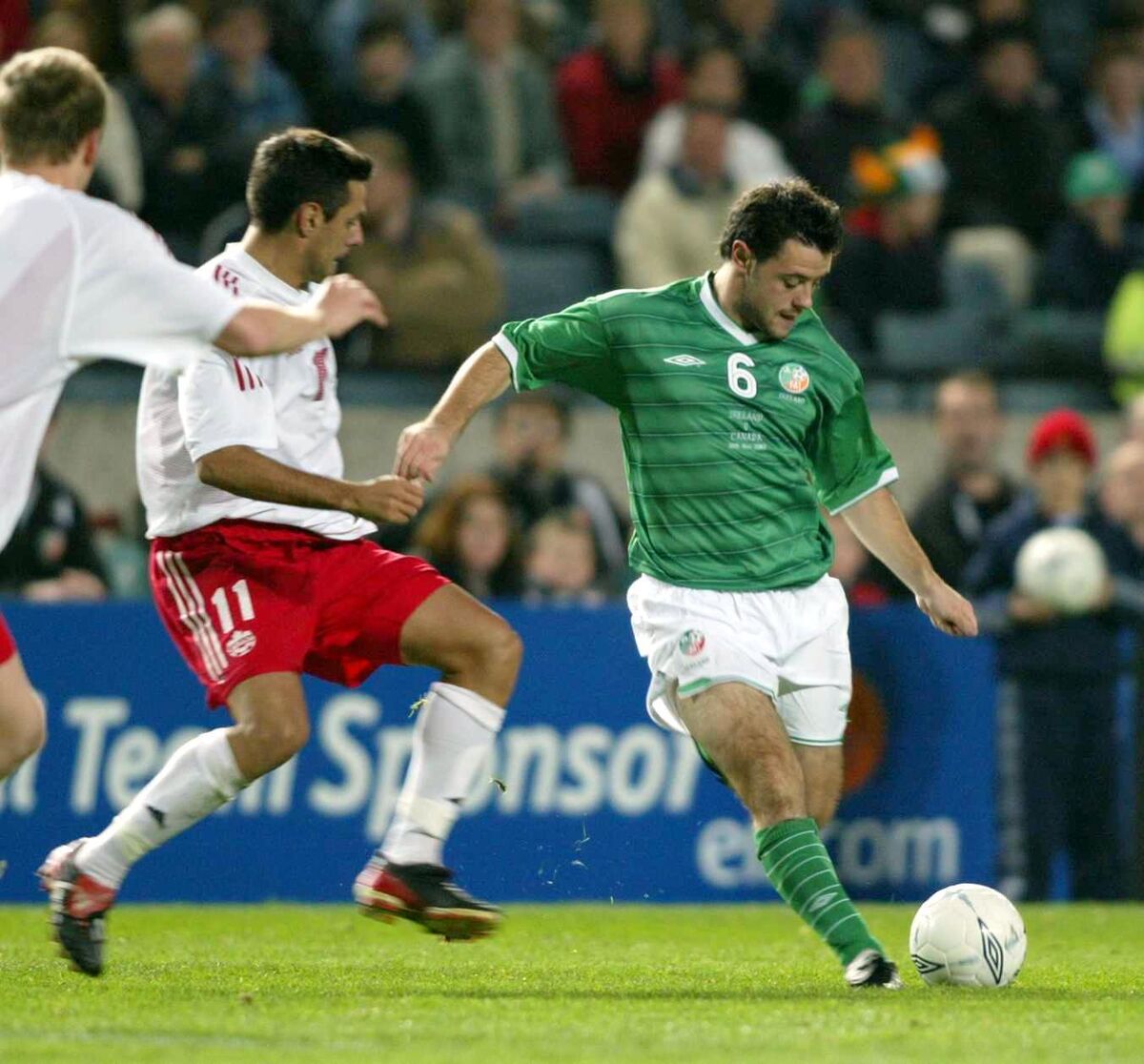
“I shared dressing rooms with players at the top, top level, some extremely successful players, and they were driven by wanting to make money. That saw football as a vehicle to make money and everything that comes with it.
“There were others who wanted the fame and to be on telly every week. Some just had that desire to win and needed to win, that’s all they wanted. I don’t have any problem with any of those desires as long as you get the outcome that you need from the player.
“As long as that desire, whatever it is, drives them to be best every day, work every day, train really hard. Whatever it is that gives them that drive, I don’t mind, I’ll take it. I can work with that.
“But they are the ones that need to have that drive somewhere inside them.”
That’s the reality


CONNECT WITH US TODAY



Be the first to know the latest news and updates