Johnny Nicholson: Man City have money and impetus but Liverpool’s history wins it
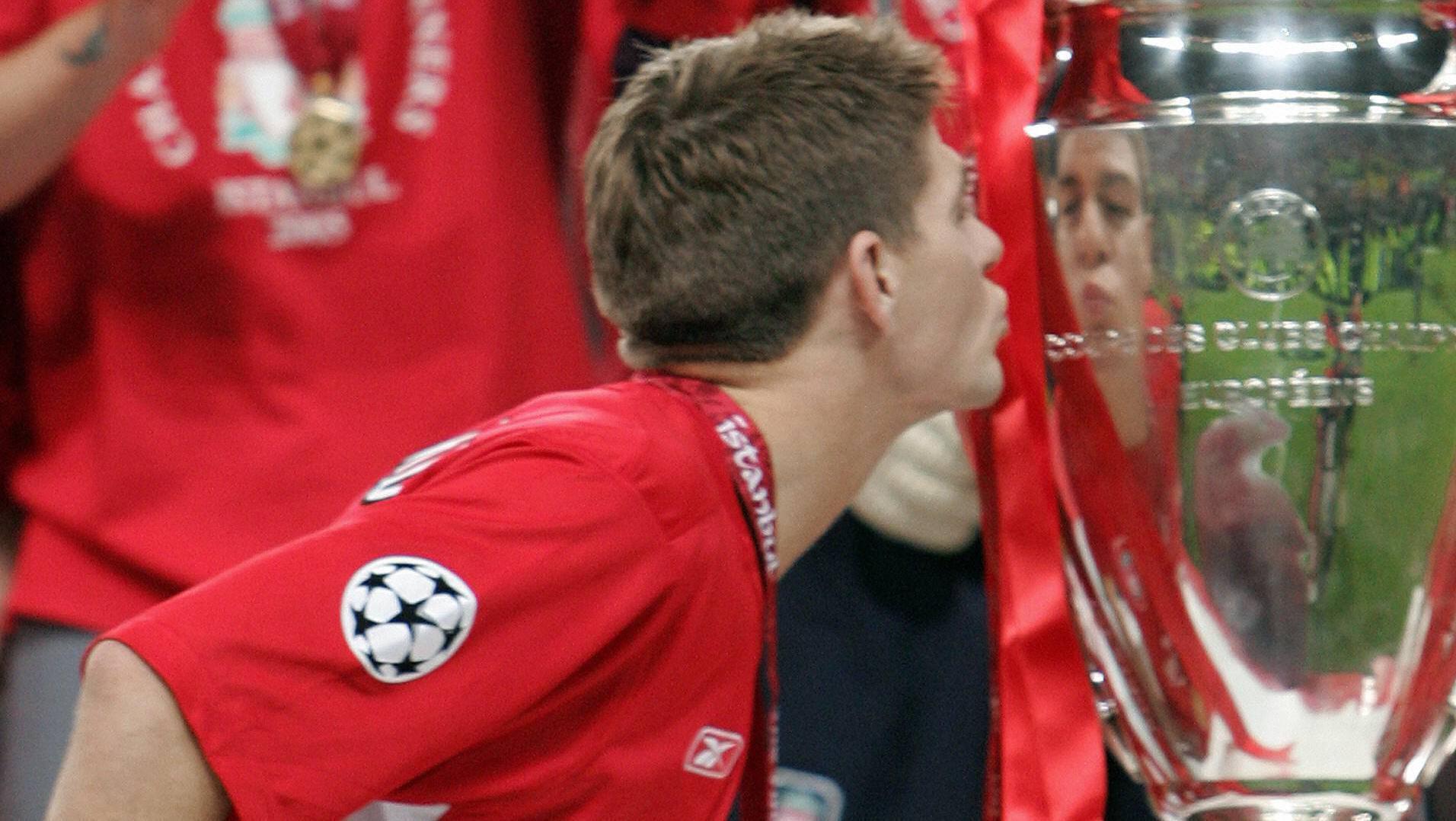
Liverpool's captain Steven Gerrard kisses the trophy surrounded by teammates at the end of the 2005 Champions League final win over AC Milan. Picture: Getty Images
For a few seasons, the Liverpool v Manchester City game has been the big match between the two best clubs in England. But which of them is the biggest club in 2021?
Many would think Liverpool are much bigger than the nouveau riche Manchester club, but that might be old-fashioned, out-of-date, or irrelevant thinking in 2021. City are certainly by far and away the more successful in the last 10 years in terms of trophies, with 11 league and cup wins compared to Liverpool’s one league, one cup and one European title.
It’s also clear that City’s recent success and phenomenal spending power has pulled a lot of admirers into orbit around their wealth and the success it has brought. Add in a high-profile manager and lots of great players and it’s not hard to see why.
But does big money and recent success make a big club, or is it about more than that? How do we decide which is the biggest club today? Both have existed since the 1890s and have a long history. It is almost impossible to know for sure how many fans around the world that each club has and estimates vary massively. Liverpool states that its worldwide fan base includes more than 200 officially recognised Supporters Clubs in at least 50 countries. While there are more City fans worldwide than was once the case, it seems unlikely they can match Liverpool’s reach.
But what does being a fan really mean, anyway? For some their club is a lifelong obsession, but for others, a passing interest which they may tire of in a year or two, and yet both sets would tick a box saying they were a fan, but it really wouldn't tell the whole story by any stretch of the imagination.
Certainly, both club’s supporters have a vociferous almost hysterical tribal hardcore who are keen to pile abuse upon anyone being less than 100% positive about the club, including their own fellow supporters.
If we look to social media as a guide to popularity, and it’s as good a way as any to measure it in 2021, City has 39 million Facebook followers, nine million on Twitter and 22.3 million on Instagram, making a total of 70.3 million. Liverpool only have 37m Facebook followers but can count 16.4m on Twitter and 29.8m on Instagram. That’s a total of 83.2 million.
So that’s the opening goal for Liverpool. 1-0.
The bigger club has more fans. Simple as that.
But if we look at how valuable each club is, then Manchester City comes out on top. Forbes 2020 list of most valuable clubs has Real Madrid top with a worth of $4,239 million. City are 5th, valued at $2,688 million, Liverpool languish in eighth valued at $2,183m below Chelsea and Arsenal. More valuable means bigger.
So City are back in it at 1-1.
And if we look at the revenue numbers on that Forbes list, the Manchester club comes out on top again with $678 compared to Liverpool’s $613.
A bigger club generates more money. That makes it Liverpool 1 City 2 When it comes to wealth of owners, there is no contest at all. City is far, far bigger. The sky blues have been owned since August 2008 by Sheikh Mansour. Forbes estimated his wealth to be £22bn and a family fortune of at least $1trn. Liverpool FC’s owner Fenway Sports Group by contrast are worth only 10% of that at $2.7bn which is slightly less even than Mike Ashley, the unpopular owner of Newcastle United. So Manchester City wins this battle in the war of who's the biggest, by a large fortune. Big clubs have owners with big money.
Liverpool 1 City 3.
When it comes to their home grounds, the Etihad Stadium is a bigger ground than Anfield holding 55,097 to Liverpool’s 53,394. It’s another strike for City. The bigger club has the biggest ground. And they have had a higher attendance average for some years now too. Another strike for City. So that’s Liverpool 1 City 4. Liverpool are taking a beating here.
However, while support, money and wealth are important, the really big club is successful on the pitch over a long period of time. And this is where City simply cannot compete with their Scouse opponents and get totally overrun both in midfield and up front.
In 216 head-to-head games, the first of which was in 1893, Liverpool have won 105, drawn 54 and lost 57. Can the genuinely bigger club lose so often to any side? No.
And with that long distance strike, the Reds are back in it. Liverpool 2 City 4.
At the end of the day, Jeff, it is trophies that matter and it is here that Liverpool are rampant. Their silverware haul down the years is huge. They’ve have 19 top flight titles to their name, City have just six. A bigger club has won the league a lot more.
That makes it Liverpool 3 City 4.
When it comes to the FA Cups Liverpool have won seven, City six. It’s close but again, the Merseyside club sneaks in at the back post to score That evens it up at Liverpool 4 City 4. And the Kop are in full voice now. There’s nothing stopping them as the reds pour forward.
When it comes to the League Cup, both clubs have won it a lot. Liverpool have eight wins and City seven. Again, very close, but the bigger club must be the one with more cup victories.
And with that near post header, Liverpool takes the lead 5-4.
And now it starts to get embarrassing for City as we enter the final minutes. They’re flagging now and Liverpool flood forward. They have just a single European title to their name: a Cup Winners Cup for that great 1969-70 side. Liverpool, on the other hand, have a mighty six European Cup/Champions League titles, three UEFA cup wins, four European super cups and one FIFA World Club Cup. That’s an absolute gulf of success worthy of two goals; a late double strike as City run out of steam seals the win.
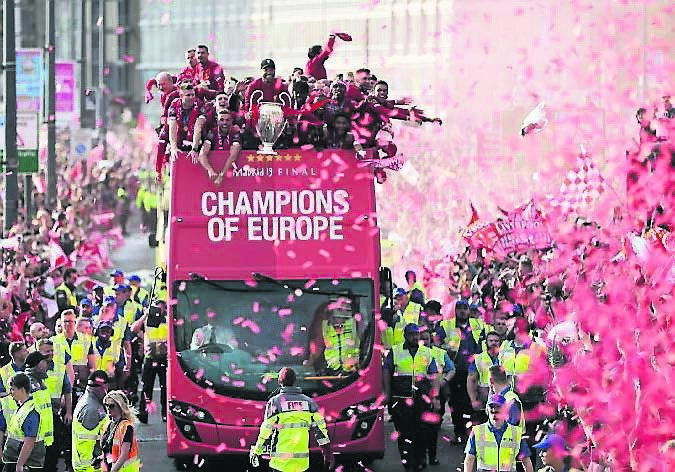
And at the final whistle, the big game about the biggest club, ends Liverpool 7 Manchester City 4.
Thus we have conclusively proved, weighing everything up, that Liverpool are still a much bigger club than Manchester City even in 2021. Despite City’s recent dominance, there’s no arguing with history.
City are dominant when it comes to wealth and are pretty much even with Liverpool on easily quantifiable support - though most I think would accept Liverpool has far, far more support worldwide, or at least brand recognition. However, City are growing fast from a low global base. But they have no European success at all, whereas Liverpool can claim to be one of Europe’s legendary clubs. A gulf separates them from their scouse rivals when it comes to league titles too.
They say money can’t buy you love, but City are already the bigger club when it comes to cash and the £1.3bn that Sheikh Mansoor has pumped in and the consequent success they’ve achieved has pulled a lot of new fans into City’s orbit. They’re set to be financially dominant for some time to come and with another Premier League win looking to already be in the bag, leaving Liverpool floundering in their wake, the more trophies they win, the more those fans who love to support winning teams will flock to them, making them an ever bigger club.
None of which helps predict the winner of tomorrow’s vital Premier League meeting.
But whatever the result, after the game, Liverpool will still be the biggest club by some distance. City have come up on the rails fast but given the size of the task they have to overhaul Liverpool’s trophy haul, the scousers will be the biggest club for many seasons to come yet.
But be in no doubt, City are gaining on them fast.
No doubt to City’s chagrin, United remains a global football brand on a scale they can only dream of. They have the biggest ground in the UK. Their revenue for 2019-20 was a huge $795m, the third-highest in the world. And they are so loved by sponsors that they have 25 global partners, including an official mattress and pillow partner, which must've been useful in the recent years of boring football, and many more local deals too. They also didn’t need their owners' business to fund a massive shirt sponsorship deal that some thought, shall we say, a tad inflated. When it comes to fans, their social media following is around 135m and their litany of league titles in the last 30 years speaks for itself.
You can spend big money and buy big players, but it doesn't instantly make you a big club. Being well known all over the world, being phenomenally lucrative and winning a lot of silverware over a long period of time does.
The biggest daddy amongst the big daddies and the big mammies too, for that matter. They are the wealthiest club on earth and generated a mighty $896m in the last full season. Their domestic and European pedigree is unmatched and they are still one of the clubs most players want to play for. People want to play for City for Pep and for the huge money, they want to play for Real Madrid because they’re Real Madrid.
They pack out the 81,000 capacity of the Bernabéu and when it comes to domestic football, the club has won an almost ridiculous 66 trophies; a record 34 La Liga titles, 19 Copa del Rey, 11 Supercopa de España, a Copa Eva Duarte, and a Copa de la Liga. But when it comes to European competitions, they bestride the continent like a football giant, having won a record 26 trophies; a record 13 European Cup/Champions League titles, two UEFA Cups and four UEFA Super Cups and a record seven club world championships.
Are they bigger than Real? It’s a toss-up but their European record doesn’t match up to Los Blancos. They generated a little less money in the previous season at $815m but that’s still the second-highest in the world. They attract some of the best players in world football through their doors with their reputation and deep pockets.
Domestically, they have won even more titles than Madrid: a record 74 trophies: 26 La Liga, 30 Copa del Rey, 13 Supercopa de España, 3 Copa Eva Duarte, and 2 Copa de la Liga trophies. Add to that: five Champions League titles (less than Liverpool - they never won the old European Cup), but do have a record four Cup Winners' Cups, a joint record five UEFA Super Cups, a record three Inter-Cities Fairs Cup, and three FIFA Club World Cups.
The Camp Nou holds just 646 under 100,000 people. Now that’s huge. And on top of all this, they can count on the support of that annoying wee glory hunter that you can see in every pub, wherever you are in the world, who stands at the bar wearing a Messi shirt. Aye, him.


CONNECT WITH US TODAY



Be the first to know the latest news and updates