Is Ole Gunnar Solskjaer still the right leader for Man United?
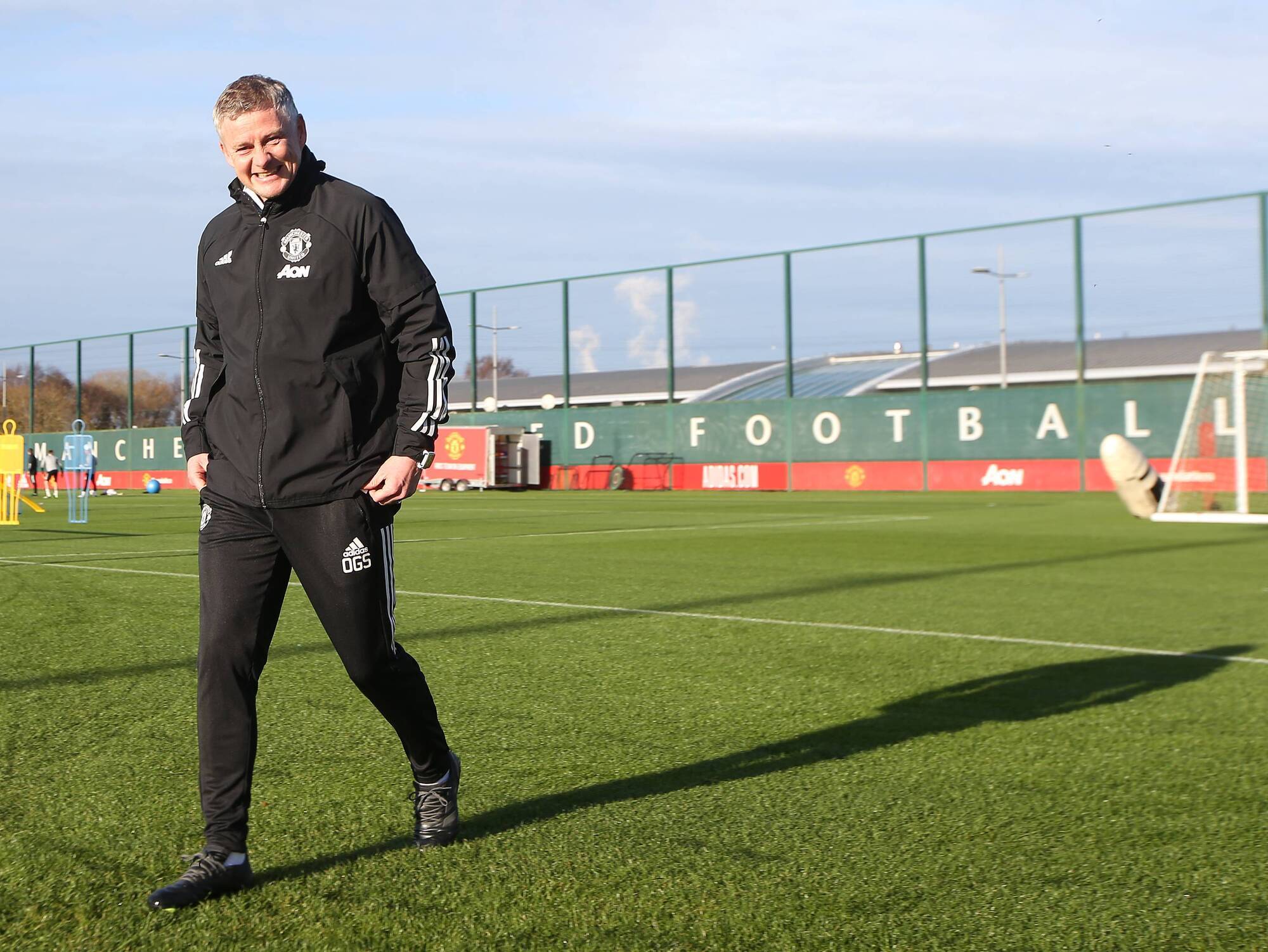
Manager Ole Gunnar Solskjaer of Manchester United in action during a first-team training session ahead of the Champions League clash with Paris Saint-Germain earlier this month. Picture: Matthew Peters/Manchester United via Getty Images
Talk of a ‘Great Reset’ has become all the rage in this year of coronavirus, but Manchester United’s own overlords got there first in 2018.
Following Jose Mourinho’s now traditional bout of third season self-destructive miserabilism, Ed Woodward’s pet media propagandists relayed the club’s desire for a great ‘cultural reset’ with Ole Gunnar Solskjaer and, er, Mike Phelan being chosen to “unite the players and the fans”; the former on the basis that “he lives and breathes the culture here.”
It was never the most compelling reason to appoint Molde’s incumbent to one of the most demanding roles in world football but, hey, the experts know best, right? Even if his only experience of Premier League management was leading Cardiff City to relegation. But then he was only a stop-gap until a properly qualified candidate was identified, so…
Any doubters were soon hushed when a transformed team romped to a 5-1 victory over Championship-bound Cardiff in his first game in charge - the first time United had scored five in a league game since Fergie retired.
Another seven successive wins quickly followed, as supporters crowed about Ole being “at the wheel” and lapped up the tokenism of a manager with “United DNA” who refused to park in Fergie’s old spot, ordered the players to wear smart blazers instead of shoddy tracksuits, and took them training at The Cliff.
Strangely, you don’t hear of such things much anymore. (The last time the team wore suits was way back in March in Linz.) But players eulogised the change Solskjaer had wrought.
“Everybody is enjoying themselves and that’s what we need,” gushed Pogba; whilst Lingard eagerly chirped, “We’ve had the right mentality, killing teams. It’s great man-management. He’s very special.”
Lukaku, Matic and Herrera were all equally effusive, yet out of them all only Matic would appear to still be in favour.
Peak giddiness arrived when United overturned a two-goal Champions League deficit to eliminate Paris St Germain, and there seemed no appetite from anyone to challenge the ramblings of Rio Ferdinand in his ‘expert analysis’ role:
The lack of cool, rational evaluation of results quickly became a recurring theme. Every defeat has become disastrous, every win signalling of a “turned corner”.
This is best observed online on platforms like Twitter, which causes United’s hierarchy to bemoan the “toxic” atmosphere that greets defeat by an audience and level of “connectivity” that The Suits themselves have long cultivated. It’s also the sort of reactionary short-termism they practice.

Ed Woodward promised a permanent appointment would be made at the end of the season, but then appeared to get sucked in by the post-Paris hype, only wretchedly so.
If he’d have appointed Solskjaer immediately after the PSG victory it might have been understandable, but to award the permanent contract after two subsequent limp defeats to Arsenal and Wolves was just baffling. It seemed more designed to head off any negative reaction to a prolonged slump, as opposed to a genuinely proactive strategic move. (It’s purely coincidental that Solskjaer was a much cheaper option than the other main contender, Pochettino, would have been.)
Of course, after the long spell of victories, those two defeats finally represented a blip that would test Ole’s mettle: how he responded was surely the true measure of his worthiness for the Old Trafford role. Yet he withered, and to the extent that some people even called for his sacking, just weeks after he’d signed that three-year deal.
There’s little doubt that, if Woodward had stuck to his original timetable, a run of eight defeats from twelve games would have had to have ruled Solskjaer out. Many of the results, such as the losses to Everton and Cardiff, and even a draw at relegated Huddersfield, were as desperate as any of the very worst post-2013 horror shows.
But, we were all assured, things would be different just as soon as Solskjaer had a full pre-season with his squad. The late-season collapse was merely due to them running out of puff. And just wait until he’d brought in a few players, and got rid of a few more. (The same argument is still being heard now – Solskjaer has signed, or extended the contract of every player bar Pogba and Fred.) So it was, in August last year, as the Reds rampaged past Chelsea that we were told the good times had returned once more.
Maguire, Wan Bissaka, and James were all hailed as inspired signings - a collective verdict that barely lasted until Christmas.
The nadir of a desperate first half to that season was any of yet another surrender at West Ham, the embarrassment of needing penalty kicks to edge past Rochdale, or another awful loss at Bournemouth. But each time pressure seems to grow on Solskjaer, it’s quickly but temporarily released: a kind of not-quite-boom and bust. Initially, in 2019/20 a creditable draw with Liverpool lifted the gloom, and then in early December back-to-back home victories over Spurs and City repeated the trick.
However, a calamitous loss to Watford, and then another possible season-low contender in January against Burnley, seriously ramped up the Pochettino talk once more.
There could have been few complaints if Ole had received the boot, but aided by some helpful cup draws, he managed another little spurt of job-saving form pre-lockdown. The arrival of Fernandes provided a new Messiah around whom to rally.
True, United clinched a Champions League spot at the expense of injury-ridden Leicester but, following elimination at the hands of Leipzig, it was hardly worth the bother on a footballing basis, and – given the resulting huge increase in players’ wages - it remains to be seen if it was even worth it financially.
“Of course, as a footballer you can’t feel sorry for yourself,” Solskjaer said following that woeful showing in Germany. “You’ve just gotta go, er, feel sorry for yourself for a, er, few minutes.”
Such confused, contradictory waffle seemed a reflection of the team’s set-up: playing for a draw but being 2-0 down inside 12 minutes; ending a game with just one of the five-man defence he started.
It’s been obvious from very early on that there is little in the way of tactics bar “sit back and counterattack” – usually fine when United face better sides, but hopeless up against strugglers content to pack the defence and play for a point, whilst the timing and obviousness of substitutions borders on a running joke.
As with the lack of tactical nous, the calibre of the coaching on the training ground has long been the subjects of insiders’ gripes, and is a flaw most starkly seen in the consistently hopeless lack of movement from the strikers in the box. (Incredibly, in September Solskjaer cheerfully admitted of Greenwood: “He needs to learn how to head a ball. I keep telling him that and if he wants to do that he is welcome to come and practice with me.")
Whilst surely there has to be a bigger plan than relying on the natural pace and talent of Martial, Rashford and Greenwood to simply smash-and-grab their way to enough goals over the course of the season.
The oft-aired arguments of his ability will undoubtedly continue to rage until Solskjaer either wins something of note or, as Roy Keane suggested in the wake of the Spurs 6-1 humiliation, he gets the sack.
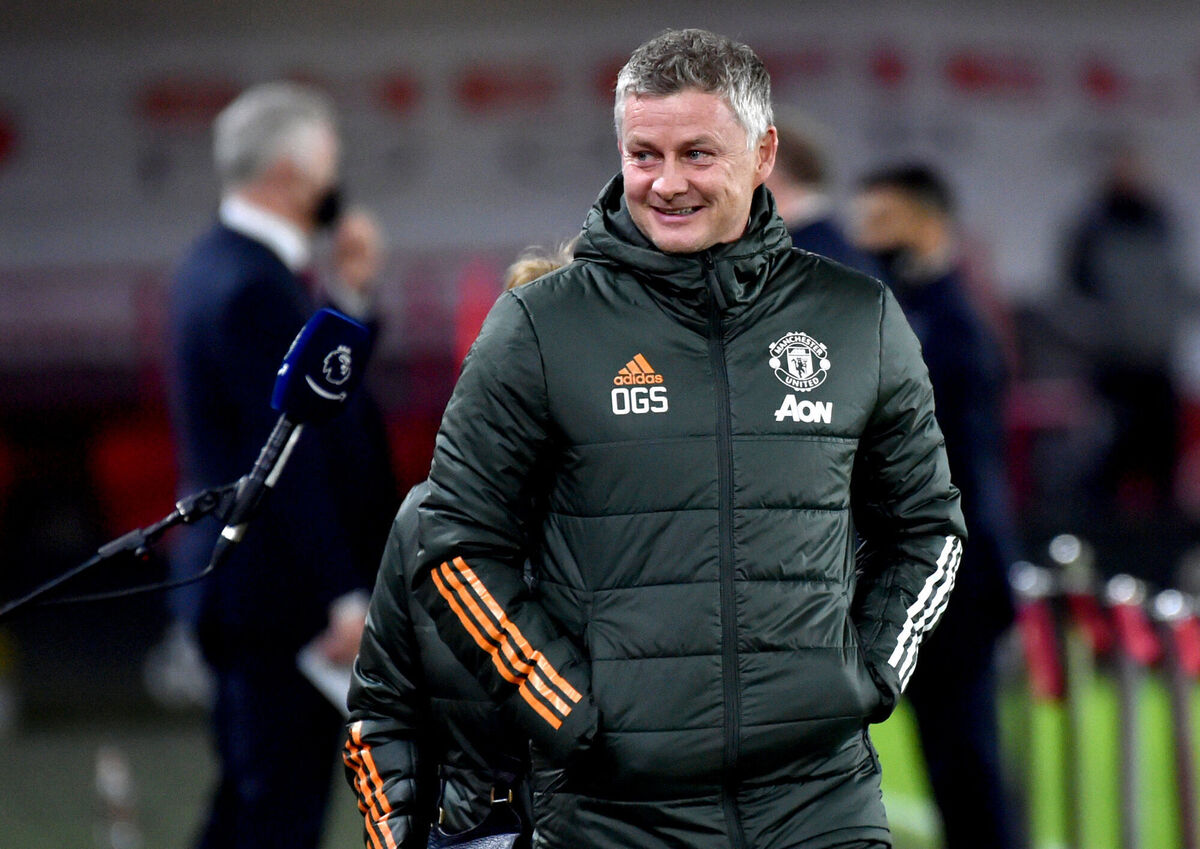
Then, Keano predicted that it’d be the players who’d throw the Norwegian “under the bus” but that’s a little hard to accept when, as the song goes, it’s Ole who’s at the wheel…
And yet, and yet: despite this seemingly hopeless track record, and some truly awful results so far this season, it would still be ridiculous to dismiss Solskjaer’s chances of eventually succeeding as United manager. After all, there is still hope.
This correspondent unconfidently predicted in September that United could easily finish anywhere from second to ninth but - though there’s been little since to suggest a narrowing of that range is either warranted or sensible just yet - the occasionally glimpsed quality within the squad, and the fact the league is so open this season means any sort of prolonged run of form would see United shoot up the table straight into title contention.
Thursday's victory over Sheffield United leaves the Reds just two points off the top, if victorious in their game in hand.
Many have whispered of late, “If only a decent coach was in charge, there might even be a decent shout of winning it.”
Rather than Pochettino coming in, might a better replacement simply be one for Phelan or Carrick?


CONNECT WITH US TODAY



Be the first to know the latest news and updates