The spirit of the old 'Crazy Gang' resurrected as football returns to Plough Lane
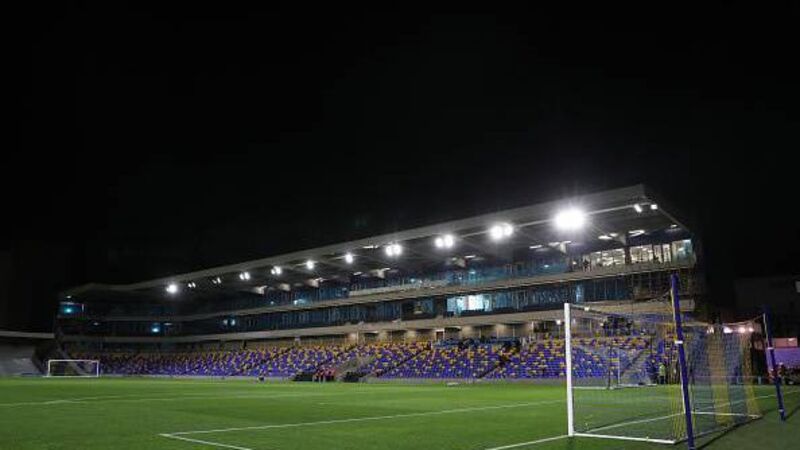
CRAZY DAYS: Inside the new Plough Lane stadium prior to Tuesday's League One match between AFC Wimbledon and Doncaster Rovers. The Dons return to their spiritual home back in in the borough after a 29 year absence.
ON a night of Champions League football, with its attendant pomp and preening, the League Division One meeting of AFC Wimbledon and Doncaster Rovers must seem like the donkey and cart.
There won’t be anyone at Wimbledon’s Plough Lane tonight, but that can’t and won’t diminish the gravitational pull and special feeling of home for locals who have waited almost 30 years for this moment.
Eighteen years after re-starting life in the ninth tier of English football, AFC Wimbledon return to their spiritual home in the borough of Merton in south west London. To say it’s been an epic voyage of false dawns and crushing lows only begins to tell the tale.
Formed in 2002, AFC Wimbledon had two founding goals - to return to the English Football League and return to Merton. The club was reborn when a core of Wimbledon FC fans responded to the decision by an independent commission to allow the club to move to Milton Keynes. The old Wimbledon relocated in September 2003 and were renamed MK Dons in 2004.
Most AFC Wimbledon supporters prefer not to speak of fellow League One side MK Dons - a club which essentially was born out of their demise. The ‘bitter’ rivals met in Milton Keynes last Saturday in League One, drawing 1-1.
AFC Wimbledon won five promotions in the space of nine years to rise from the depths of the Combined Counties League and reach the EFL in 2011. “If you’d have said to me that within 20 years of starting out, we’d be in League One and playing in a brand new stadium at Plough Lane, I’d have said you’d lost the plot,” Ivor Heller, AFC Wimbledon’s commercial director, told magazine.
“When we started back in 2002, people said we were mad – but look what we’ve achieved.”
The second goal of a return to their real home proved more elusive. When the original Wimbledon FC received permission to relocate to Buckinghamshire, the club had already been ground-sharing for 11 years.
When the notion of relocating to Dublin and becoming the Dublin Dons foundered, then owner, Sam Hammam, sold Plough Lane to developers in 1991. The Dons found a temporary home at Selhurst Park. The switch to Crystal Palace's home in Croydon came following the publication of the Taylor Report which, in the wake of the 1989 Hillsborough disaster, recommended that top-flight sides should play in all-seater stadiums.
“Plough Lane was a tip, but it was our tip,” Brian Sullivan, a Dons fan since 1982, told . “The atmosphere there was just incredible. It was only tiny and they used to pack around 18,000 in for a big match, with 80 per cent of that standing. You were so close to the pitch too."
"When we went to Selhurst Park we were told it would be temporary," Graham Stacey, a board member of the Dons Trust - the democratic supporters' organisation which owns AFC Wimbledon - told the BBC.
"We could have reformed anywhere. But we have always represented Wimbledon, so playing there is everything."
The Dons launched their bid to return to Plough Lane in August 2012, but it was over two years before they could even submit a planning application. With their old ground now turned into a housing estate, their intention was instead to redevelop Wimbledon Greyhound Stadium.
Permission to build was granted in December 2015, yet planning delays meant it was not until March 2018 that the site began to be cleared.
Even then came a final financial hurdle in November last year, when the club announced it needed £11m by January to complete construction. Wimbledon fans rallied once again, establishing the Plough Lane Bond which eventually raised over £5.4m and allowed the club to proceed.
The final construction contract was signed in May after investment from local businessman Nick Robertson, who became a new minority shareholder.
After beginning the 2020-21 campaign with a short-term groundshare with Queens Park Rangers, the Dons have finally realised their dream.
Manager Glyn Hodges was one of the original ‘Crazy Gang’ at Wimbledon, leaving for Newcastle before their famous FA Cup final win over Liverpool in 1988. Two nights later the Cup was on display at Plough Lane for Alan Cork's testinomial. It wasn't the only thing on display - a collective 'moon' by the Crazy Gang for the cameras earned them a hefty FA fine. A different sort of nostalgia’s been around Hodges in recent weeks.
“We’ve already trained there and every time I come back there is some kind of flashback,” Hodges told . “In the old days, I used to get the train to Haydons Road and go to a sweet shop before matches. We also used to spend quite a lot of time at the dog track and go banger racing there as well on Saturday nights, which is where the new ground is. It’s all quite surreal.”
However, social distancing regulations meant no supporters can be in attendance Tuesday night for the landmark match in SW19 against Doncaster Rovers.
Dons Trust member Matt Griffin sums up a bittersweet night. "It's an emotional day. I've been singing about having a stadium on Plough Lane since my first game in 1996. But not being able to be at Plough Lane tonight is a strange feeling. It feels really abstract. It’s like winning the lottery but then being told that your winnings are buried on the moon."
“It’s heart-breaking,” Heller told FFT. “People have put blood, sweat and tears into the club, and they can’t be there. The ground won’t truly be open until everyone is in there together. We’ll have two occasions. The one when we play there for the first time and the one when the fans come back."
CONNECT WITH US TODAY



Be the first to know the latest news and updates