Testing times in every sense for Irish footballers
Amid all the discussion about how and when the League of Ireland might resume, there is a fundamental question which arises irrespective of whether games will be able to take place in summer or autumn, behind closed doors or with limited spectator access.
And it is this: How can any contact sport be played at all as long as social distancing regulations are still required?
It’s an issue which, understandably, is a core concern for the union which represents Ireland’s professional footballers: The PFAI.
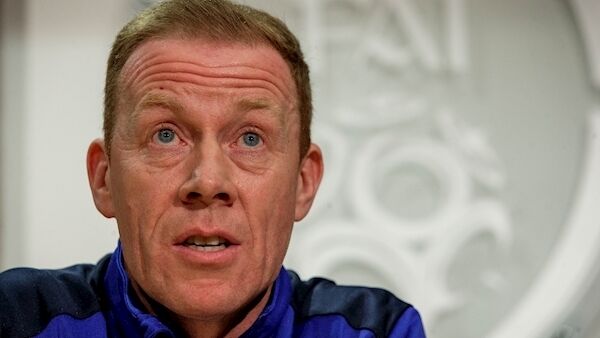
“Part of the discussions of the steering group (with the FAI and the National League Executive Committee) that I’m involved in during this pandemic is on that very point,” said the PFAI’s general secretary Stephen McGuinness.
“We’re looking for the medical advice in relation to contact sport and what we are potentially exposing our members to.
"There are discussions about our players being tested every three to four days and also that everyone within the club and anyone who interacts with the players would have to be tested too. So there’s a huge amount of work to be done on all that.”
As well as engaging with the FAI and health authorities here, McGuinness is in contact with his counterparts in the PFA in England to find out what guidelines are being introduced there.
But, already, he is certain that testing for the virus will be a key component in the safe resumption of football.
“It would be the most important factor and we’d have to be in a position where the club doctors would be able to do that testing because you can’t be taking medical professionals off the frontline against this pandemic to be testing elite athletes,” McGuinness said.
“This would be about giving athletes peace of mind so they know that the athlete they’re competing against has been tested — and has tested negative — for Covid-19 in the last 72 hours.
“The problem then is if someone did get it, would that mean that his team and the last team they played against are both completely locked down? That’s the kind of detailed discussion that needs to take to place.
My focus in all this obviously is on the athlete and that’s where the FAI and (medical director) Alan Byrne will need to give players the peace of mind that the environment they’re going into is as safe as it can possibly be.”
Indeed, peace of mind is already an issue in the forefront of the PFAI’s thoughts as its members face the challenge of life in lockdown without football. “Aside from the financial impact, the mental impact has been the biggest so far,” McGuinness said..
The international players’ union, FIFPRO, in association with the Amsterdam University Medical Centre, recently conducted a survey in 16 countries under lockdown — including Ireland — the results of which showed a sharp rise in players, male and female, reporting symptoms of anxiety and depression.
According to FIFPRO, 22% of female players and 13% of male players reported symptoms consistent with a diagnosis of depression while 18% of the women and 16% of the men reported symptoms consistent with a diagnosis of generalised anxiety.
This contrasts with a survey conducted in December and January — before football competitions were suspended — in which 11% of female players and 6% of male players reported symptoms consistent with a diagnosis of depression.
The new survey, which was conducted from March into April, also found that the percentage of players reporting symptoms was significantly higher among those worried about their future in the football industry.
Previous research by FIFPRO has shown football players are equally susceptible to mental health issues as the general population and, in the face of the current crisis, the organisation is working on producing a ‘mental health toolkit’ for its 65 affiliated player associations that will provide them with basic primary care for footballers who require support. The toolkits will be distributed in the coming months.
“These new figures are extremely concerning and our heart goes out to all the players who are struggling with their mental health,” FIFPRO general secretary Jonas Baer-Hoffmann said.
Also responding to the survey’s findings, Juventus captain Giorgio Chiellini, a member of the FIFPRO Global Player Council, urged his fellow professional footballers to support each other during the pandemic.
“It’s very important that football players, like families and other communities, look after each other during this difficult time by staying in touch via phone or video-calls,” he said. “Keep in touch with your team-mates, especially if you think they may be depressed or anxious. Let’s keep the team spirit strong even when there is no football.”
In this country, a significant number of the PFAI’s 300 members responded to the survey, with results which Stephen McGuinness found deeply concerning.
“One figure that stood out for me is that 64% of our members feared for their jobs and for the future of the industry itself,” he says. “That’s a huge figure. The survey also found that anxiety is double what it would be at this time in a normal season.”
This impact on mental health is one of the reasons that — pending whatever workable solution can be reached to permit the resumption of competitive football — McGuinness hopes that players will be able to return to some form of collective training sooner rather than later.
“It’s why I would like to get the training back as soon as possible,” he says. “I don’t see a reason why in May, if we have everything right from a safety point of view, that government will not allow athletes to resuming training.
“In the environment we’ve got in football — training outdoors and especially in club grounds where they have control — we can see the potential for players coming back to training next month. And that would be a hugely positive development.”
Amid all the discussion about how and when the League of Ireland might resume, there is a fundamental question which arises irrespective of whether games will be able to take place in summer or autumn, behind closed doors or with limited spectator access.
CONNECT WITH US TODAY



Be the first to know the latest news and updates