Uefa Nations League looks to be a qualified success
Few international tournaments can have been greeted with such a wave of apathy as the Uefa Nations League, writes
To most fans and most journalists, this writer included, it looked like an unnecessary complication in the football calendar. “Over-elaborate and irrelevant,” said Italy’s Gazzetta dello Sport when the tournament format was announced — and the Gazzetta is normally guaranteed to be enthusiastic about any competition. The timing also seemed wrong, a matter of weeks after the World Cup.
Yet in the event, some of the excitement and unpredictability of the World Cup has carried over into the new tournament and the format has produced some enthralling matches.
No disrespect to the Belgians, but even people who despise cuckoo clocks and hate chunky triangular chocolate were thrilled by Switzerland’s five-goal comeback on Sunday night. England’s shock 3-2 win in Seville was another one to savour, particularly as it set up the three-way cliff-hanger in Group A4.
In turn that set up the added-time drama in Zagreb, and finally a decider in which both England and Croatia could advance to the semi-finals — or be relegated.
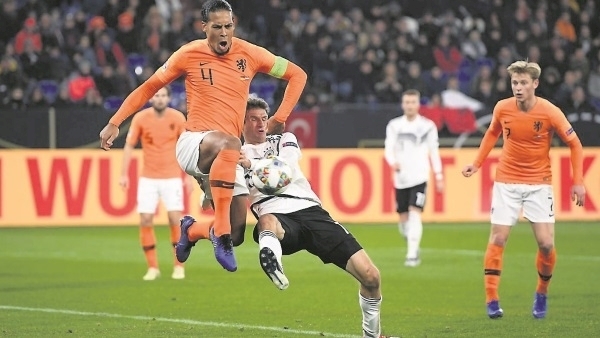
These nailbiting top group matches are what Uefa were hoping for, and there was thriller as Germany and the Netherlands drew 2-2 last night.
The icing on Uefa’s cake is that Portugal, who host the final four games next June, have also made it through, thanks to their 0-0 draw in Milan on Saturday. Italy were perhaps unlucky to go out, but paid the price for only scoring twice in their four games — once from the penalty spot and the other two minutes into added time. Some things never seem to change.
So the top division has worked out very well, and there is another cliff-hanger in League B, where Sweden can gain promotion to the top division if they beat Russia tonight in Solna.
But in other respects, the tournament has hardly stirred the blood.
Perhaps it was to be expected that both Irish sides would be relegated, but the other teams involved in their groups have hardly produced a feast of football, even if the Danes deserve their chance in the top league next time. Elsewhere in League B, Ukraine have gained promotion from a group that ought to have been more evenly contested than it was: they went down 4-1 to Slovakia on Friday, but were already through after winning their first three matches.
Grouping lower-ranked teams together ought to make for more competitive football in general, not just in the top league. That’s the theory anyway. In practice, it looks more as if traditional competitors such as Serbia and Romania have battled it out whereas others have not.
Maybe that was to be expected in this inaugural competition. The next tournament, with the likes of Greece, Macedonia, Kosovo, and Montenegro facing off, could be lively, to say the least.
Confusion remains however. The Nations League is intended to streamline qualification for the European Championships. “The equation is now simple,” says Uefa, but read the regulations, explained in detail on their website, and you are liable to end up cross-eyed.
The aim of replacing friendlies with a meaningful competition has been realised — but only partially. Is it sensible for those involved in the Nations League still to be playing friendlies during the competition (friendlies in the off-season or against non-European countries are a different matter)?
Despite these doubts, however, the positives outweigh the negatives.
Competition in the strongest groups has gone right to the wire. Two of the hottest favourites for the World Cup last summer, Germany and Spain, have again been found out.
Dutch football, in the doldrums or worse since 2014, has produced a bright new generation of youngsters. The Italians would also like to think they have turned a corner, although they badly need someone who can put the ball in the net.
And the Nations League has also vindicated England’s new course, led by Gareth Southgate. They were perhaps fortunate to get as far as they did in the World Cup last summer, but no one can deny their right to be in the final four of this tournament.
Maybe all those foreign players and coaches in the Premier League are not such a problem after all.

CONNECT WITH US TODAY



Be the first to know the latest news and updates