A tale of two O’Neills: North rise to the occasion as Republic slump
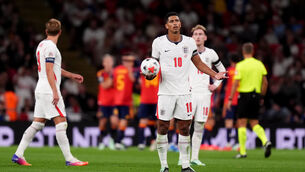
Northern Ireland’s 2-0 win over the Czech Republic didn’t just seal a World Cup play-off place for Michael O’Neill’s side, it held a mirror up to happenings in Dublin last night as his namesake’s Republic of Ireland team held their own party to very different mood music.
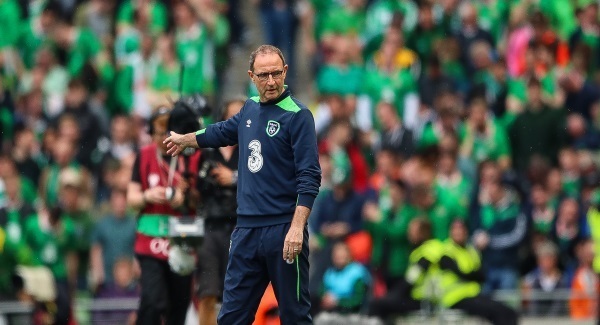
Martin O’Neill had been keen to point out before the game that his boys were unbeaten, and that the Serbs were the only team sitting in a more elevated position, but for every comparison between the Irish sides there was a contrast equally applicable.
There had been no cheers and hugs when the top seeds in the North’s group were first revealed. Germany are a very different proposition to Wales, after all, and they were landed with the Czechs and Norway for travelling companions, too.
Theirs looked to be the more arduous of journeys. Yet, even before Monday, they had won two more games, scored five more goals and conceded three fewer — only Germany have scored against them, twice — than their nearest neighbours.
The North have won five games on the spin for the
first time, they are superb
defensively, a threat at set-pieces, and they have a manager adept at swapping formations and personnel while maintaining a consistency of effort and performance.
Basically, there is a buzz about Northern Ireland that was absent down the M1. Where they had kicked on developmentally since Euro 2016, the Republic had stalled, even if it was the latter that played the better football in France two summers ago.
Michael O’Neill is doing the same things now, on and off the field and training pitch, that he did when his reign began with two defeats and nine goals conceded to Norway and Holland. The difference is that they continue to do it all better and better.
Where the North have mastered a level of consistency, the Republic have become the kings of unpredictability. Squeeze past Georgia one day, scalp Germany the next. Scrape an awful draw in Tbilisi, then lose to Serbia on the back of an infinitely better effort.
If the Republic were a patient it would be a psychiatrist’s dream, an exhibit of wonder in a medical college that continues to confound the brightest minds in the field.
The turnaround last night was total but then there is always the suspicion that they work best with a gun to their head. Like that laidback kid who starts cramming for the Leaving Cert with weeks to go and does just enough to get by.
They clearly upped their game here.
It wasn’t the 1-1 that stuck in the craw in Tbilisi so much as the 26% possession Martin O’Neill’s side had managed. And yet they trudged off dejectedly last night having enjoyed 49% of the ball against
a side so technically accomplished.
Some context sits well here: The North the night before had claimed just 23% of the ball against the Czechs. The visitors had attempted more shots on goal and ‘won’ more corners too. So the Republic’s market share was a complete surprise.
It’s hard to turn anywhere here and not think of Wes
Hoolahan.
Football managers like Martin O’Neill clearly know a lot more than your average punter about the game but there are times when some decisions just look to be wilful ignorance or pure stubbornness — and the irregular use of the Norwich City player is one of them.
How else to explain it?
Hoolahan’s inclusion wasn’t alone in flicking the switch between night and day. David Meyler’s turn as the holding midfielder in a 4-1-3-2 was pivotal but the little playmaker did his bit in dismantling Serb attacks when he wasn’t plotting destruction of his own.
Three times a subtle Hoolahan ball almost set a colleague free between the well-stacked Serbian lines in the first-half and Ireland’s best chance of the period — Shane Long’s effort tipped over
the bar — all derived from a short but clever ‘Weso’ ball from defence.
Simple things.
A player like Hoolahan doesn’t just bring poise, he sows doubt into the opposition minds as it removes the comfort of the expected which, in Ireland’s case, has been all too often an approach that appears under football’s dictionary as ‘agricultural’.
And yet, he was long gone by the time the last desperate chapter was written. There was no place for him as Ireland reverted to type, threw on the effective Daryl Murphy, and recalibrated for the sort of siege that has long been the side’s most effective plan of attack.
Ireland tried to be subtle, then they tried the sledgehammer. Neither worked.
Where to now?

CONNECT WITH US TODAY



Be the first to know the latest news and updates