End of the line for Tolka Park
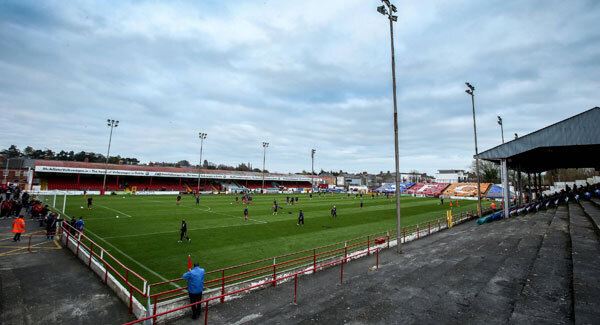
By the time Shels close the gates in 2020 to cohabit, just 3km away, with Bohemians at the revamped Dalymount Park, Tolka will have hosted football matches for 94 years.
While Dalymount was saved as a football venue, there are no plans for Tolka to be retained for sport by Dublin City Council, now deeply involved in both properties.
Eamon Dunphy, reared in the shadow of the Drumcondra stadium, yesterday led the outpouring of anguish at Tolka’s proximity to extinction.
The signals of its demise have been visible for the past decade.
These days, Shelbourne are operating in the second tier of Irish football, attracting around 600 fans to Tolka once a fortnight, not that their trophy-laden spell in the noughties had the place packed either.
Tolka’s appeal to the Irish football fan predated that dominant era for Shels, stemming back to the glory days of the 1950s and 1960s, with which Dunphy could associate.
That was the era when the original tenants of the ground from 1928, Drumcondra — better known as Drums — were in their pomp and immersed in an enduring cross-city rivalry with Shamrock Rovers.
Indeed, in January 1958, the first-ever all-ticket League of Ireland game between Drums and Rovers was abandoned 25 minutes from the end after thousands of fans without tickets barged past stewards to swell what was already a capacity crowd.
At that stage, Tolka was the sole Irish ground equipped with floodlights. Night-time games became the new craze in the capital, fans flocking to Tolka for a unique experience. “It was like being on another planet to see floodlight football,” said Dunphy yesterday.
International matches of all grades, including two senior friendlies, were hosted at Tolka, along with a few FAI Cup finals from the 1980s.
As Drums merged with Home Farm in 1972, however, the terraces were sparsely populated and the wounds of dilapidation began to tell.
Shelbourne returned to Tolka for the fourth and final time in 1989, inheriting the lease, and so the Reds, under the leadership of Ollie Byrne, looked to revive some of their former glories.
They weren’t alone by the banks of the Tolka river, as Shamrock Rovers took up what was intended to be temporary residency but one that lasted 12 years until Tallaght Stadium was finally open for business.
Modest infrastructural improvements arrived in tandem with Shels’ on-field success, the dressing-rooms formerly situated in a house behind the Ballybough End getting switched to the opposite side as part of a new stand.
Byrne’s frenetic mind was legendary and one of the brainwaves behind the swish structure centred on installing corporate hospitality, a game-changer on the League of Ireland scene.
Sponsorship accrued as Pat Fenlon’s side took a tighter grip on the domestic game, his team drawing with Spanish giants Deportivo La Coruna in the 2004 Uefa Champions League play-off. But the windfalls of the time in Ireland were being brokered through property deals.
With the best of intentions, Byrne had agreed to sell Tolka to Coneforth — a consortium led by former U2 accountant Ossie Kilkenny — and used the advance payments to maintain Shelbourne’s dysfunctional cost base. As the property crash hit, any prospective deal was shelved and the true extent of the club’s woes unravelled.
Demoted to the First Division in 2007, Shels have since struggled and require stimulus to progress from survive to thrive mode.
“Tolka Park is increasingly showing its age and there was no prospect of attracting investment to redevelop,” said club chairman Joe Casey yesterday, adding: “The time is right to start pastures new.”
Tolka will always hold a special place in the hearts of Irish football fans — Robbie Keane and Damien Duff shone in a B international there in 1998 while Roy Keane appeared there for Manchester United in a friendly eight weeks after Saipan — but sentimentality gave way to pragmatism in this case.
Both Bohs and Shels will spend the next three years operating in Drumcondra until Dalymount is ready, providing ample time for those of a nostalgic disposition to cherish its final days and months.
CONNECT WITH US TODAY



Be the first to know the latest news and updates