Paul Rouse: If Platini is right, England might just win 2022 World Cup
Firstly, Fifa decided to award the staging of the World Cup to Qatar, a small Arab country with a population of fewer than 2 million people. This was a surprise — not least because Qatar had never even qualified to play in the finals throughout their history.
There were powerful reasons to choose Qatar — it holds the world’s third largest natural gas reserves and oil reserves and its income per capita is among the highest in the world.
Against that, the World Cup is always played in June and July and the summer heat in Qatar regularly pushes past 50°c.
Which brings is to the second stroke of luck for England. When Fifa made the shock discovery that it gets very hot in a desert (especially in summer), it acted decisively and moved the playing of the tournament to the winter.
The World Cup in Qatar will now be played from November 21 to December 18, 2022.
A further boost to England’s chances came when Qatar promised to build new stadiums for the competition (using migrant workers whose treatment is unconscionable and would be a scandal if anyone cared). These stadiums will be climate controlled, further reducing the temperature in which the games will be played.
This is an obvious bonus for English players — it will be a still greater bonus if the climate control technology can be developed to include the option of squally rain showers blown in on strengthening gales.
Which brings us to the nub of the matter: The belief that the players of England thrive in early winter, but are devastated by tiredness by early summer.
The blame for this — and ultimately for the failure of the English national team — is routinely attributed to the decision to take no break over Christmas, but instead to actually increase the number of games being played.
This Christmas, Liverpool’s new manager Jurgen Klopp threw in his spake as to why the playing of matches over Christmas will mean that England will not win the forthcoming Euro 2016 title.
He said: “Everybody thinks Roy (Hodgson, the England manager) should lead these boys to the title, they have really good players. But they’ve had no break for one year. All the other teams have. You can be [successful] but it’s much harder.”
It’s hard to know where to start with that, but if Klopp keeps doing the hokey-cokey in front of The Kop after drawing league matches and keeps spouting that kind of nonsense he will quickly undermine the obvious respect and goodwill for him that extends well beyond the supporters of Liverpool.
Klopp’s views (he also argued that there were too many competitions played for by English teams) had previously been expressed by many others, including by the Manchester United manager Louis Van Gaal.
Van Gaal noted: “England haven’t won anything for how many years? Because all the players are exhausted at the end of the season.”
He added: “There is no winter break and I think that is the most evil thing of this culture.”
Nothing like a bit of perspective!
It is not merely foreign managers who hammer out this tune. English managers such as Sam Allardyce also argue time and again for the winter break.
In part, their views are the product of the tedium where Premier League managers are obliged to hold press conferences in advance of, and after, all matches their team plays.
This charade involves managers on auto-pilot running through the same topics several times a week, as journalists desperately try to find an angle that looks in some way original (or interesting).
There is no disputing that opponents of playing games over Christmas have a point that is borne out by science.
Playing a match 48 hours (or less) have the previous one — and then playing another within a couple of days — places an inevitable strain on a body which can manifest itself in diminished performance and in injury.
It must present a serious challenge to managers to rotate their squads in a way that protects players but avoids defeat.
o why then are matches played?
The first reason, obviously, relates to money.
The passion for Christmas football is immense. Crowds are up, merchandise sales are up, TV audiences are up — it is a product that sells and that matters.
The second reason is tradition. For as long as league football has been played in England, the Christmas programme has been central to its calendar.
Until 1957 every English league club played a match on Christmas Day itself and some continued this tradition into the 1960s, before settling on matches for St Stephen’s Day and New Year’s Day — as well as the Saturdays in-between.
The calendar of play in England has been radically redrawn by the Premier League since 1992, with the number of matches played at 3pm on a Saturday dwindling by the season, but it has stopped short of breaking for Christmas because the outcry would be too great.
This outcry comes from the simple fact that traditions of playing at Christmas extend not just through the history of League football but back centuries long before that.
Just as Christmas Day was a day for playing hurling on the Blasket islands or in the hills of Donegal long before the GAA was founded, so it was that football was played during Christmas in towns and villages all across England for centuries.
This was communal play where villages turned out to play in their tens and even in their hundreds. Winning mattered (and so did the occasional fighting), but mostly it was festive fun.
Some managers understand the glory of this tradition. Arsenal manager Arsene Wenger said earlier this season: “I would cry if you changed that because it’s part of English tradition and English football.”
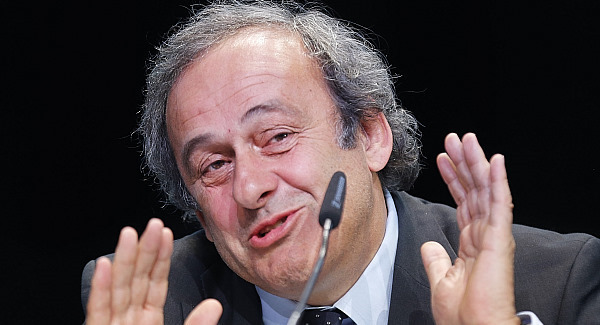
And, as well as protecting a tradition, it sets up England for 2022 in Qatar, because as Michel Platini (whose views, admittedly, are not as cherished as once they were) put it, ‘English players are lions in the autumn, but lambs in the spring’.

CONNECT WITH US TODAY



Be the first to know the latest news and updates