Ian Lynam Interview: Writing sport’s small print
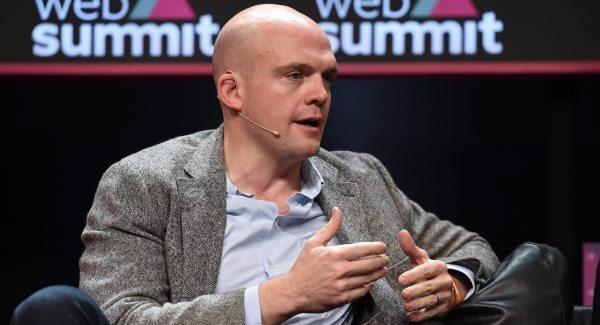
AN LYNAM headed to London to work at the City’s top corporate law firm, but a colleague’s wedding sent him down a different road. When the Premier League’s January 2005 transfer window was looming, one of the other lawyers was heading off on honeymoon leave. Trouble was, she handled one of the main clients: Arsenal. Could the Limerick man step in and take up the slack?
“I was thinking, it’s an asset transfer, like corporate law,” recalls Lynam now. “I can turn my hand to that.” For the next three years, half of Lynam’s work related to Arsenal - transfers, contracts, etc - and then he moved on to the firm of Charles Russell Speechlys and focused on sports law.
“What’s now recognised as sports law in the UK came from horse racing originally, because it was the only sport with any money in it, really, up to the nineties. That was the sport that could pursue cases to the High Court, which was an expensive process, so all the cases which set the parameters for sports law were horse racing cases.
“Charles Russell were the lawyers for the Jockey Club, which became the BHA (British Horseracing Authority), so we were in a good position when other sports became more sophisticated. Governing body issues or regulatory issues tended to be similar across the sports, so we had a lot of experience, as well as having a strong governing-body practice.” Charles Russell Speechlys still act for the FA, Premiership Rugby, the BHA, WRU and other, smaller governing bodies (“Greyhound racing throws up a surprising number of legal cases,” says Lynam) as well as brands like Nike, companies like Paddy Power, and individual players such as Cesc Fabregas, Alex Oxlade-Chamberlain, Raheem Sterling and Thierry Henry.
Very well, first things first. We’ve all seen the picture of a footballer with a pen in his hand, manager hovering eagerly, a sheet of paper about to be signed. What are those contracts actually like?
“They’re not standard contracts of employment in that sport is different, and in different ways. Take the way athletes are employed in team sports, for instance.
“For example, if another newspaper is interested in hiring you and asks you if you’re interested, nothing can stop them doing so. In football or rugby that’s tapping up. There are additional restrictions in the market.
“The contract a rugby player signs in the Premiership, or France, is a standard contract, and it’s the same in football. Effectively the contract is agreed between the league and the players’ union. We’ve actually just gone through the consultation period on the new player contracts in England, where they’ve been updated, which was interesting.
“What’s different? Something that’s interesting - which the recent injury to Paul O’Connell puts in the spotlight - is that a footballer signs a contract and moves at the same time. Raheem Sterling was a Liverpool player until the day he signed a Man City contract, and then was a Man City player. He moves straight away.
“In rugby players tend to sign up with a new club six months ahead of actually joining that club - it’ll be in the season before they move that they sign up. So there are two medicals - one when you sign the contract, and then six or nine months later when you actually join the club and the contract begins. Given the high rate of injuries in rugby, and the fact the club can terminate the contract at that later date, there’s an additional exposure there for players, one which the unions have been trying to address, and one for which you’d have some sympathy.
“It’ll be interesting to see if Toulon will stand by their contract, though presumably that will depend on how Paul recovers.”
s it worth comparing European sports contracts to those elsewhere? Lynam is cautious about emulating America. After all, until relatively recently mechanisms such as the reserve clause in professional baseball effectively tied players to clubs for life.
“There was effectively the same situation in football up to the Bosman ruling,” he says. “In that when the contract expired, a player’s registration remained with the club until that club received a fee it was satisfied with. That changed because of the Bosman ruling, which found it in breach of European law. Now, when you’re out of contract you’re free to go, but FIFPRO (the international player representative body) is still unhappy with the current system. They feel that the transfer fee system is unfair to players, that they should be free to go, and they’ve challenged the current system - they’ve lodged that with the (European) Commission and they’ve put a lot of work into it. It’s not entirely clear what a post-transfer fee system would look like. Where are the precedents? In most of the European team sports the system’s pretty similar to football, so to look at team sports which are different - which don’t have the concept of the transfer fee - you’d have to look at US sports.
“But in most of the American sports the players have a lot less security, a lot more restricted. In baseball they’re trading chips - ‘tomorrow you’re playing for San Diego’ - while in American football, you get a bit slower, or miss a couple of kicks, and you’re cut. FIFPRO are making some good points but it’s also a case of ‘be careful what you wish for’, because there are good aspects to the current system.
“If you’re a massive superstar outperforming expectations, you’re probably losing out on your ‘current’ contract, but if you’re an older player slowing down or out of form, then the system protects you to an extent. It depends on what lens you look through.” That’s the on-field performance. Away from the action there’s a whole other set of challenges for Lynam. Take the image rights issue.
“That’s interesting because I think it’s misunderstood, and it’s an area that’s had a bit of a renaissance in recent years There might be a perception, even from the term ‘image rights’, that people own a right to their own image, but actually they don’t. There’s no such thing, legally, as an image right, in England or Ireland. If you take a picture of David Beckham, you own the rights to that photograph. David Beckham can’t use that photograph. It’s your image.
“What people do have is an endorsement right - you can use an image of someone, but you can’t use that image to imply an endorsement of your company or brand. There’s a legal remedy called passing off - if I have a coffee brand and I put a photograph of David Beckham on the cover, that implies a commercial relationship between Beckham and the brand which doesn’t exist.” How image rights actually work for athletes can be complicated.
“What happens is a sportsperson sets up a company - a foreign footballer playing in England, for instance, might set up two companies, one in England and an overseas company. He’ll licence his endorsement rights, trademarks and so on to those companies, and they will exploit his image by entering into sponsorship deals and so on, entering into any commercialisation of his image on his behalf.
“That came into England from Italy in the nineties, and the first big case it involved was with David Platt and Dennis Bergkamp, who had existing image rights companies in Italy when they came to England from there.
“They were challenged by the taxman but the players won, though after that, in the 2000s, the use of these image rights structures mushroomed, and in some instances were used without fully understanding how it should work. There were some badly organised structures, the taxman challenged them, there were big investigations and almost all of the Premier League clubs ended up entering into settlements with the taxman regarding the use of image rights - millions per club, huge amounts.
“After that - from 2010 onwards - there was very little use of image rights in football in particular, it all stopped but in the last few years, clubs have begun to use image rights again, but in a much more sensible way, by taking proper advice on it.
“Now the taxman in Britain has reached an agreement with Premier League clubs effectively saying ‘if you use image rights in this way and at this level we’re okay with it’.
“There’s a value that a player brings to a club which goes beyond what he does kicking a ball, and by entering into an image rights deal with a company, a club is acknowledging that, putting a value on that.”
Finding value is crucial for players, for representatives and for clubs. Lynam points to analytics and data as new frontiers in the interaction between sports stakeholders.
“I’ve been interested in .”analytics a few years, and it’s clear it’s something with a role in football, and for me it was about identifying what would be useful in analytics in terms of working for my clients to improve their position. Analytics are beginning to have an impact on football - Brentford are the most high profile example but some of the big clubs are using analytics pretty heavily now as well - Arsenal, Liverpool, Man City. They’re using in terms of player identification for the recruitment process, but also in tactics and so on.
“What I’ve been looking at is if clubs are looking at analytics to identify players, to understand their contribution and thus their value, can we use that on the players’ behalf? Contract negotiations in sport are horse trading, as they are in all walks of life.
“You go in thinking the player has a certain value, the club has a certain value in mind, but those are obviously subjective views. You can point to a club down the road which thinks he’s worth X, and worth paying Y amount more, but even though that’s another data point, it’s still subjective. With analytics you can introduce objective data points into the discussion and say ‘it’s not just what we think, here’s some analysis’. And you can compare your player to the best in the league in his position, or, as we did last year for a young player, against the best of all time in his position at his age. If you’re acting for a young wide attacking player you can say ‘here’s how he lines up against the best wide attackers in the Premier League, and against the best of all time at the same age’.”
t’s a strong argument, but it’s an event that doesn’t always take place on a level playing field. Or even with the same rules.
“If you’re dealing with a club that has invested in analytics, they’ll always feel they have the information edge on you - they have a team of analysts and will feel they know the player better than you do, that their numbers have greater validity. The analytics department of any club remains a bit of a black box - you won’t know how their model works and they won’t share that information with you because that’s their competitive edge.
“You may be speaking the same language, but they may be speaking a different dialect.
“With other clubs, they may have an analytics department only because it’s fashionable to have an analytics department. The owner may want them to be seen as progressive and cutting-edge, so the CEO hires the analytics department - but because the CEO doesn’t understand it and the manager doesn’t believe in it, the department’s stuck in a back room where nobody listens to them.
“And this is why analytics is relatively tricky, because there needs to be an unbroken chain: the whole club needs to buy into it.
“Then again, if you’re dealing with a club that has no interest in analytics at all, you’re wasting your time even bringing it up. Overall, it’s something which still has a relatively limited impact, or use, and it’s certainly not a magic bullet, it’s just another tool in the toolbox which may give you a different way of approaching things sometimes.” There are always different ways. Take the most obvious asset in any sports club. If you’re buying a football club, like the purchase of any large company, you do your due diligence. Historically that comes in two forms - financial due diligence and legal due diligence. You get in the lawyers and the accountants, they check out any skeletons in the closet, they see how things are being run.
“But now there’s a third strand of due diligence, which I’d always recommend to an investor - data based analysis of the playing squad. Looking at what you’re buying when it comes to the actual players.
“Maybe the team came 15th last season - was that an accurate reflection of how they played or were they unlucky? What was the underlying performance? Is that likely to improve or deteriorate? What’s the age profile of the players?
“For example, Man City had the oldest squad in the Premier League, so if you were buying that club then the depth in certain positions and succession planning would come into your thinking.
“Obtaining a deep understanding of the squad - the assets you have - beyond the league table, is something that historically wasn’t the focus; the football bit wasn’t part of what people analysed when buying clubs, which is funny because ultimately the financial performance of the club is dependent on the playing performance of the club. They go hand in hand. And while that’s changing, the structures around the playing side of the business are part of an area that’s still developing. It’s a relatively conservative sport, so it takes a while for things to change.” But change they do. The Limerick man’s career shows you that.
CONNECT WITH US TODAY



Be the first to know the latest news and updates