Argentina must find right balance
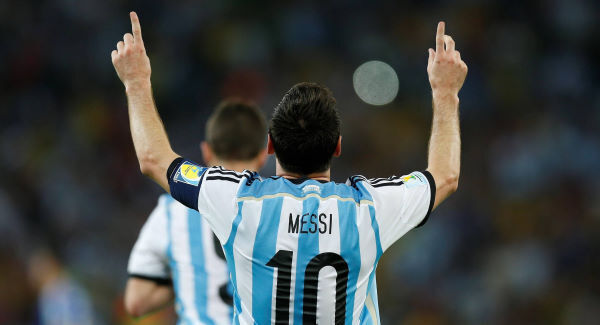
The one few know about and the one that’s dwarfed, such is the extent of his genius. Back in the days when Pep Guardiola was making Barcelona unbeatable, he was in the midst of a pre-game teamtalk when his star player interrupted for no other reason than to ask for a Coke. The manager was adamant it was the not the sort of pre-game drink he endorsed. Undeterred though, Messi just stood up, took one himself, opened it loudly in front of the entire team and took a long, accentuated slurp. The ego had truly landed.
For all that the Messi-Ronaldo debate focussed on humility versus arrogance, it seems we may have got it the wrong way around. In fact at the end of a season where Barcelona won nothing for the first time since 2008 and, not coincidentally, Messi wasn’t world player of the year for the first time since 2008, his low work-rate and mileage numbers were a source of concern. It seemed that way against Iran too. With a lack of space, rather than rile against it he seemed to give in to it. At one point, he passed the ball away and didn’t even attempt to close down mere metres to win it back. But as long as there are mind-blowing moments to follow, no one can tell him he’s wrong because he is bigger than even this Argentina team.
Indeed it’s impossible now more than ever to say the attitude isn’t acceptable as already at this World Cup he’s threatened to make it his own á la Ronaldo in 2002 and Roberto Baggio in 1994. His two moments of otherworldliness are the difference between Argentina being stuck on two points and their progression assured. It’s not just the technicality of his strikes against Bosnia and Iran either, which need to be contextualised to be truly understood.
To be around Argentina at this World Cup is to experience a phenomenal atmosphere, and at the Mineirão at the weekend, the stadium shook with a violence that made you want to look for assurance from structural engineers. This isn’t dissimilar to a home World Cup for the side and it was almost poignant that on Saturday, Maradona got up to leave with the game ticking towards a stalemate. As the nation’s past headed for a stadium exit, the nation’s present put previous tournaments behind him with what could become one of its most iconic moments.
But if Messi’s on-field brilliance is crucial at a competition of many good, but perhaps no truly great teams, his off-field attitude is just as vital as it dictates the harmony and direction of this group. Manager Alejandro Sabella stresses at each and every opportunity the unity and happiness of his squad, but the sentiment is so common, it has come across as a little forced.
Just over a week ago, before Argentina opened their campaign, the press conference in the Maracanã saw the same question asked over and over. It revolved around Sabella’s choice of a back five. Some saw it as a step onto the defensive foot and it was only when they reverted to a flat four in that game that they opened up Bosnia and showed the sort of attacking splendour we’d expected. Their play in the second half made it look like they’d changed to the formation best suited to them all the while making Sabella’s initial call seem wrong.
The issue has followed them all the way to Belo Horizonte as there are strong suggestions the switch was down to the wishes of Messi himself. And if that is the case, it leaves Argentina with an issue. What we saw against Iran was why Sabella initially felt the need to pack his defence. Especially in the second half, their last line was sliced open by a basic long ball met with pace. The quartet didn’t look like World Cup winners and a quintet will be needed against better sides or even Messi’s brilliance could be offset. That’s the balance they must now strike and quickly; to do what’s best for the team, while doing what’s best for the grand ego of a prince threatening to become a king.